What can cause an enlarged heart?
Ask our experts
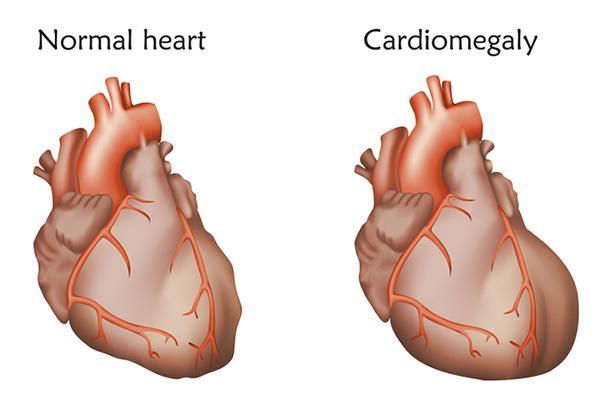
Q. A chest x-ray to check my lungs was normal, but the report mentioned a slightly enlarged heart. My doctor said this is common. But I am curious, why might this happen?
A. An enlarged heart — which doctors refer to as cardiomegaly — has many possible underlying causes. Often, it’s the consequence of a condition that makes your heart work harder than usual. Just like your arm or leg muscles get bigger when you exercise regularly, your heart can enlarge when it has to work harder than normal to pump blood throughout your body. But unlike your other muscles, your heart doesn’t always become more effective when it gets bigger.
Probably the most common cause of an enlarged heart is chronic, untreated high blood pressure, which can cause the walls of the heart’s main pumping chamber (the left ventricle) to thicken. This is known as left ventricular hypertrophy (LVH).
LVH can also arise from problems with one of the heart’s four valves. For example, a leaky aortic or mitral valve can lead to a higher volume of blood in the left ventricle, which responds by getting larger. Narrowing of the aortic valve (aortic stenosis) can raise pressure inside the left ventricle and lead to LVH.
Various forms of heart muscle disease (cardiomyopathy) can also enlarge the heart. The most common inherited form, called hypertrophic cardiomyopathy, affects about one in 500 people. The genetic mutations responsible for this condition cause heart muscle to thicken. Amyloidosis, a group of diseases marked by clumps of abnormal protein in tissues throughout the body, can affect the heart. The resulting thickening and enlargement can cause restrictive cardiomyopathy, or “stiff heart syndrome.”
Yet another type, dilated cardiomyopathy, can cause one or both of the heart’s ventricles to enlarge. But instead of thickening, as in LVH, the damaged muscle thins and stretches out of shape, making the heart expand. This condition can run in families, but the genetic underpinnings aren’t yet fully understood.
Cardiomyopathy can also be caused by heart attacks resulting from coronary artery disease, drug or alcohol abuse, certain cancer drugs, toxins, or congenital heart defects. In rare cases, heart muscle inflammation (myocarditis), which can be triggered by viral infection, can lead to cardiomyopathy. These conditions can weaken the heart and impair its ability to pump enough blood to the body, resulting in cardiomegaly and heart failure.
It’s worth noting that an enlarged heart does not always mean there is a medical problem. For example, cardiomegaly can develop in response to long-term, high-intensity exercise. The hearts of endurance athletes, such as competitive runners and cyclists, may grow larger and more efficient as a natural response to all that rigorous exercise.
Image: © Veronika Zakharova/Science Photo Library/Getty Images
About the Author

Howard E. LeWine, MD, Chief Medical Editor, Harvard Health Publishing; Editorial Advisory Board Member, Harvard Health Publishing
Disclaimer:
As a service to our readers, Harvard Health Publishing provides access to our library of archived content. Please note the date of last review or update on all articles.
No content on this site, regardless of date, should ever be used as a substitute for direct medical advice from your doctor or other qualified clinician.