










Loneliness linked to cognitive decline and early death
News briefs
- Reviewed by Robert H. Shmerling, MD, Senior Faculty Editor, Harvard Health Publishing; Editorial Advisory Board Member, Harvard Health Publishing
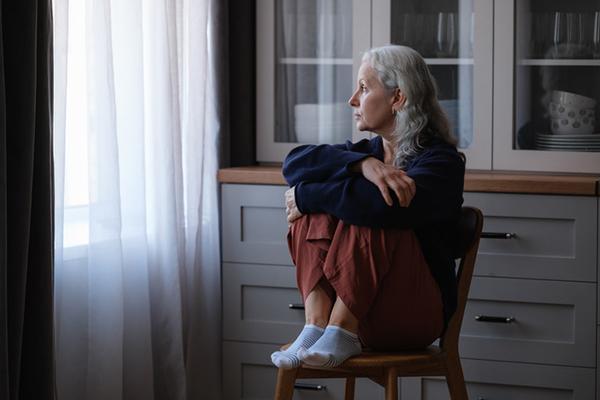
Some people don’t mind spending time alone, while others hate it. But older people who struggle with loneliness — rather than from strictly being alone — may be more likely to develop thinking and memory problems and die earlier, according to an analysis published July 15, 2026, by the Journal of Personality and Social Psychology.
Researchers used statistical models to analyze 11 earlier long-term aging studies involving 175,070 adults ages 50 and older from 18 countries. Study participants reported how frequently they felt lonely as well as how often they had contact with other people. Medical records also revealed how many participants transitioned through cognitive stages (from normal to severely impaired) over time or died.
Feeling lonely was consistently linked to worsening cognitive health and a shorter life, even after accounting for social isolation. A 10% increase in participants’ loneliness scores was associated with an 8% to 9% higher risk of transitioning from normal cognition to mild cognitive impairment and a similarly greater risk of developing severe cognitive impairment. Unlike loneliness, however, spending time alone (either by choice or circumstance) was not consistently associated with cognitive impairment and showed only a weak link with dying prematurely.
The study was observational, meaning it couldn’t prove loneliness causes cognitive decline or an earlier death, just that an association exists. The findings suggest that for healthy aging, feeling connected may matter more than how many social contacts people have, study authors said.
If you feel lonely, it may be important to your health to expand your social network, if possible. As examples, you may consider
- searching for online or in-person clubs, volunteer opportunities, or classes that match your interests or activities you’d like to try
- starting your own group that meets regularly, such as a book club, a game or trivia night, or a bird-watching group.
Image: © MementoJpeg/Getty Images
About the Author

Maureen Salamon, Executive Editor, Harvard Women's Health Watch
About the Reviewer

Robert H. Shmerling, MD, Senior Faculty Editor, Harvard Health Publishing; Editorial Advisory Board Member, Harvard Health Publishing
Disclaimer:
As a service to our readers, Harvard Health Publishing provides access to our library of archived content. Please note the date of last review or update on all articles.
No content on this site, regardless of date, should ever be used as a substitute for direct medical advice from your doctor or other qualified clinician.


