







Understanding exercise heart rate zones
Your gym's cardio machines and your smartwatch can show your heart rate zone during a workout or a walk. Are these readouts worth tracking?
- Reviewed by Kieran F. Reid, PhD, MPH, Contributor
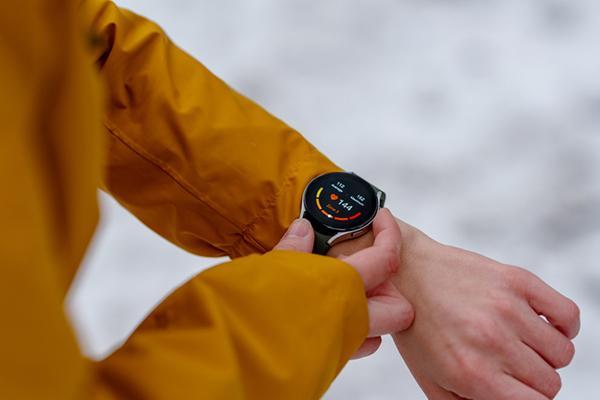
You hit your stride on the elliptical machine and the electronic readout says your heart rate has reached zone 2 - the "fat-burning" zone. Is this the best zone for weight loss? Maybe you're more focused on cardiovascular health. Should you strive to reach a different zone?
Heart rate zones reflect how hard you're working during exercise (see "Tracking exercise intensity: How do you feel when you're "in the zone"?). Gym equipment and watches that can monitor heart rate are the most common ways people determine which zone they're in.
But rather than targeting one of the five specific heart rate zones, focusing on how you feel is a simpler and equally effective way to track your workouts and meet your health goals, says Kieran Reid, who directs the laboratory of exercise physiology and physical performance at Harvard-affiliated Brigham and Women's Hospital. "In both the rehabilitation clinic and in clinical trials, we often use the rate of perceived exertion, or RPE, scale," he says. It's practical, personalized, and a good gauge of how hard your heart, lungs, and muscles are working during physical activity, he adds.
However, if you like numbers and paying attention to your pulse, you can compare your rate of perceived exertion to your estimated target heart rate zone. You can use either method (RPE or heart rate zones) to make sure you meet recommended weekly exercise targets: 150 minutes of moderate-intensity exercise, or 75 minutes of vigorous-intensity exercise, or a combination of the two.
Tracking exercise intensity: How do you feel when you're "in the zone"?Here's how the rate of perceived exertion (RPE) scale corresponds to the five heart rate zones (see main story for determining your maximum heart rate). |
||
|
RPE |
Intensity or effort (based on the impact of exercise on your breathing or speaking pattern) |
Heart rate zone (percentage of maximum heart rate) |
|
1 |
Low (extremely easy, able to sing) |
Zone 1 (50% to 60%) |
|
2 |
Very easy (able to speak in complete sentences) |
|
|
3 |
Easy |
Zone 2 (60% to 70%) |
|
4 |
Easy to moderate (speech becomes broken) |
|
|
5 |
Moderate (breathing becomes heavier) |
Zone 3 (70% to 80%) |
|
6 |
Moderate (talking is difficult) |
|
|
7 |
Moderate to vigorous (deep, forceful breathing) |
Zone 4 (80% to 90%) |
|
8 |
Vigorous (labored breathing, cannot talk) |
|
|
9 |
Vigorous (very labored breathing, borderline breathless) |
Zone 5 (90% to 100%) |
|
10 |
Very vigorous (gasping for air) |
|
Heart rate zone formulas
Heart rate zones are based on your maximum heart rate (MHR) - an estimate of the highest heart rate you can achieve when you're exercising as hard as you can. The basic formula to compute your MHR is 220 minus your age. But that's a ballpark figure, since other factors are at play, including genetics and your baseline fitness level. A 65-year-old who jogs or plays tennis nearly every day will have a stronger, more efficient heart (and a lower resting heart rate) than a 65-year-old who only walks a few times a week.
"For a more personalized estimate, you can use the Karvonen formula," says Reid. That takes into account your resting heart rate (RHR), which reflects your overall fitness. As such, it's a more accurate way to estimate your target heart rate zones. You can find an online target heart rate calculator that uses either the standard age-based formula or the Karvonen formula. For the latter, you'll need to measure your RHR; it's best to do this first thing in the morning, before you get out of bed. (No smartwatch to check your heart rate? Press two fingers on your inner wrist to count your pulse while you watch 15 seconds pass on a clock, then multiply the pulse count by four.)
Weight loss vs. heart-health zones?
During easy-to-moderate-intensity (zone 2) exercise, a greater proportion of the energy you use comes from fat than when you exercise at higher intensities. "As the intensity of your exercise increases to zones 3 and 4, your body relies more on carbohydrates because they can generate energy more rapidly," says Reid. But for weight loss, what matters most is the total amount of energy your body burns over time, not whether the fuel source during a specific workout is fat or carbohydrate.
Exercising at higher heart rate zones has physiological benefits that will improve your fitness and performance. "But you don't need to train in zone 4 to reap the cardiovascular benefits of exercise. Consistent easy-to-moderate-intensity exercise is very effective," says Reid. Finding an activity you enjoy and doing it consistently is the main priority.
Image: © Alina Mosinyan/Getty Images
About the Author

Julie Corliss, Executive Editor, Harvard Heart Letter
About the Reviewer

Kieran F. Reid, PhD, MPH, Contributor
Disclaimer:
As a service to our readers, Harvard Health Publishing provides access to our library of archived content. Please note the date of last review or update on all articles.
No content on this site, regardless of date, should ever be used as a substitute for direct medical advice from your doctor or other qualified clinician.