What should people with thyroid nodules know about kelp?
Ask the doctor
Q. Will kelp be harmful to someone with nodules on the thyroid?
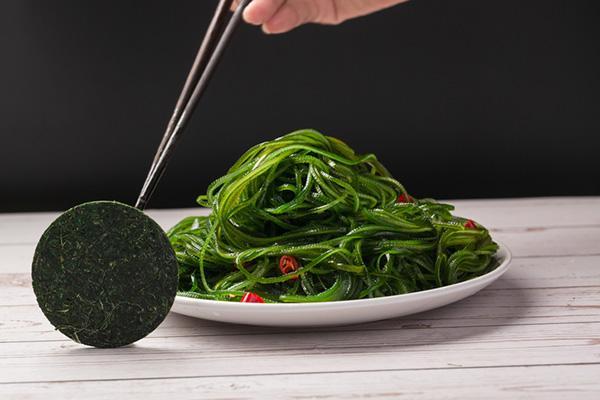
A. Kelp, a type of seaweed, is rich in iodine, a chemical needed by the thyroid gland to make thyroid hormone. However, too much iodine can be toxic to the thyroid gland. High doses of iodine actually lower blood thyroid hormone levels by blocking the release of the hormone from the gland. This prevents the hormone from getting into the blood.
In developed countries, most table salt is iodized, so iodine deficiency has become rare. In underdeveloped countries, iodine deficiency is still a problem. People with iodine deficiency develop goiters, enlarged thyroid glands that are trying to compensate for the lack of iodine. The goiter can be smooth or nodular. The goiter will shrink when even small amounts of iodine are ingested.
People often develop benign thryoid nodules, even when iodine intake is adequate. People with thyroid nodules should not take iodine drops or purposefully eat foods like kelp just to get extra iodine.
An irregular enlarged thyroid with or without nodues can be related to Hashimoto's thyroiditis. It's an inflammation of the thyroid that is the most common cause of hypothyroidism (an underactive thyroid) in developed countries. It is more common in women than men.
Because people with Hashimoto's thyroiditis have thyroid glands that are already struggling to make enough thyroid hormone, blocking any release of the hormone with extra iodine can make the situation worse.
When doctors feel one or more nodules on a thyroid gland, they usually first order a blood test for thyroid stimulating hormone (TSH). TSH is made by the pituitary gland, and the blood level goes up when the thyroid gland is not making enough thyroid hormone. If the thyroid stimulating hormone is high, the nodules should get smaller once thyroid replacement is sufficient to treat the hypothyroidism. When there is a possibility that the nodule is cancerous, other tests are also ordered, most often a thyroid ultasound and sometimes a special thyroid scan.
Image: © Jian Yi Liu/Getty Images
About the Author
Howard E. LeWine, MD, Chief Medical Editor, Harvard Health Publishing; Editorial Advisory Board Member, Harvard Health Publishing
Disclaimer:
As a service to our readers, Harvard Health Publishing provides access to our library of archived content. Please note the date of last review or update on all articles.
No content on this site, regardless of date, should ever be used as a substitute for direct medical advice from your doctor or other qualified clinician.