When can older women stop getting mammograms?
Breast cancer screening comes with benefits and drawbacks, and women over 70 have additional factors to consider.
- Reviewed by Wendy Y. Chen, MD, MPH, Contributor
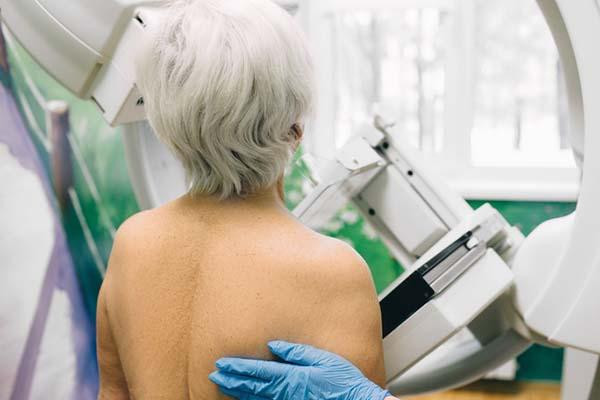
You've faithfully undergone annual mammograms for decades, knowing the imaging tests are pivotal in detecting breast cancer when it's early and highly treatable. But now that you're in your 70s, you may be wondering at what age it's safe - or sensible - to stop screening.
The answer is complicated. While mammogram screening guidelines vary for routine testing up to age 74, advice for women 75 and older is even more opaque. That's because there's no robust evidence indicating mammograms help older women live longer. At the same time, overdiagnosing and overtreating tiny breast tumors that are unlikely to reduce life expectancy can harm women, says Dr. Wendy Chen, a breast oncologist at Harvard-affiliated Dana-Farber Cancer Institute.
"Most of my patients are unaware there are data to suggest that it's not helpful to screen people when they're older," Dr. Chen says. "Initially, they think it's ageist, but when I explain to them that we're trying to avoid treatments that aren't going to improve their life expectancy, they see things differently."
Breast cancer screening guidelines vary
The rapid increase in people ages 65 and up in the United States highlights the importance of determining the most effective way to screen older women for breast cancer. Age is one of the biggest breast cancer risk factors, with 62 the average age at diagnosis, according to the American Cancer Society (ACS).
But major health organizations' mammogram screening guidelines differ considerably. The U.S. Preventive Services Task Force, which bases its recommendations on the strength of research results, says screening mammograms should stop after age 74, since no randomized, controlled clinical trials - considered the gold standard in research - have examined the implications of screening mammograms in women 70 and older.
An observational study published online Sept. 13, 2025, by Annals of Surgical Oncology suggests women in their 80s who undergo regular mammograms are more likely to have breast cancer detected early, need less aggressive treatment, and live longer than women who don't. But the study couldn't prove that undergoing regular mammograms in your 80s improves breast cancer outcomes, just that an association exists.
Indeed, the women in the study who didn't continue getting mammograms were likely already less healthy than the screening group, a factor that would have contributed to them having poorer results, Dr. Chen says. So the results aren't as reliable as they might appear.
Meanwhile, the ACS recommends mammograms continue if an older woman is in good health and expected to live another 10 years or more, while the American College of Radiology advocates for individualized decision making, with no firm end to screening.
"There's no question if you do mammograms, you're going to catch cancer. That is something everyone agrees on," Dr. Chen says. "The question is if treating the cancer is going to help the patient or not. It's hard when there are no clinical trial data to guide you."
Benefits versus risks
Dr. Chen says women in their 70s and up should consider these pros and cons to continuing routine mammograms:
Pros. Screening provides peace of mind for some women. And early detection can enable less-invasive treatment that's more likely to eradicate the cancer. "We may be able to do a lumpectomy instead of a mastectomy," Dr. Chen says.
Cons. False positives that show a suspicious area - later deemed to be benign - can provoke anxiety and unnecessary biopsies. And mammograms may find slow-growing cancers unlikely to affect a woman's life expectancy, leading to risky treatments. "As people get older, even a minor surgery can have risks," she says.
"I still advocate treating breast cancer," Dr. Chen adds. "I'm not saying you shouldn't treat it when you see it, but when you do pick up an early-stage breast cancer in an older person, it's not clear how much it's going to extend their life span."
How to have the conversationWhen you're weighing with your doctor whether to continue screening mammograms, Dr. Wendy Chen, a breast oncologist at Dana-Farber Cancer Institute, recommends you discuss
"I would never make a blanket recommendation that every woman should stop mammograms at a certain age," Dr. Chen says. |
Image: © peakSTOCK/Getty Images
About the Author

Maureen Salamon, Executive Editor, Harvard Women's Health Watch
About the Reviewer
Wendy Y. Chen, MD, MPH, Contributor
Disclaimer:
As a service to our readers, Harvard Health Publishing provides access to our library of archived content. Please note the date of last review or update on all articles.
No content on this site, regardless of date, should ever be used as a substitute for direct medical advice from your doctor or other qualified clinician.