What should pregnant women know about flu shots?
Ask the expert
 Q.
I can't decide what to do about getting flu shots. I am two months pregnant. What are your thoughts?
Q.
I can't decide what to do about getting flu shots. I am two months pregnant. What are your thoughts?
A. Pregnant women and those who expect to become pregnant are being urged to get flu shots. But that's not always a simple decision for a woman once she knows she is pregnant. For most, protecting the health of the fetus is their No. 1 concern. This means many of them won't take a medicine or have a medical procedure unless they know that it is absolutely safe for the baby.
The U.S. Centers for Disease Control and Prevention (CDC) and The American College of Obstetricians and Gynecologists (ACOG) say that pregnant women should get the seasonal flu vaccine. In fact, they are on the priority list to get the vaccine.
Pregnancy puts women at increased risk of getting serious health problems if they get the flu. In any given year, there is always the chance that the new flu strain will cause more than the usual cases of severe symptoms and also be more easily transmitted from person to person. That can happen when pregnant women have not been exposed to the current circulating flu strain or a similar strain in prior years. So they don't have what's known as adaptive immunity.
It is understandable that some pregnant women are anxious about getting a flu shot. But there is a long history of flu vaccine safety during pregnancy. The seasonal flu shot is made from purified killed virus. There is no chance that you or your baby can get an infection from the vaccine. However, pregnant women should not get the nasal vaccine.
Pregnant women should get the seasonal flu shot for several reasons:
- They can protect infants who cannot receive vaccination. The mother can pass protective antibodies to her fetus. They may help protect the baby after it's born.
- If you do get the flu, you have a higher than average risk of getting pneumonia. Pneumonia lowers your blood oxygen level. This means your fetus may not receive the oxygen needed for normal development.
- Having the flu in pregnancy increases your risk of a miscarriage or giving birth too early.
Some people are concerned about thimerosal, a preservative used in many vaccines. The safety of thimerosal has been extensively studied. There is no scientific evidence of any bad effects on babies when mothers get shots containing this preservative.
Pregnant women may have an understandable reluctance to getting a flu shot. Certainly, more testing would make all of us feel even more secure about its safety. But in balance, the risks of not having the shot are greater than the extremely low risk of significant side effects.
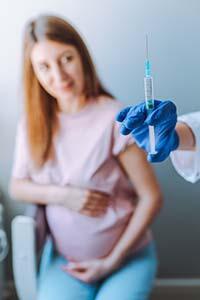
Image: © Olga Rolenko/Getty Images
About the Author

Howard E. LeWine, MD, Chief Medical Editor, Harvard Health Publishing; Editorial Advisory Board Member, Harvard Health Publishing
Disclaimer:
As a service to our readers, Harvard Health Publishing provides access to our library of archived content. Please note the date of last review or update on all articles.
No content on this site, regardless of date, should ever be used as a substitute for direct medical advice from your doctor or other qualified clinician.