
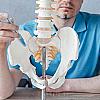
Sacroiliac joint pain: Causes, symptoms, and exercises that help

What causes knee pain: How doctors make a diagnosis

Study: At-home colorectal cancer screening may significantly cut colon cancer deaths

Where you carry excess weight matters in predicting heart disease risk

Tai chi walking: What is it and does it work?

Fatty liver disease: Should you be tested?

Weight-loss drug may lower risk of heart attacks and infections

Testosterone therapy without evidence of deficiency may boost heart risk

Even a little exercise linked with lower stroke risk in people with afib

FDA approves first mRNA-based flu vaccine
Weight loss and management Archive
Articles

Bleeding gums? You may need more vitamin C
In the journals
Bleeding gums are a sign of gingivitis, an early stage of periodontal disease, but they may also signal low vitamin C in your diet, suggests a study published online Feb. 1, 2021, by Nutrition Reviews. Researchers examined 15 published studies involving 1,140 healthy people as well as data on 8,210 people from the CDC's Health and Nutrition Examination Survey. They found that low vitamin C levels in the bloodstream were associated with an increased risk for gum bleeding with gentle probing. The researchers also observed that increasing vitamin C intake may help resolve the problem.
Increased bleeding in general is one of the symptoms of scurvy, a disease caused by severe vitamin C deficiency. Scurvy, which often affected 18th-century sailors without access to fruits and vegetables, is rare today. Still, this new study sheds light on a potential cause of gum bleeding related to vitamin C levels that are only slightly low — not enough to cause scurvy.

Fruit of the month: Kiwifruit
The Chinese gooseberry — more commonly known as kiwifruit or simply kiwi — is a brown, fuzzy, egg-sized fruit with bright green flesh. You can sometimes find gold kiwis, which have yellow flesh, or kiwi berries, which are the size of a grape and have smooth, green skin. Sweet yet slightly tart, kiwi's flavor has been described as a cross between a strawberry and a banana with a hint of citrus.
One kiwi provides nearly all (about 80%) of an adult's daily vitamin C requirement. It's also a good source of fiber, potassium, and vitamin K.

Optimize your exercise routine
Whether you're an exercise novice or a gym regular, these tips can help you get the most out of your workout.
When it comes to exercise, timing is everything — but not in the way we normally think about timing. What matters most is making the time to exercise regularly, not when it happens. That said, your personal experience and specific goals may influence what workout schedule works best for you.
"If you're just starting a physical activity routine, any time that you feel motivated and energized enough to exercise is the best time for you," says Dr. Beth Frates, clinical assistant professor of physical medicine and rehabilitation at Harvard Medical School. For some people, that's in the morning; for others, the afternoon works better. But if you can work out with a friend, choose a time that works best for both of you, she suggests. Teaming up with an exercise buddy is more enjoyable, and you can hold each other accountable.

Can you avoid macular degeneration?
You have the power to reduce certain risk factors for the disease.
We've come a long way in our understanding and treatment of age-related macular degeneration (AMD), the leading cause of vision loss for people ages 50 or older in the United States. We've learned that certain genes and lifestyle factors increase the risk for developing AMD, and discovered treatments that often slow the disease's progression.
Yet for all our advances, we still don't have a guaranteed way to prevent AMD. You are at greater risk if one of your parents had the condition. "One needs to be concerned, but it doesn't mean you're destined to get it. It's a complex disease, and it takes a combination of factors for it to develop," says Dr. Joan W. Miller, chief of ophthalmology at Harvard-affiliated Massachusetts Eye and Ear and ophthalmology chair at Harvard Medical School.

Fight chronic inflammation and cholesterol to protect your heart
It takes a one-two punch to lower these risks for heart disease, heart attack, and stroke.
High cholesterol has long been known as a bad actor in heart health. Too much LDL (bad) cholesterol in your blood can lead to fatty deposits in your arteries and the formation of artery-narrowing plaque (atherosclerosis), heart attacks, and strokes.
But LDL doesn't act alone. Chronic inflammation — a persistent activation of the immune system — also fuels heart attack and stroke risks. That means you must address both high LDL levels and chronic inflammation to protect your health.

5 mistakes that will sabotage a healthy diet
Excluding the wrong foods and following eating plans that are too restrictive may do more harm than good.
If you've ever made a New Year's promise to eat more healthfully, then you know how easy it is to slip back into less healthy eating routines. "People go into these plans with the best of intentions, but sometimes they don't have the best information to support their changes," explains registered dietitian Kathy McManus, director of the Department of Nutrition at Harvard-affiliated Brigham and Women's Hospital (www.brighamandwomens.org).
Whether you've chosen an eating plan to lose weight or to address a health problem (for example, a low-salt diet to help lower your blood pressure), it's important to understand the little things that can throw you off track.

Salad greens: Getting the most bang for the bite
Tailor salad greens to your dietary needs and taste preferences.
Image: © yulkapopkova/Getty Images
In the quest to follow daily dietary recommendations and eat the right amount of vegetables, salad is your friend. A large salad can check off your veggie requirements for the day in one fell swoop.
But not all salad greens are created equal. "They vary in regard to their nutrient content, nutrient density, flavor, and texture," says Elisabeth Moore, a registered dietitian at Harvard-affiliated Beth Israel Deaconess Medical Center. So it helps to know which salad greens will give you the most bang for the bite.

Fermented foods can add depth to your diet
Health benefits come from the live microbes that thrive in foods such as yogurt, kimchi, and sauerkraut.
Image: © marekuliasz/Getty Images
Pickles and sauerkraut might not be the first examples that jump to mind when you think of health foods. But a growing body of research shows that a diet that includes a regular intake of fermented foods can bring benefits.
Fermented foods are preserved using an age-old process that not only boosts the food's shelf life and nutritional value but can give your body a dose of healthful probiotics — live microorganisms crucial to good digestion.

Know the facts about fats
You need adequate amounts of good dietary fat.
Image: © JulijaDmitrijeva/Getty Images
Low fat? No fat? Try more fat. Dietary fats are essential for maintaining good overall health, especially as you age. "Your body needs a regular intake of fat," says Vasanti Malik, a research scientist with the Department of Nutrition at Harvard's T.H. Chan School of Public Health. "Fat helps give your body energy, protects your organs, supports cell growth, keeps cholesterol and blood pressure under control, and helps your body absorb vital nutrients. When you focus too much on cutting out all fat, you can actually deprive your body of what it needs most."
Two types of fats
To understand the role fats play in a healthy diet, you have to look closer at the two types of dietary fats: saturated and unsaturated. (A third kind, trans fats, have been all but eliminated from U.S. foods.)

Why nuts may be good for your heart
Research we're watching
Eating nuts even just a couple of times a week is linked to a lower risk of dying from heart disease, a new study suggests.
The study included 39,000 women who filled out dietary questionnaires at the start of the study and again about 10 years later. During the follow-up, which lasted an average of 19 years, nearly 1,000 of the women died of cardiovascular disease.
Sacroiliac joint pain: Causes, symptoms, and exercises that help
What causes knee pain: How doctors make a diagnosis
Study: At-home colorectal cancer screening may significantly cut colon cancer deaths
Where you carry excess weight matters in predicting heart disease risk
Tai chi walking: What is it and does it work?
Fatty liver disease: Should you be tested?
Weight-loss drug may lower risk of heart attacks and infections
Testosterone therapy without evidence of deficiency may boost heart risk
Even a little exercise linked with lower stroke risk in people with afib
FDA approves first mRNA-based flu vaccine
Free Healthbeat Signup
Get the latest in health news delivered to your inbox!
Sign Up
