

Healing after food poisoning

What is tempeh? Benefits, nutrition, and how to use it

Light exposure at night may raise risk for heart disease

Whole grains may improve several heart risk factors at once

A lumbar belt may help ease low back pain

Children of centenarians may stay healthier and live longer too, study finds

Signs of pneumonia: Sometimes vague and unexpected

The surprising link between ovarian cancer and the fallopian tubes

Using a vibration plate: What it can — and can't — do for your body

People who walk more or walk faster live longer, study finds
Heart Failure Archive
Articles
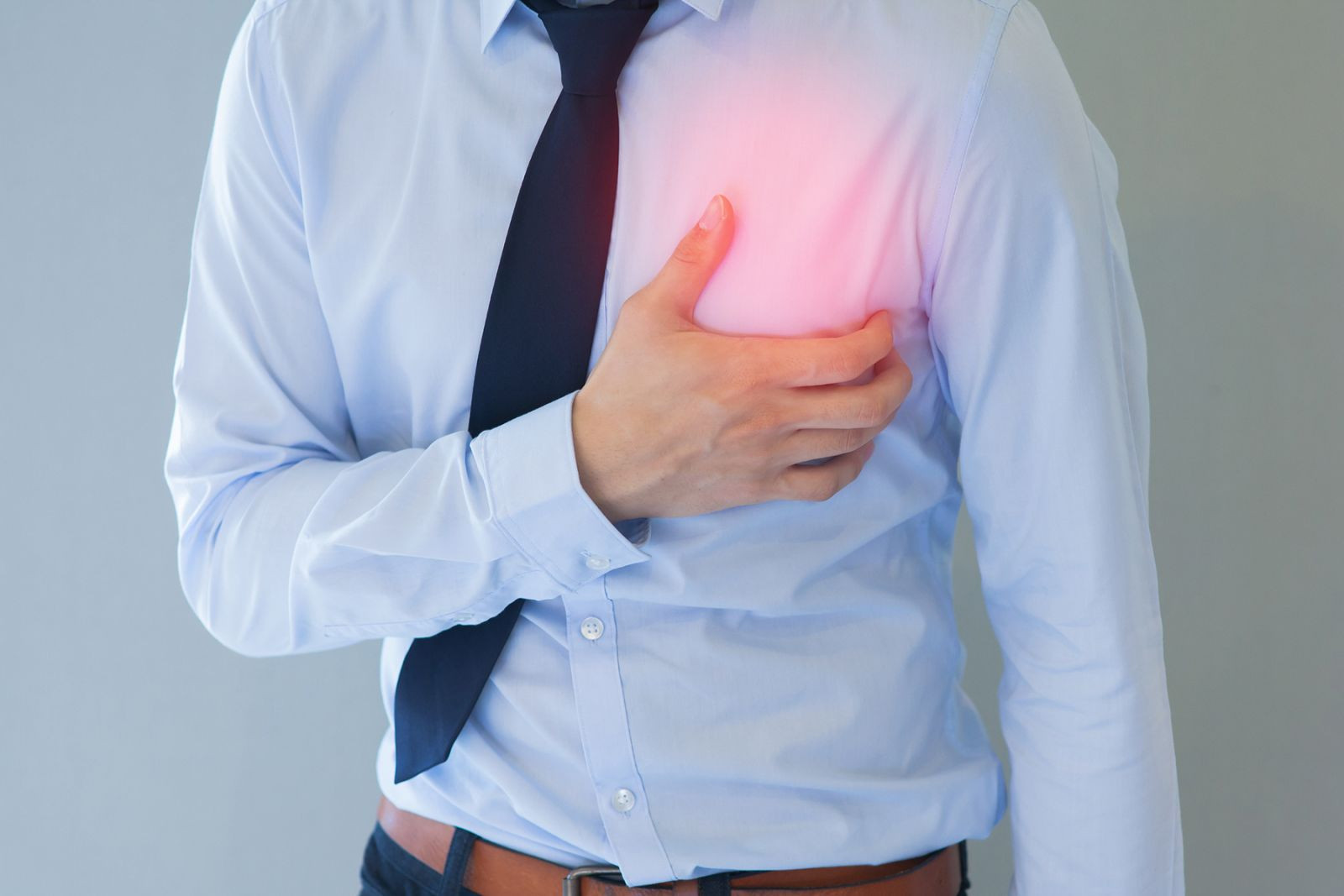
Don't ignore signs of sudden cardiac arrest
You may assume that there aren't any symptoms for sudden cardiac arrest (SCA), the deadly condition that occurs when your heart suddenly stops pumping. But a study published Jan. 5, 2016, in Annals of Internal Medicine suggests that warning signs are common and often ignored. The most common warning signs were chest pain, breathlessness, palpitations, lightheadedness or fainting, nausea, and vomiting.
Researchers looked at the health information of more than 800 people who experienced SCA, mostly middle-aged men, and discovered that about half of the people had warning signs during the four weeks leading up to SCA and even 24 hours before their hearts stopped. But most of those with warning signs ignored the symptoms. Thirty-two percent of those who called 911 before SCA survived, compared with only 6% among those who didn't call for help. That's because many of the symptoms that led people to call 911 occurred in the hours just before the SCA, so these people were likely to be in a medical care setting when their hearts stopped.

Antidote for blood thinner's side effect
There's encouraging news for people who take dabigatran (Pradaxa), a newer type of blood thinner that's had a rare side effect of uncontrolled bleeding during surgery or accidents. In October 2015, the FDA approved an antidote called idarucizumab (Praxbind), which may be able to reverse dabigatran's blood-thinning effects.
Dabigatran was approved by the FDA in 2010 and welcomed as a convenient alternative to warfarin (Coumadin) for people with certain types of atrial fibrillation, deep-vein thrombosis, or pulmonary embolism. While warfarin is generally safe and inexpensive, it takes about a week for it to become effective, and dosing is so complicated that people taking warfarin need frequent blood tests to see if the dose needs to be adjusted. Dabigatran is effective within two hours and doesn't require dose adjustment or lab monitoring. But dabigatran has caused more episodes of major bleeding than had been expected, without a way to reverse the problem.

Blood pressure: How low should you go?
A new study suggests greater health benefits with a lower-than-standard number.
Blood pressure has long been one of the best markers of your health. It is a number you can remember and monitor. High blood pressure (hypertension) is linked to a greater risk of heart attacks and strokes.
About one out of three adults has high blood pressure, which is usually defined as a reading of 140/90 millimeters of mercury (mm Hg) or higher.
Heart attack survivors can have sex without fear
Sex does not appear to trigger a heart attack or increase your risk for a second one, suggests a study in the Sept. 21, 2015, issue of the Journal of the American College of Cardiology.
Experts looked at 536 heart attack survivors ages 30 to 70 and evaluated their sexual activity in the 12 months prior to their heart attack. Sexual activity was divided into three categories: less than once a month, less than once a week, and once or more per week.
Why conquering stress can help your heart
Learning to deal with stress can lower your risk for anxiety, depression, and cardiovascular disease.
The more we learn about women's hearts, the more we realize that they are different from men's. One of the most dramatic differences is a rare heart condition called takotsubo cardiomyopathy, or broken-heart syndrome, that is nine times more common in women than in men. It has been cited as evidence that sudden emotional stress can actually cause death in some women.
Like a heart attack, takotsubo cardiomyopathy strikes suddenly with symptoms such as chest pain and shortness of breath; however, it does not involve clogged arteries. Takotsubo cardiomyopathy is brought on by a surge of stress hormones that literally bend the heart out of shape. As a result, when the main pumping chamber of the heart (the left ventricle) contracts, it balloons out, so it can't eject blood into the arteries effectively.
Women shirk cardiac rehab, study shows
Women are not only more likely than men to overlook symptoms of heart disease, they are also more likely to skip rehab once they're diagnosed, even though completing the programs has been shown to reduce the risk of death by 26%.
The Cardiac Rehabilitation for Heart Event Recovery (CR4HER) study was designed to test three types of rehab programs to see which was more effective for—and attractive to—women. Researchers randomly assigned 169 female heart patients to 24 sessions over six months in one of three rehab programs. Women in one group were visited three times in their homes by physical therapists and instructed to complete exercises on their own thereafter. Those in the other two groups were assigned to either a mixed-sex or all-female program at a rehabilitation facility.
Walnuts can lower cholesterol
Research we're watching
Walnuts are loaded with folate, vitamin E, and lots of good fats. Although they are also high in calories, they don't seem to contribute to weight gain. Researchers at Yale University Prevention Research Center wanted to determine if eating walnuts daily could help people at risk for diabetes control their cholesterol and blood sugar.
The researchers randomly assigned 112 people ages 25 to 75—70% of whom were women—to two groups. People in both groups were given 2 ounces of walnuts to eat daily. They were told to eat whatever else they wanted but to keep a record of what they ate. One group was also told to eat 366 fewer calories from other food to compensate for the calories added by the walnuts. Both groups ate the walnuts for six months, and their customary diet without walnuts for another six months.

Heart disease: All in the family history
Image: Thinkstock
Is heart disease in your genes? And if so, can you do anything about it?
Cardiovascular disease continues to be the No. 1 killer of men, and while strides have been made to reduce the risk of heart attack and stroke, one area that remains elusive is genetics.
Some prostate cancer treatments increase heart attack risk
In the journals
If you have suffered a heart attack and plan to undergo prostate cancer treatment, you may want to weigh the risks and benefits of androgen deprivation therapy (ADT). ADT decreases the amount of androgens in the body, which prostate cancer needs to grow and survive. It is also often used along with radiation therapy, and the combination has been shown to prolong survival in men with unfavorable-risk prostate cancer—defined as cancer with two or more high-risk factors, like a PSA level between 10 and 40 ng/mL, a Gleason score of 7 or higher, or biopsies with 50% or higher cancerous cells.
But a study in The Journal of the American Medical Association suggests that men who had a prior heart attack can increase their risk of a fatal one if they undergo both radiation therapy and ADT. Researchers compared overall survival and death from prostate cancer, fatal heart attack, and other causes in a group of 206 men with unfavorable-risk prostate cancer. The men received either radiation alone, or radiation and six months of ADT. The researchers also categorized the men into subgroups based on other health conditions, including heart disease.
When to treat a narrowed heart artery
Ask the doctor
Q. A test showed a 50% blockage in one of my major heart arteries. That sounds pretty bad to me, but the cardiologist said I didn't need a stent. Why?
A . Your reaction is not unusual. Many people find it hard to understand why that degree of blockage wouldn't be treated with a stent—a tiny, flexible mesh tube that props open a newly cleared artery. But while stents can be helpful, they're not risk-free. The procedure to open the artery (angioplasty) involves threading a balloon-tipped tube from the wrist or the top of the thigh up to the heart. Minor risks include discomfort and bleeding at the insertion site. Rare but more serious risks (such as a heart attack) occur in about 3% of people undergoing the procedure. And to prevent blood clots at the stent site, people need to take anti-clotting medications for up to a year afterward.
Healing after food poisoning
What is tempeh? Benefits, nutrition, and how to use it
Light exposure at night may raise risk for heart disease
Whole grains may improve several heart risk factors at once
A lumbar belt may help ease low back pain
Children of centenarians may stay healthier and live longer too, study finds
Signs of pneumonia: Sometimes vague and unexpected
The surprising link between ovarian cancer and the fallopian tubes
Using a vibration plate: What it can — and can't — do for your body
People who walk more or walk faster live longer, study finds
Free Healthbeat Signup
Get the latest in health news delivered to your inbox!
Sign Up
