

Reading the current blood pressure guidelines

Oat vs. dairy milk: Nutrition, benefits, and downsides

Microplastics: A hidden health threat?

Healing after food poisoning

What is tempeh? Benefits, nutrition, and how to use it

Light exposure at night may raise risk for heart disease

Whole grains may improve several heart risk factors at once

A lumbar belt may help ease low back pain

Children of centenarians may stay healthier and live longer too, study finds

Signs of pneumonia: Sometimes vague and unexpected
Heart Disease Archive
Articles

Cardiac rehab: Even better with stress reduction
Cardiac rehabilitation—a supervised program to help people recover after a heart attack or heart surgery—may be more helpful if it includes stress reduction training, according to a study published online March 21 in the journal Circulation.
Researchers compared three groups of heart patients: people who did cardiac rehab for 12 weeks, those who did cardiac rehab plus stress reduction, and those who chose not to participate in cardiac rehab. The stress reduction group engaged in weekly, 1.5 hour-long sessions that included small group discussions and training in stress reduction, coping skills, and relaxation techniques.

Drink more water to cut calories, fat, and sugar?
Increasing daily water intake by one, two, or three cups daily can help reduce total calorie intake and lower a person’s intake of saturated fat, sugar, sodium, and cholesterol.

Mammograms identify heart disease risk
Research We’re Watching
Image: Frans Rombout/Thinkstock
When specks of calcium appear in ductal tissue on mammograms, they can indicate a small cancer. But when calcifications are found in the breast arteries, they haven't been a cause for concern. However, in recent years, physicians have begun to suspect that arterial calcifications in the breast, like calcifications in the coronary arteries of the heart, can be an early sign of cardiovascular disease.
A team of researchers at Mount Sinai St. Luke's Medical Center in New York City studied the test results of 292 women who'd had digital mammography and non-contrast CT chest scans within a year. None of the women were known to have heart disease. They found that 42.5% of the women had evidence of breast artery calcifications on mammography, and of these, 70% also had evidence of coronary artery calcification on their CT scans. Moreover, 63% of those whose CT images revealed coronary artery calcifications had breast artery calcifications as well. Over all, the results indicated that women with breast artery calcifications are three times as likely as those who don't to have coronary artery calcifications. The study was published online March 24, 2016, by JACC Clinical Imaging.
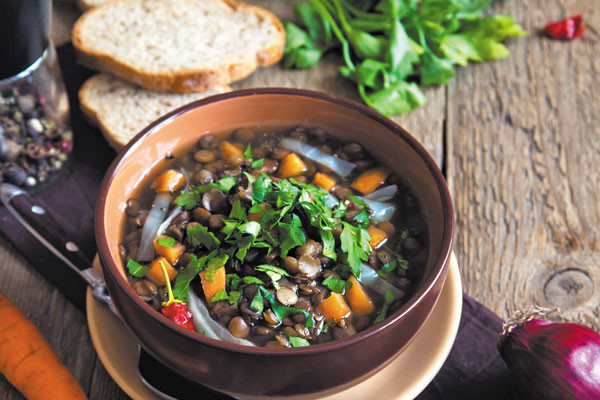
What do heart experts eat for dinner?
They follow their own advice to enjoy lots of vegetables, legumes, lean protein, and a fruit-based dessert.
Image: Mizina/Thinkstock
Following a healthy diet is a proven and powerful way to lower your risk of heart disease. But do you ever wonder if doc-tors actually practice what they preach, especially with regard to their eating habits? While we obviously can't speak for all of them, four Harvard physicians with diverse ethnic backgrounds agreed to share examples of their favorite heart-healthy dinner menus.
Dr. Enrique Caballero, assistant professor of medicine
A native of Mexico, Dr. Caballero directs the Latino Diabetes Initiative at the Joslin Diabetes Center; his research interests include cardiovascular disease prevention.

Atrial fibrillation: The latest treatment trends
About one in six strokes can be traced to atrial fibrillation. Doctors now have newer and better options to lessen this risk.
Close to one in 10 people ages 65 or older have atrial fibrillation (afib), the most common heart rhythm disorder. During a bout of afib, the usually rhythmic contractions of the heart's upper chambers (the atria) are replaced by an ineffectual quiver. While the symptoms, which include a racing heartbeat, dizziness, and shortness of breath, are troublesome for some people, the real threat lies in the increased risk of stroke that accompanies the condition.
When the heart takes on the afib rhythm, blood does not completely move out of the atria. Instead, it tends to pool and clot in a pouchlike extension in the upper left quadrant of the heart, called the left atrial appendage. If these clots break loose, they may travel to the brain and cause a blockage. This is known as an ischemic stroke.

Lend a hand, help your heart?
People who do volunteer work may reap benefits beyond the satisfaction of helping others.
Doing volunteer work may give you a greater sense of purpose in life—a positive emotion that’s been linked to a lower risk of heart disease.
Image: monkeybusinessimages/Thinkstock
If you volunteer on a regular basis, perhaps you've experienced the emotional rewards of donating your time. What you might not realize, however, is that volunteering may offer some added advantages for your heart.
Can mammograms help reveal heart disease?
Research we're watching
Mammograms, which are widely used to detect early breast cancer, may also be an effective tool for spotting early signs of heart disease, a small study suggests.
The study, in the April JACC: Cardiology Imaging, involved nearly 300 women free of heart disease. All underwent both a mammogram and a computed tomography (CT) scan of the chest. The mammograms showed calcifications (which look like a chalked line) in the arteries within the breast in just over 40% of the women. These artery calcifications are different from the irregular spots of calcifications that may indicate early cancer.

While waiting for your flight, learn how to save a life
Research we're watching
Image: Highwaystarz/Thinkstock
If your summer vacation plans include a stop at one of the nation's major airline hubs, you can put your waiting time to good use by learning cardiopulmonary resuscitation (CPR). The American Heart Association and the Anthem Foundation partnered to provide interactive training kiosks that teach people how to perform hands-only CPR in just five minutes. The pilot kiosk program at the Dallas/Fort Worth International Airport has trained more than 25,000 people so far.
The training includes a short a "how-to" video followed by a practice session on a rubber torso. You'll receive feedback about proper hand placement and the correct depth and rate of chest compressions—factors that influence the effectiveness of CPR. More than 20% of the estimated 359,000 cardiac arrests that occur outside the hospital each year happen in public places like airports, casinos, and sporting facilities.

High blood pressure: Why me?
It can be tough to accept a diagnosis of hypertension. It often causes no symptoms, and when doctors diagnose it, they often mention the consequences that may someday happen if it isn’t controlled. This can be a lot to take in if you’re feeling fine! Fortunately, hypertension is easily controlled — and staying on top of the treatment is the first step toward taming this “silent killer.”
Reading the current blood pressure guidelines
Oat vs. dairy milk: Nutrition, benefits, and downsides
Microplastics: A hidden health threat?
Healing after food poisoning
What is tempeh? Benefits, nutrition, and how to use it
Light exposure at night may raise risk for heart disease
Whole grains may improve several heart risk factors at once
A lumbar belt may help ease low back pain
Children of centenarians may stay healthier and live longer too, study finds
Signs of pneumonia: Sometimes vague and unexpected
Free Healthbeat Signup
Get the latest in health news delivered to your inbox!
Sign Up
