

Even a little exercise linked with lower stroke risk in people with afib

Testosterone therapy without evidence of deficiency may boost heart risk

Weight-loss drug may lower risk of heart attacks and infections

What to eat on the DASH diet

Migraine: How it's diagnosed and what that means

Tricep workouts you can do at home

Mindfulness practices to reduce stress and improve focus

Antihistamines may not offer meaningful relief from eczema symptoms

Overweight and taking blood pressure medications: Study finds it's a trend that's working

FDA approves first mRNA-based flu vaccine
Cholesterol and lipids Archive
Articles

New thinking about beta blockers
Beta blockers are no longer the first line of defense used to lower blood pressure. |
If you have high blood pressure, there may be better alternatives.

"Advanced" cholesterol testing: Is it for you?
A discussion with your doctor can help to determine whether an advanced cholesterol test will be beneficial for you. |
For most people, there is no advantage to tests that measure cholesterol and triglyceride particle size.

PCSK9 inhibitors: a major advance in cholesterol-lowering drug therapy
Every so often, a medical advance comes along that rewrites the script for treating a disease or condition. After today’s announcement of impressive results of a new type of cholesterol-lowering drug, that scenario just might happen in the next few years. The results of three clinical trials presented today at the annual meeting of the American College of Cardiology, and simultaneously published in the New England Journal of Medicine, suggest that a class of new drugs called PCSK9 inhibitors can dramatically reduce the amount of harmful LDL cholesterol circulating in the bloodstream and prevent heart attacks, strokes, and other problems related to cholesterol-clogged arteries. The drawbacks are that PCSK9 inhibitors must be given by injection every 2 to 4 weeks, may cause mental confusion or trouble paying attention, and, if approved, will likely be expensive.
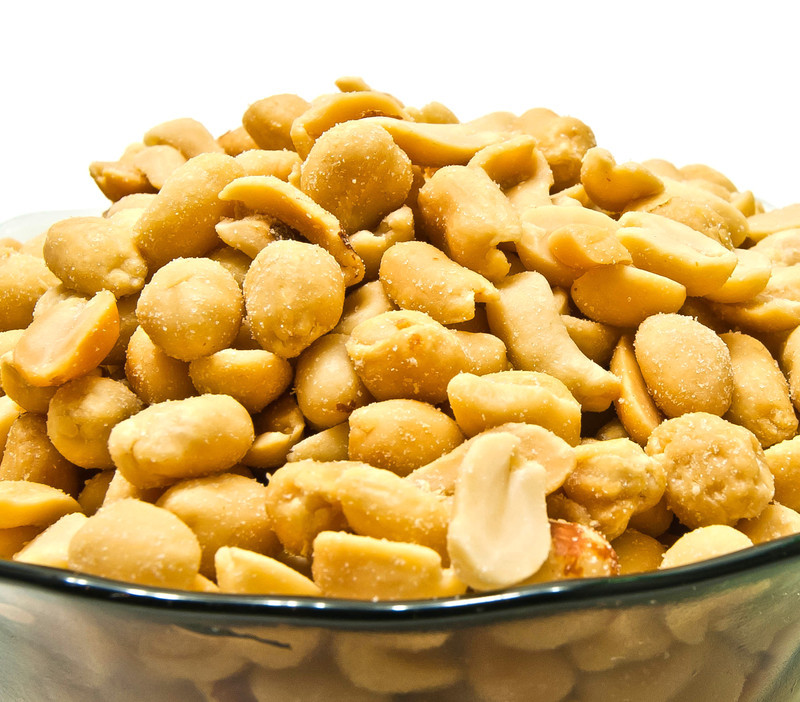
Peanuts linked to same heart, longevity benefits as more pricey nuts
Nuts have been gaining traction as an all-natural health food. Tree nuts like almonds, pecans, and walnuts are especially prized for their rich cargo of vitamins, minerals, and mono- and polyunsaturated fats. The downside is that tree nuts tend to be pricey. But a study published online this week in JAMA Internal Medicine puts the humble peanut squarely in the same nutritional league as its upscale cousins. This work makes the health benefits of nuts more accessible to lower-income shoppers. An international team of researchers found that in more than 200,000 people from Savannah to Shanghai, those who regularly ate peanuts and other nuts were substantially less likely to have died of any cause — particularly heart disease — over the study period than those who rarely ate nuts. A key take-home message from this study is that eating peanuts appears to be just as potent for preventing heart disease as eating other nuts.

Sauna use linked to longer life, fewer fatal heart problems
Sitting in a sauna is one way to chase away the cold. A new report in JAMA Internal Medicine makes this pastime even more appealing: regularly spending time in a sauna may help keep the heart healthy and extend life. Among 2,300 middle-aged Finnish men, those who took a sauna bath four or more times a week were less likely to have died over a 20-year period than those who took a sauna once a week or less. Frequent visits to a sauna were also associated with lower death rates from cardiovascular disease and stroke. Sauna baths are generally safe and likely beneficial for people with well-controlled coronary artery disease or mild heart failure, but may not be so hot for those with unstable angina or a recent heart attack. The high temperature in a sauna can boost the heart rate to a level often achieved by moderate-intensity physical exercise. Is sitting in a sauna the equivalent of exercising? No. But exercising and then taking a sauna seems like a very healthy routine.
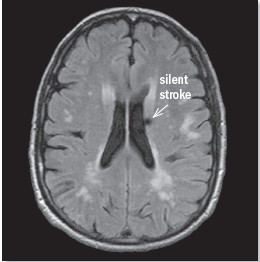
Reduce your risk of silent strokes
As seen on this MRI scan, a silent stroke |
Exercise, eat a healthy diet, and manage blood pressure and cholesterol to lower your odds.

Ask the doctor: Stroke danger from a hole in the heart?
Q. I just discovered that I have a hole in my heart that my doctor called a patent foramen ovale, which was found during an ultrasound. What are the pros and cons of having it repaired?
A. All people start off with an oval, flap-like opening (called a foramen ovale) between the right and left upper chambers of their hearts. This small hole usually closes during infancy. But in about one in four people, it stays open and is known as a patent foramen ovale (PFO). Most people with the condition have no symptoms and never know they have it unless it's discovered by accident, as happened to you.

The problem with plaque: Even lesser amounts are still risky
Known as non-obstructive coronary artery disease, this condition can trigger heart attacks down the road.
You just had a cardiac stress test and you passed with flying colors. Does that mean you are free of heart attack risk? Not necessarily, says Dr. Ron Blankstein, assistant professor of medicine at Harvard Medical School and preventive cardiologist at Brigham and Women's Hospital.

Can deep, slow breathing lower blood pressure?
Long, slow breaths may help dampen nerve activity that governs your blood pressure. Image: Thinkstock |
A device called RESPeRATE may help, but questions remain.

A new way to "beet" high blood pressure?
Images: Thinkstock |
Beets rarely rank high on anyone's list of most-loved vegetables. But here's a reason to give these ruby-red roots another try: beet juice may help lower blood pressure, according to a study in the February 2015 Hypertension.
Beets contain naturally high levels of nitrates, which your digestive system converts into nitric oxide. This compound relaxes and widens blood vessels, which, in turn, lowers blood pressure.
Even a little exercise linked with lower stroke risk in people with afib
Testosterone therapy without evidence of deficiency may boost heart risk
Weight-loss drug may lower risk of heart attacks and infections
What to eat on the DASH diet
Migraine: How it's diagnosed and what that means
Tricep workouts you can do at home
Mindfulness practices to reduce stress and improve focus
Antihistamines may not offer meaningful relief from eczema symptoms
Overweight and taking blood pressure medications: Study finds it's a trend that's working
FDA approves first mRNA-based flu vaccine
Free Healthbeat Signup
Get the latest in health news delivered to your inbox!
Sign Up
