

Healing after food poisoning

What is tempeh? Benefits, nutrition, and how to use it

Light exposure at night may raise risk for heart disease

Whole grains may improve several heart risk factors at once

A lumbar belt may help ease low back pain

Children of centenarians may stay healthier and live longer too, study finds

Signs of pneumonia: Sometimes vague and unexpected

The surprising link between ovarian cancer and the fallopian tubes

Using a vibration plate: What it can — and can't — do for your body

People who walk more or walk faster live longer, study finds
Balance Archive
Articles

Should I drop calories or boost exercise?
Ask the doctor
Image: © udra/Thinkstock
Q. To lose weight, should I focus more on my calorie count or the amount of time I spend exercising?
A. It is very, very hard to lose weight without both watching your calories and regularly exercising. But it's not that simple. For years, doctors (including me) told patients: "You've got to burn off more calories through exercise than the calories that you eat. If you do that, you'll maintain a healthy weight." We even implied that not being able to maintain a healthy weight, since it was so simple, reflected a weakness of character.

The value of prevention
Treating heart disease is expensive. Adopting heart-healthy habits can save money as well as lives.
If you exercise, eat right, and follow other heart-friendly habits, you're probably less likely to end up in the hospital with a heart problem. And — no surprise here — that translates to far lower health care costs. The average hospital charge for a heart operation or related procedure is about $85,000 (see "The price of treating heart disease").
A recent report shed light on the magnitude of the savings realized from heart disease prevention strategies. The study, published in the Feb. 1, 2017, Journal of the American Heart Association, focused on Medicare claims for more than 6,200 people over age 65. Health care costs were about $5,000 less per year in people with the most heart-healthy factors compared with those with the least number of factors. If all Medicare beneficiaries followed five of seven key heart-healthy habits (see "Life's Simple 7") to reduce cardiovascular disease, it would save more than $41 billion a year in Medicare costs, the study authors estimated.

Is it possible for weekend warriors to get enough exercise?
On call
Image: © Nastco/Thinkstock
Q. I am an active person, but I exercise only on the weekends. Should I be concerned that all my exercise is concentrated over just two days ?
A. Regular exercise at any time is beneficial to your health. The rewards are related more to the amount of weekly exercise, and less to the type of workout or frequency. In fact, a recent study, which recorded self-reported exercise habits in more than 60,000 adults, found that weekend-only exercise had similar gains to regular daily exercise.
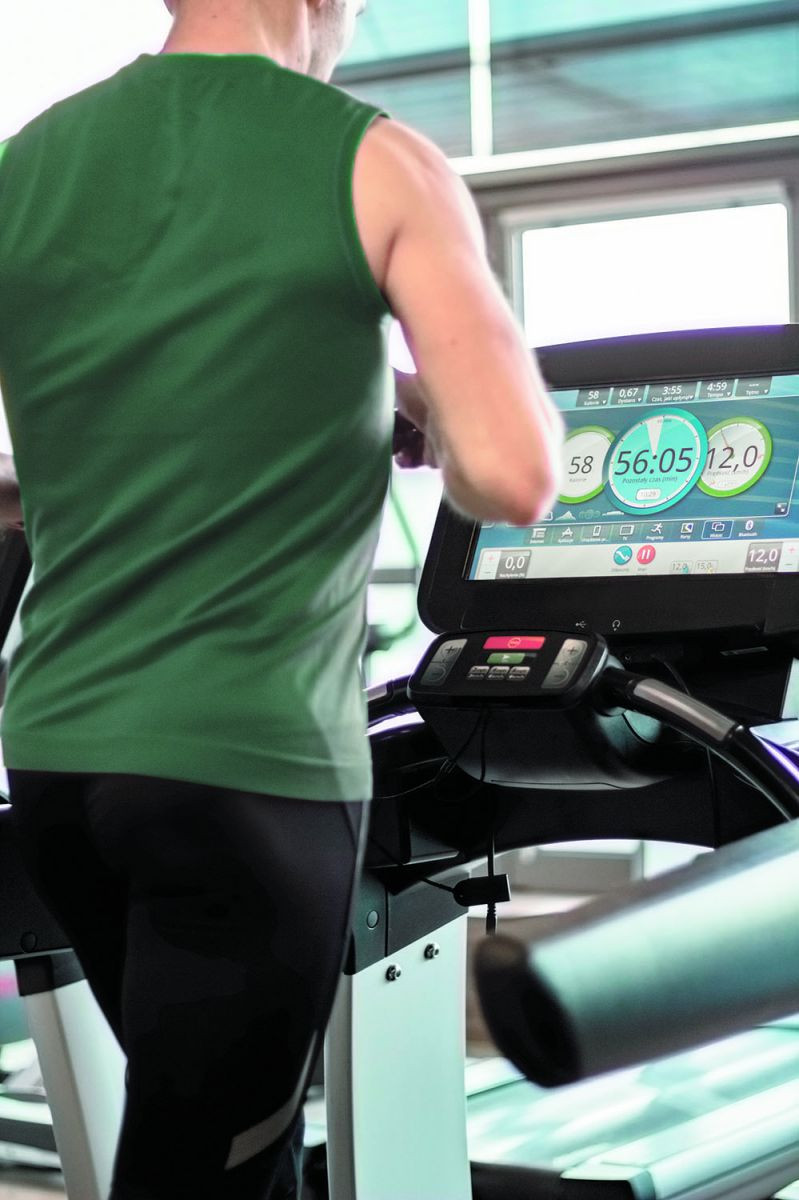
Get smart about treadmills
Treadmills are among the most effective types of exercise equipment — if you know how to use them.
Cardio exercise is essential for all-around health, but many older men have trouble hitting the recommended 150 minutes of moderate-intensity exercise per week. And some people may have limitations that prevent them from doing traditional cardio workouts like walking, running, or swimming.
But there may be another option: the standard gym treadmill.

Just 45 minutes of weekly activity may help with arthritis
In the journals
Studies have shown that regular activity can help older adults with arthritis stay independent. How much is enough? Research published online Dec. 28, 2016, by Arthritis Care & Research suggests you may need as little as 45 minutes per week.
Federal guidelines recommend 150 minutes of moderate activity per week to prevent premature death and serious illness. However, reaching that number is tough to reach for people with arthritis; in fact, only one in eight men with knee arthritis meet this standard. In this study, researchers tracked several years of fitness activity for 1,629 adults (44% of whom were men), ages 49 to 83, with osteoarthritis in the hip, knee, foot, or some combination. Specific exercises or activities were not recorded, only the time invested per week.

Sticking with your exercise program
Exercise shouldn't be something you do only when you want to drop those 10 extra pounds or prepare for the charity 10-kilometer run. To be successful, it should be something you do as routinely as eating, sleeping, and taking your morning shower. That can be difficult, as you may already know. The information below may help you stay on course when your motivation starts to flag. Remember, the result is worth the effort.
The value of maintaining an exercise program became evident when the results of the Harvard Alumni Health Study were published in the New England Journal of Medicine. The men who had been moderately active but later became sedentary had a 15% higher risk of death than their counterparts who had never been active. On the other hand, those who started and kept up an exercise program had a 23% lower risk of death, which approaches the 29% decrease in risk enjoyed by the men who'd always been active. But knowing the benefits of lifelong exercise or even creating a personal exercise plan will be of little use if you don't stick to your program. As you plan an exercise routine, you need to prepare for the challenges that await you, so you won't be thrown off track.

A win for weekend warriors?
Exercising just one or two days a week may lower the odds of dying of heart disease.
Image: © Jupiterimages/Thinkstock
If you find it difficult to fit a workout into your daily schedule, here's some encouraging news: exercising even just once or twice a week appears to help your heart, new research suggests.
The findings, which were based on the self-reported exercise habits of more than 63,500 people, were published March 6, 2017, in JAMA Internal Medicine. Among people who exercised enough to meet federal physical activity recommendations, those who did all their exercise on one or two days a week — so-called weekend warriors — had 40% lower risk of death from heart disease than people who were inactive (see "Exercise patterns: How much do time and intensity matter?").
Walking movements may predict memory decline
In the journals
Previous research has suggested that slow walking speed might predict cognitive decline, but a recent study suggests how you walk also may provide clues. The results were published online Nov. 19, 2016, by the Journal of Alzheimer's Disease.
Researchers examined medical records of more than 3,400 people ages 70 to 89 who had completed both a neurological examination and gait analysis to measure walking movements like stride length, step count, cadence, stance time, and arm swings.
Leisure time exercise
Like his father and grandfather before him, the typical American man of the 21st century works for his living. In most cases, though, he works with his mind, not his body.
It wasn't always that way. As recently as the 19th century, 30% of all the energy used in the American workplace was provided by human muscle power; today, the percentage is minuscule. In most ways, the transition from an agricultural economy to an industrial society to today's information age has been a great boon. But something has also been lost.
Aerobic Fitness Test: The Step Method
To help assess your aerobic fitness, here is a minimum standard: See if you can walk up five flights of stairs at your own pace without stopping, using the railing only for balance. The test may seem too simple to be useful, but in the days before sophisticated exercise tests were widely available, thoracic surgeons used this very test to see if their patients were fit enough to undergo lung operations. In modern terms, people who pass the five-flight test have maximum oxygen uptake values of at least 20. That level will get you through surgery and daily life, but healthy people should use exercise to build up to levels two or even three times higher.
It is unlikely that a health club would ask you to use the stairwell for self-assessment, but it might well use a single 12-inch step or bench to evaluate your fitness. With just a little help, you can do it yourself. Ask someone to time you and count for you so you can concentrate on the task at hand (or foot!). At the signal to begin, step up with your right foot, then bring your left foot up beside it. Follow the "up, up" with "down, down" to complete one step. Repeat at a rate of 24 steps per minute for three consecutive minutes. Then rest in a chair for exactly one minute before taking your pulse. Finally, use the YMCA standards (see table below) to see how you stack up.
Healing after food poisoning
What is tempeh? Benefits, nutrition, and how to use it
Light exposure at night may raise risk for heart disease
Whole grains may improve several heart risk factors at once
A lumbar belt may help ease low back pain
Children of centenarians may stay healthier and live longer too, study finds
Signs of pneumonia: Sometimes vague and unexpected
The surprising link between ovarian cancer and the fallopian tubes
Using a vibration plate: What it can — and can't — do for your body
People who walk more or walk faster live longer, study finds
Free Healthbeat Signup
Get the latest in health news delivered to your inbox!
Sign Up
