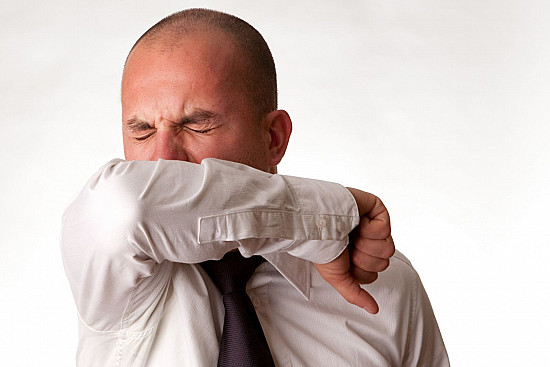
Could a lingering cough after a cold signal asthma?
Ask the doctor

Q. For the second time, I developed prolonged coughing and wheezing after a cold. My doctor called it reactive airways disease. Does that mean I have asthma? If yes, what can I do to minimize symptoms? Are my children more likely to also develop asthma?
A. Just because a person has wheezing and a cough, it doesn't mean they have asthma. Reactive airways disease means that your bronchial tubes have become more sensitive. They are inflamed, causing them to constrict and produce more mucus. If it is temporary, such as after a bad cold, then your airways are reactive but you may not have asthma.
To determine if you have developed asthma, ask your doctor about getting formal lung testing.
If you have asthma, there are excellent ways to prevent symptoms. The most important is to avoid exposure to allergy triggers. Steps for avoiding triggers include:
Pollen exposure. Keep windows closed when you sleep at night. Do not dry laundry outside, as pollen can collect on your clothes. Change your clothes after you have been outside for an extended time. Consider an evening shower with a thorough hair rinse before going to bed.
Dust mite exposure. Encase pillows, mattresses, and box springs in allergen-proof materials. Wash your sheets at least once a week in hot water.
Cockroach exposure. Don't leave food out overnight, and keep food stored in sealed containers. Empty your garbage each evening. Quickly repair leaky pipes, as standing water can attract roaches.
Can you prevent asthma, or allergies in general, from starting? Some actions might help, but there is no sure way to prevent allergies. Much of your children's risk relates to family history. Having a parent with asthma gives a child a one in four chance of developing the disorder. If both parents are affected, the odds are one in two that the child will be asthmatic. A child can also inherit atopy, a tendency to develop the allergies that underlie many cases of asthma in children.
Consider these strategies that you can control that might help prevent asthma in children:
Reduce exposure to smoke. Living with a smoker boosts the odds of a child developing asthma.
Breastfeed your infant longer than three months. This has been shown to lead to fewer skin allergy (eczema) symptoms.
Expose children to animals. Kids who live on farms have lower rates of allergy than children who live in cities. Children who have daily exposure to cats and dogs during early infancy are less likely to be allergic to cats, dogs, and other allergens later in childhood.
Image: © Charday Penn/Getty Images
About the Author

Howard E. LeWine, MD, Chief Medical Editor, Harvard Health Publishing; Editorial Advisory Board Member, Harvard Health Publishing
Disclaimer:
As a service to our readers, Harvard Health Publishing provides access to our library of archived content. Please note the date of last review or update on all articles.
No content on this site, regardless of date, should ever be used as a substitute for direct medical advice from your doctor or other qualified clinician.