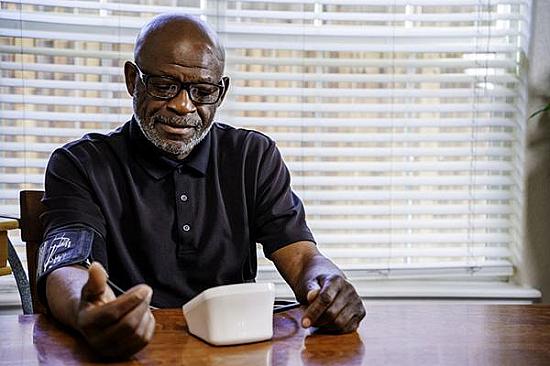
Breathing exercises to lower your blood pressure
For some people, a regular breathing practice may reduce blood pressure as much as a medication.
- Reviewed by Elizabeth Pegg Frates, MD, FACLM, DipABLM, Contributor
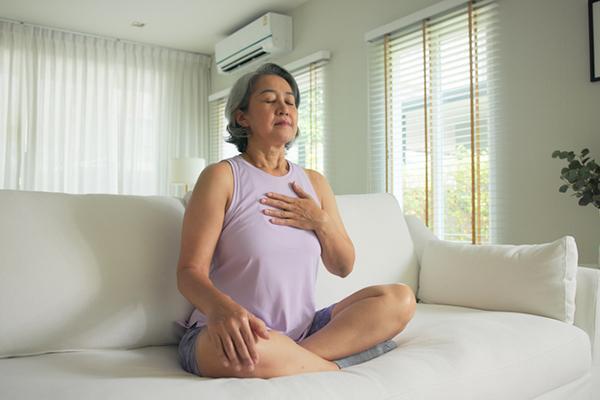
The average person breathes in and out some 22,000 times each day, usually with little effort or thought. But what happens if you deliberately slow down your breathing for a little while each day? At rest, most adults take about 12 to 18 breaths per minute. Slow breathing is usually defined as anywhere from six to 10 breaths per minute and features a prolonged exhalation.
"Practicing slow, deep breathing for 15 minutes a day can help lower your blood pressure," says Dr. Beth Frates, a lifestyle medicine coach and associate professor of medicine at Harvard Medical School. For people with high blood pressure, the practice can potentially reduce systolic blood pressure (the first number in a reading) by up to 10 points, she says.
Deep breathing benefits
Deep breathing stimulates the vagus nerve, which runs from the brain to the colon. This activates the "rest and digest" response of your nervous system, Dr. Frates explains.
As you slowly inhale, your diaphragm (the strong sheet of muscle that separates your chest from your abdomen) contracts and pulls downward. A larger volume of air in the lungs delivers extra oxygen to your body and brain, which increases the release of feel-good chemicals called endorphins and lowers levels of epinephrine, a stress hormone.
As you exhale, the diaphragm presses back upward against your lungs. As air moves out of your lungs, your blood pressure rises slightly. To counteract that rise, your nervous system automatically lowers your heart rate and widens your blood vessels - part of the "rest and digest" response. Prolonging your exhalation takes advantage of this reflex.
What's the evidence?
A review article published in Frontiers in Physiology looked at the effects of various breathing exercises in people with high blood pressure. Of the 20 studies included in the review, 17 documented declines in both systolic and diastolic blood pressure (diastolic is the second number in a reading). The studies varied widely in terms of how long, how often, and what type of breathing exercises the participants did, so it's hard to provide one specific prescription. But it's likely that many types of breathing practice can be beneficial. Following are Dr. Frates' suggestions.
For inspiration, count breaths
"Many people like to use a counting strategy to help them focus," says Dr. Frates. One common pattern is 4-7-8 breathing, which involves inhaling for four counts, holding for seven, and exhaling for eight. Purse your lips like you're blowing out candles on a birthday cake to help slow down your exhalation.
Another pattern is box breathing, in which you "draw" a box in your mind's eye as you breathe, as follows:
- Inhale for four counts (the height of one side of the box)
- Hold for a count of four (the length of the box)
- Exhale for four counts (the height of the other side)
- Hold for another four counts (the length of the other side).
Belly breathing
You might also try diaphragmatic or belly breathing, which takes a little practice to master but can be very relaxing, says Dr. Frates. Here are the steps:
- Place one hand on your upper chest and the other just below your rib cage.
- Breathe in slowly through your nose, letting the air in deeply, toward your abdomen. The hand on your chest should remain still, while the one on your belly should rise.
- As you exhale through pursed lips, allow your abdomen to contract. The hand on your belly should move down to its original position.
Device-guided breathing
Other people may prefer using a device to guide their breathing. Inspiratory muscle strength training (IMST) uses a small, handheld device that provides resistance as you inhale and exhale. You can buy the devices online for less than $20. In 2021, a well-designed study in the Journal of the American Heart Association showed that doing IMST for just 30 breaths per day, six days per week, reduced systolic blood pressure by an average of nine points within six weeks.
A more elaborate option is an FDA-cleared device called Resperate, sold online for $99. It features a chest strap with a sensor to monitor your breathing pattern. You follow musical cues via headphones to gradually slow down your breathing.
Want to give breathing exercises a try?
If you've been diagnosed with hypertension, breathing exercises are a safe and potentially effective way to lower your blood pressure. But don't make any changes to your medicines without discussing it with your doctor. And be sure to get your blood pressure checked regularly.
Image: © ChayTee/Getty Images
About the Author

Julie Corliss, Executive Editor, Harvard Heart Letter
About the Reviewer

Elizabeth Pegg Frates, MD, FACLM, DipABLM, Contributor
Disclaimer:
As a service to our readers, Harvard Health Publishing provides access to our library of archived content. Please note the date of last review or update on all articles.
No content on this site, regardless of date, should ever be used as a substitute for direct medical advice from your doctor or other qualified clinician.