










When is treatment needed for high uric acid?
Ask the doctor
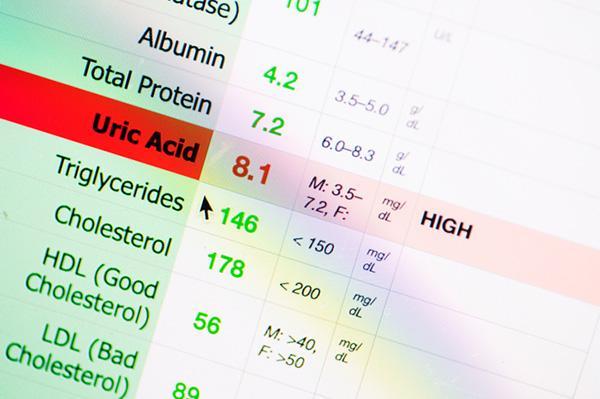
Q. My blood uric acid level is high at 8.1 mg/dL. I may have had an attack of gout in my big toe two years ago, but I never went to see a doctor. It got better with Aleve. Do I need medicine to lower my uric acid? I would like to avoid that if possible.
A. If you've only had gout once, you and your doctor can discuss to the pros and cons for starting daily drug therapy to lower the uric acid level.
Uric acid comes from the breakdown of purines. Purines are a group of chemicals that are in all body tissues and in many foods. Our bodies are always processing purines. Normally our bodies, especially our kidneys, can keep uric acid levels from getting too high.
When blood uric acid levels rise above 7.0 mg/dL (men) or 5.7 mg/dL (women), it's called hyperuricemia. This happens when you make too much uric acid or your kidneys can't get rid of normal uric acid production. Or it could be a combination of both problems.
Not everyone with hyperuricemia gets gout. In fact, only one out of five people do. Today, 21% of American adults have hyperuricemia. And only 4% of them also have gout.
Here are the main reasons when doctors recommend taking daily medicine to lower blood uric acid levels:
- more than two or three attacks of gout per year
- attacks of gout that don't respond quickly to anti-inflammatory medicine
- kidney stones related to high levels of uric acid in urine
- gout that attacks multiple joints at the same time (polyarticular gout)
- the presence of tophi: Tophi are clumps of uric acid crystals that can form anywhere in the body. When they form, they often can be seen on the skin. Typical places are near joints and the outer ear.
You can help lower uric acid levels by
- eating only the calories you really need
- exercising regularly to keep up a healthy body weight
- avoiding red meats, especially processed meats
- limiting sugary foods and beverages
- drinking no more than one alcoholic beverage per day, or completely avoiding alcohol.
Coffee (both regular and decaffeinated) also lowers uric acid levels, as long as you don't add too much sugar. In some people, vitamin C may help lower uric acid levels too.
Image: © MarioGuti/Getty Images
About the Author

Howard E. LeWine, MD, Chief Medical Editor, Harvard Health Publishing; Editorial Advisory Board Member, Harvard Health Publishing
Disclaimer:
As a service to our readers, Harvard Health Publishing provides access to our library of archived content. Please note the date of last review or update on all articles.
No content on this site, regardless of date, should ever be used as a substitute for direct medical advice from your doctor or other qualified clinician.


