What foods are high in potassium?
Ask the doctor
Q. My friend has stage 3 kidney disease. His doctor asked him to eat foods low in potassium. So far, we can't find potassium in the nutrition information available on food labels. Is there anywhere he can get a list of foods low in potassium?
A. You can have a high blood potassium level (hyperkalemia) for several reasons. Kidney disease is one of the most common causes. And medicine that makes the kidneys hold on to potassium can also cause it, including:
- certain diuretics such as spironolactone (Aldactone, generic) and triamterene (Dyrenium, generic)
- angiotensin converting enzyme inhibitors (ACE inhibitors)
- angiotensin-receptor blockers (ARBs)
- nonsteroidal anti-inflammatory drugs such as ibuprofen or naproxen.
Two other causes of high potassium include:
- using a salt substitute that has potassium in it
- taking a potassium supplement.
Instead of looking for foods low in potassium, it might be easier for your friend to avoid foods that are high in potassium.
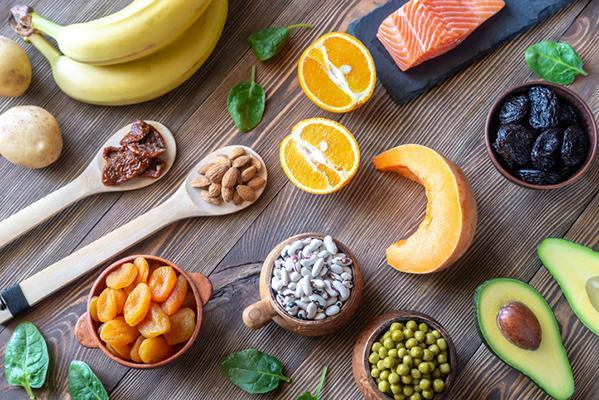
Here is a list of foods with high potassium content:
|
Food (serving) |
Potassium (milligrams) |
|
Potato with skin, baked (1 medium) |
926 |
|
Halibut, baked (4 ounces) |
654 |
|
Raisins (1/2 cup) |
543 |
|
Banana (medium) |
451 |
|
Acorn squash, cooked (1/2 cup) |
448 |
|
Spinach, cooked (1/2 cup) |
419 |
|
Tomato sauce (1/2 cup) |
405 |
|
Lentils, cooked (1/2 cup) |
365 |
|
Cantaloupe (1/4 medium) |
365 |
|
Kidney beans, cooked (1/2 cup) |
356 |
|
Orange juice (6 ounces) |
354 |
|
Bran breakfast cereal (1/2 cup) |
340 |
|
Milk, low-fat 1% (1 cup) |
290 |
|
Orange (1 whole) |
260 |
Image: © AlexPro9500/Getty Images
About the Author

Howard E. LeWine, MD, Chief Medical Editor, Harvard Health Publishing; Editorial Advisory Board Member, Harvard Health Publishing
Disclaimer:
As a service to our readers, Harvard Health Publishing provides access to our library of archived content. Please note the date of last review or update on all articles.
No content on this site, regardless of date, should ever be used as a substitute for direct medical advice from your doctor or other qualified clinician.