

Whole grains may improve several heart risk factors at once

Light exposure at night may raise risk for heart disease

Children of centenarians may stay healthier and live longer too, study finds

A lumbar belt may help ease low back pain

Signs of pneumonia: Sometimes vague and unexpected

Using a vibration plate: What it can — and can't — do for your body

The surprising link between ovarian cancer and the fallopian tubes

People who walk more or walk faster live longer, study finds

Rosacea treatments: What works?

For sleep apnea, a dental device may be as effective as CPAP
Step-by-step guide to performing Kegel exercises
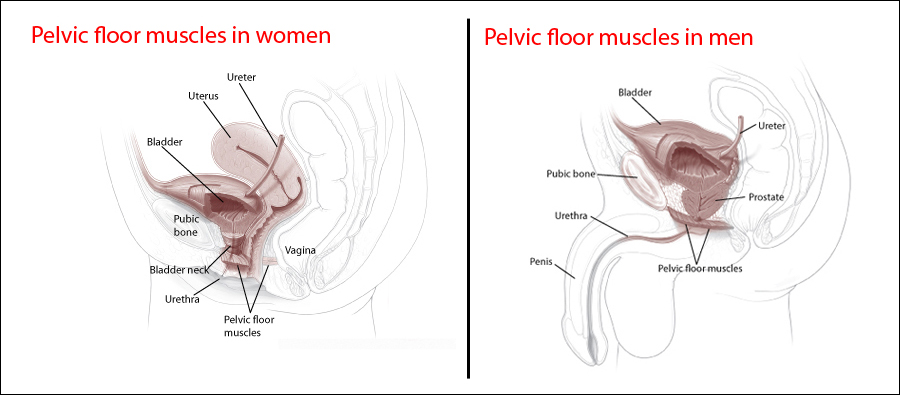
Doing Kegels right means find your pelvic floor muscles and working them.
Kegel exercises won't help you look better, but they do something just as important — strengthen the muscles that support the bladder. Strong pelvic floor muscles can go a long way toward warding off incontinence.
These exercises were developed in the late 1940s by Dr. Arnold H. Kegel, an American gynecologist, as a nonsurgical way to prevent women from leaking urine. They also work for men plagued by incontinence.
Although Kegel exercises themselves are simple, finding the right muscles to exercises isn't. One-third or more of women and men who do Kegels are actually working their abdominal, buttock, or inner thigh muscles. They don't reap the benefits of the exercises.
Locate your pelvic muscles
Several techniques can be used to find the right set of muscles to exercise.
Women:
Pretend you are trying to avoid passing gas.
Pretend to tighten your vagina around a tampon.
Men:
Pretend you are trying to avoid passing gas.
While urinating, try to stop your urine stream.
If you've identified the right muscles, you'll feel the contraction more in the back of the pelvic area than the front.
Practice contractions
Choose your position. Start by lying on your back until you get the feel of contracting the pelvic floor muscles. When you have the hang of it, practice while sitting and standing.
Contract and relax
- Contract your pelvic floor muscles for 3 to 5 seconds.
- Relax for 3 to 5 seconds.
- Repeat the contract/relax cycle 10 times.
Keep other muscles relaxed. Don't contract your abdominal, leg, or buttock muscles, or lift your pelvis. Place a hand gently on your belly to detect unwanted abdominal action.
Extend the time. Gradually increase the length of contractions and relaxations. Work your way up to 10-second contractions and relaxations
Aim high. Try to do at least 30 to 40 Kegel exercises every day. Spreading them throughout the day is better than doing them all at once. Since these are stealth exercises that no one notices but you, try to sneak in a few when waiting at a stoplight, riding an elevator, or standing in a grocery line.
Diversify. Practice short, 2 to 3 second contractions and releases (sometimes called "quick flicks") as well as longer ones.
Kegel exercises in an emergency
If you leak urine when you cough, sneeze, laugh, bend over, or lift something heavy (stress incontinence), doing one or more Kegels before a "trigger" may be enough to prevent any leakage. If you have the urge to urinate and doubt you are going to make it to the toilet, doing Kegels may get you safely to a restroom.
Disclaimer:
As a service to our readers, Harvard Health Publishing provides access to our library of archived content. Please note the date of last review or update on all articles.
No content on this site, regardless of date, should ever be used as a substitute for direct medical advice from your doctor or other qualified clinician.
Whole grains may improve several heart risk factors at once
Light exposure at night may raise risk for heart disease
Children of centenarians may stay healthier and live longer too, study finds
A lumbar belt may help ease low back pain
Signs of pneumonia: Sometimes vague and unexpected
Using a vibration plate: What it can — and can't — do for your body
The surprising link between ovarian cancer and the fallopian tubes
People who walk more or walk faster live longer, study finds
Rosacea treatments: What works?
For sleep apnea, a dental device may be as effective as CPAP
Free Healthbeat Signup
Get the latest in health news delivered to your inbox!
Sign Up
