Why do I keep smelling odors that aren't there?
Ask the expert
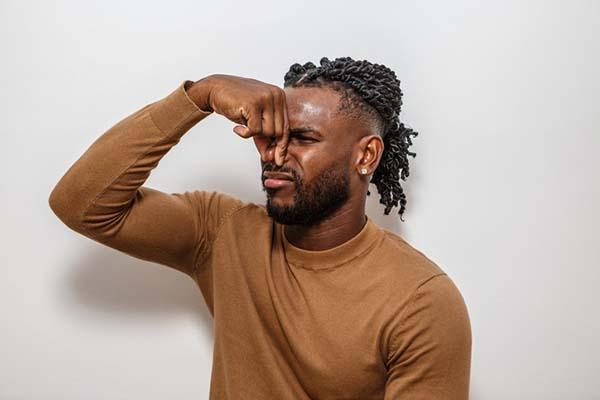
Q. What can cause someone to have a constant sense of smelling metal or heavy cigarette smoke? Could it be caused by a vitamin deficiency or PMS?
A. Having an altered sense of smell is actually quite common. Smell disorders are often classified as one of the following:
- complete loss of the ability to detect odors, called anosmia
- decreased sense of smell with some ability to detect odors, called hyposmia
- distorted sense of smell, called dysosmia.
Your symptoms suggest that you have dysosmia. I suspect that your brain is registering an odor when none is present in the environment, a phenomenon known as phantosmia. Another possibility is that you are experiencing parosmia, which means you have become more sensitive to an odor that doesn't bother other people. When this occurs, the odor is usually described as an unpleasant one.
As to what might be causing your dysosmia, there are a number of possibilities. While vitamin or mineral deficiencies can cause altered smell, this would be very unlikely unless you are on a very restricted diet or have an intestinal problem that impairs absorption of nutrients. Regarding an association of premenstrual syndrome (PMS) with altered smell, I was not able to find any studies to suggest that the two are related.
Here are some other causes of altered or loss of smell:
- a cold, sinus or other respiratory infection: this happened to many people when they developed a COVID-19 infection
- some medications: in general, medications cause a metallic taste rather than a metallic smell; the antibiotic metronidazole (Flagyl) is probably the most common cause of a metallic taste in the mouth and potentially a metal smell
- exposure to certain chemicals
- pregnancy
- a history of head trauma
- side effect of anesthesia
- migraine.
People with depression, anxiety, or other psychological disturbances can have an altered sense of smell.
Image: © Juan Algar/Getty Images
About the Author

Howard E. LeWine, MD, Chief Medical Editor, Harvard Health Publishing; Editorial Advisory Board Member, Harvard Health Publishing
Disclaimer:
As a service to our readers, Harvard Health Publishing provides access to our library of archived content. Please note the date of last review or update on all articles.
No content on this site, regardless of date, should ever be used as a substitute for direct medical advice from your doctor or other qualified clinician.