










Two bad knees? What to know about bilateral knee replacement
You can have both knees replaced at once, but it's more likely to be done as two surgeries a few months apart.
- Reviewed by Hayden Box, MD, Contributor
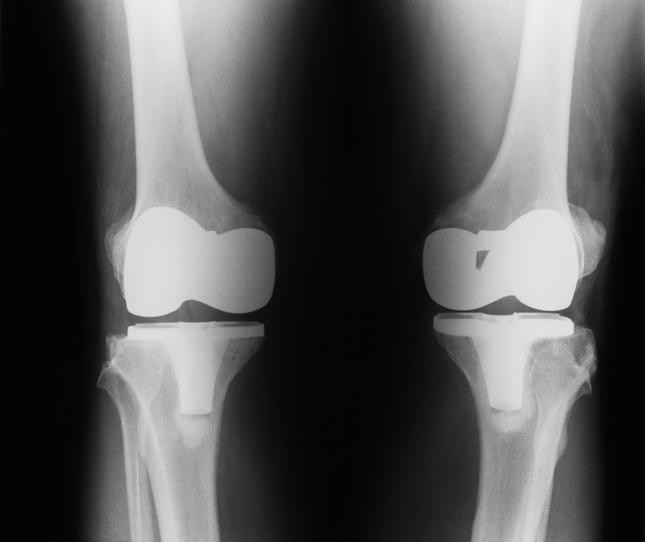
When nonsurgical measures can't relieve the osteoarthritis pain in your knee, and it's bad enough to impair your daily function, it may be time to consider total knee replacement. But if both of your knees are affected - a common situation - how should you do it? Both at the same time, or in two separate surgeries?
You and your surgeon have several factors to consider when making this decision. "If one knee is more painful and limiting than the other, we typically recommend having the more symptomatic knee replaced first," says Dr. Hayden N. Box, an orthopedic surgeon at Harvard-affiliated Massachusetts General Hospital.
After recovering, many people find that once they can put more weight on the replaced knee and have better range of motion, the other knee feels better, and they choose to delay the second surgery. Others decide to move ahead with the second knee.
Two equally bad knees
"If someone has severe arthritis in both knees, and they are equally symptomatic, that's when we discuss bilateral knee replacement," says Dr. Box.
This can be performed in one operation, called simultaneous bilateral knee replacement. More often, it's performed as staged surgeries, where two total knee replacements are performed on different days, separated by several months or longer.
It may be tempting to want both knees replaced at the same time to get it over with. There are advantages, such as undergoing only one surgery and one recovery period. However, this option is not ideal for everyone. (See "Who are the best candidates for simultaneous bilateral knee replacement?")
Who are the best candidates for simultaneous bilateral knee replacements?Having both knees operated on at the same time is usually reserved for people who
Employment status is another consideration. Some people who meet these criteria choose simultaneous knee replacement because there's only a limited amount of time they can or want to take off from work for recovery. |
Simultaneous knee replacement
Simultaneous knee replacement increases stress on the body. Studies have shown that the risk of a major complication, such as a blood clot or a heart attack, is slightly higher when both knees are replaced in one surgery. The overall risk is low, but the increase is sufficient for surgeons to weigh carefully before offering this approach.
Simultaneous bilateral knee replacement can be performed in two ways. A single surgeon can operate on one knee and then the other knee. Alternatively, two surgeons can work at the same time, one on each knee.
"It's usually done with one surgeon, which means it's a longer surgery," says Dr. Box. A longer duration of anesthesia can increase the risk of complications.
"The recovery from simultaneous bilateral knee replacement is more challenging and physically demanding, especially at first," says Dr. Box. People often require a short stay in a rehabilitation facility rather than going straight home after surgery. "Without a good leg to rely on, people often have a harder time just getting around their home," he says.
It can take three to six months to feel mostly recovered and up to a year for full recovery.
Staged procedures
Most people with two equally symptomatic knees have them replaced in a staged fashion. This is less stressful for the body.
When only one knee is replaced, it's common to go home on the same day as the surgery or the next day, without needing to go to a rehabilitation facility. Physical therapy begins with home visits by a physical therapist, followed by outpatient physical therapy.
"There's no hard-and-fast rule about when the second surgery can be done," says Dr. Box. He generally recommends waiting for at least three months.
"At three months, most of the recovery is complete, and people are getting back to doing most of things they want to do," he says. Strength and coordination in the operated leg have returned. Having one strong and stable leg makes the second recovery easier.
Getting the best results
Whether you have your knees replaced one at a time or at the same time, the key to success is your commitment to the recovery process. Once you've gone through it, you can expect to return to your normal daily activities.
Studies have shown that the outcomes for simultaneous and staged bilateral knee replacements are similar, with significant improvements in pain, physical function, and range of motion.
Image: © Sutthaburawonk/Getty Images
About the Author

Lynne Christensen, Staff Writer
About the Reviewer

Hayden Box, MD, Contributor
Disclaimer:
As a service to our readers, Harvard Health Publishing provides access to our library of archived content. Please note the date of last review or update on all articles.
No content on this site, regardless of date, should ever be used as a substitute for direct medical advice from your doctor or other qualified clinician.


