










How many grams of fat can I eat each day as part of a healthy diet?
Ask the doctor
Q. How many fat grams should be consumed per day?
A. The amount of fat grams you should consume daily depends upon what else you eat during the day and how active you are.
For many years, the American Heart Association recommended limiting the amount of fat in our diet. Diets high in carbohydrates and low in fat were thought to be the healthiest.
Now, we know that our emphasis should be on
- the total calories we get each day (to maintain a healthy weight or to lose weight)
- eating the healthiest types of fats (monounsaturated and polyunsaturated) and carbohydrates (whole grains or other slowly digested carbohydrates)
- becoming more physically active - with time scheduled for exercise every day.
So, you first want to estimate how many calories you should consume daily. It doesn't need to be exactly the same each day, but you do want the average intake over a week to hit your goal.
Remember that each gram of fat has about 9 calories. Protein and carbohydrates have only 4 calories per gram. So consuming a lot of fat - even healthy fats - fills up your daily calorie allotment quickly.
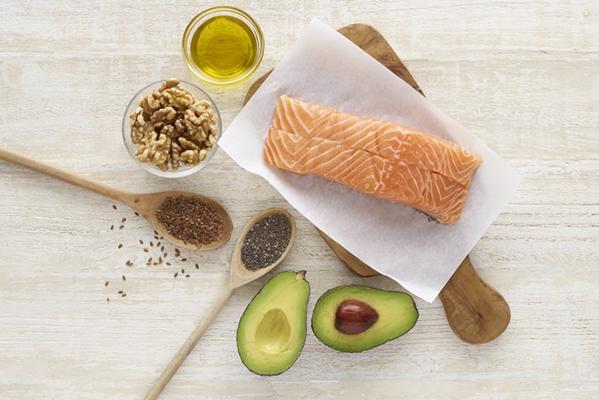
Which fats should you choose? Use monounsaturated or polyunsaturated fats. Good sources of monounsaturated fats include vegetable oils such as olive oil, canola oil, peanut oil, sunflower oil, and sesame oil; avocados; peanut butter; and many nuts and seeds. Good sources of polyunsaturated fats include vegetable oils such as soybean oil, corn oil, and safflower oil; fatty fish such as salmon, mackerel, herring, and trout; and some nuts and seeds such as walnuts and sunflower seeds.
Limit foods that contain saturated fats. And avoid trans fats completely.
Image: © Science Photo Library/Getty Images
About the Author

Howard E. LeWine, MD, Chief Medical Editor, Harvard Health Publishing; Editorial Advisory Board Member, Harvard Health Publishing
Disclaimer:
As a service to our readers, Harvard Health Publishing provides access to our library of archived content. Please note the date of last review or update on all articles.
No content on this site, regardless of date, should ever be used as a substitute for direct medical advice from your doctor or other qualified clinician.


