Are whole grains that important?
Ask the doctor
Q. I eat lots of fruits and vegetables. Are whole grains that important?
A. Fruits and vegetables seem to get top billing on the healthy food list. But I put whole grains right there as well.
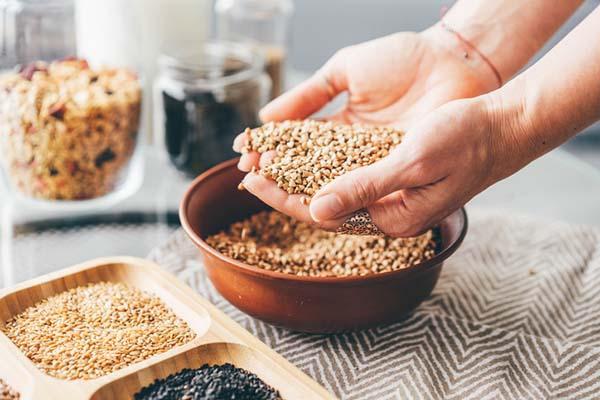
Whole grains reduce your risk of heart disease, stroke, and type 2 diabetes. But they do even more: people that eat a diet rich in whole-grain foods live longer compared to those who eat foods made from refined grains.
All grains grow as kernels. Each kernel has three layers:
- The inner germ contains many of the vitamins, minerals, and healthy oils.
- The middle layer is called the endosperm. It is primarily starch and makes up most of the kernel. It provides the energy the kernel needs to start growing.
- The outer coating, known as bran, contains most of the grain's fiber.
In the 1880s, millers became very adept at separating the layers, especially for wheat. The starchy middle layer was ideal for baking. These new refined grains became very popular. White bread crowded grocery store shelves for the next 100 years. Goodbye to the germ and bran, along with their nutritional value.
When you eat a whole grain, you're getting more than just the fiber from the outer layer. You also get all the vitamins, minerals, good fats, protein, antioxidants, and other healthful parts of the grain's inner layers.
It's easy enough to decide between brown rice and white rice. But selecting whole-grain breads and cereals often requires a close reading of the food label.
Don't be fooled by terms such as "wheat flour," "unbleached wheat flour," and "enriched wheat flour." They can refer to refined white flour.
The same goes for "stone-ground," "multigrain," "fortified," "stoned wheat," "cracked wheat," and "organic." None of these terms guarantees that the product is whole grain.
To be sure that you are really getting whole grains, look for the word "whole" or "whole-grain" before the grain's name as the first ingredient.
And it's not enough that "made with whole grain" appears somewhere on the list of ingredients. That grain may have been refined. Again, the key is the word "whole" in the first ingredient listed — for example, "stone-ground whole wheat."
Image: © Maris Korneeva/Getty Images
About the Author

Howard E. LeWine, MD, Chief Medical Editor, Harvard Health Publishing; Editorial Advisory Board Member, Harvard Health Publishing
Disclaimer:
As a service to our readers, Harvard Health Publishing provides access to our library of archived content. Please note the date of last review or update on all articles.
No content on this site, regardless of date, should ever be used as a substitute for direct medical advice from your doctor or other qualified clinician.