








| Help us be sure this email newsletter
isn't filtered as spam. Adding our return address (HEALTHbeat@hms.harvard.edu)
to your address book may ‘whitelist’ us with your filter, helping
future issues get to your inbox. Thanks! |
||
![]() |
||
| December 7, 2005 | ||
Dear HEALTHbeat subscriber, Hands are a fundamental tool for sensing, communicating, working, and creating. For this reason, when our hands hurt, our lives suffer in one way or another. And, chances are that you or someone close to you has hand pain, since nearly one in three adults has arthritis or other chronic joint problems. This issue of HEALTHbeat discusses a leading cause of hand pain — arthritis, specifically osteoarthritis — and ways to relieve arthritis-related hand pain. Also in this issue, Celeste Robb-Nicholson, M.D., Editor in Chief of the Harvard Women’s Health Watch, discusses what might cause hands to tingle at night. Best wishes, |
Beneath the skin, your hands are an intricate architecture of tendons, joints, ligaments, nerves, and bones. Unnoticed and unsung, healthy hands perform countless small tasks and are also a tool of communication, expression, and emotion. But aching hands can transform even a simple task into a painful ordeal. OsteoarthritisAlthough there are more than 100 different types of arthritis, the most common is osteoarthritis, sometimes called degenerative joint disease. An estimated 21 million Americans, mostly middle-aged and older, have osteoarthritis. In addition to the hands, osteoarthritis typically strikes the knees, hips, feet, and back. Many factors can increase the likelihood of developing osteoarthritis. The incidence rises with age, with most cases occurring in people older than 50. Up to age 50, the disease is slightly more common in men, but beyond that age, it’s more common in women. Heredity seems to play a role, particularly for osteoarthritis in the hands. Muscle weakness and a history of joint injuries caused by sports or accidents may also make a person more prone to osteoarthritis. Ordinary, repetitive activities such as typing or playing a musical instrument may worsen arthritis symptoms, but they do not cause osteoarthritis of the hands. The key symptoms — stiffness, swelling, pain, and loss of motion and function — make arthritis the leading cause of disability among Americans. More specifically, the symptoms include:
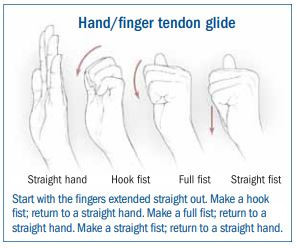
Treating arthritic handsManaging pain and improving function are the key goals in treating osteoarthritis. The best approach is usually a combination of different therapies described below. Exercise. Therapeutic exercise helps by improving mood, decreasing pain, and increasing flexibility and fitness. Rest and joint protection. Take steps to prevent pain caused by overexertion. It’s important to learn to recognize your body’s signals to stop or slow down. You can also use braces or splints to support painful joints. Using specialized products and assistive devices can also make a big difference. Heat or cold therapy. You can often soothe painful joints without medications. A warm bath or shower can ease pain and stiffness. Other times, usually after exercise or exertion, cold therapy may work better. Check with a doctor or therapist to find out whether heat or cold is the best treatment for you. Medication. Doctors prescribe a number of medications for arthritis, including painkillers. Those that are in the class known as nonsteroidal anti-inflammatory drugs (NSAIDs), such as ibuprofen (Advil, Motrin) and naproxen (Aleve), also curb inflammation. Surgery. This option usually is recommended only after other treatments don’t work. Several surgical procedures are used for osteoarthritis: removal of cysts and osteophytes; joint replacement; and joint fusion. Alternative or complementary therapies. These span a wide range of treatments, including dietary supplements, acupuncture, and massage. For more information on how to keep your hands healthy, order our special health report Hands: Strategies for Strong, Pain-free Hands http://www.health.harvard.edu/HND |
|
|||||||||||||||||||
| ** Arthritis: Keeping Your Joints Healthy | |||||
|
|||||
| ** The Aging Eye: Preventing and Treating Eye Disease | |||||
|
|||||
Q: I wake up at night with pins and needles in one or both of my hands. I’ve tried chiropractic, physical therapy, and a special pillow, with no success. What’s causing this, and what can I do to stop it? A: The likeliest cause of your symptoms is compression of one or both of the main nerves that supply feeling and function to your hands. These nerves — the median and ulnar nerves — run from the spinal cord at the neck all the way down to the hands. They pass through the vertebrae of the neck, across the armpit, down to the bony elbow joints, and between the ligaments and bones of the wrist. If they come under pressure at any point along the way, the arm or hand may feel as if it has “fallen asleep.”
This is most likely to occur if you sit or lie with your hands in one position for a long of time. That doesn’t usually happen during the day, but it’s common at night. Typical pressure points during sleep are the neck, elbows, and wrists. Your head may be in a position that causes the vertebral bones or discs, or the muscles in your neck, to press on the median and ulnar nerves. Lying on your back with your elbows at your sides may create pressure on them at the elbow joints. And sleeping with both wrists bent forward can put pressure on the nerves at the wrists. Certain conditions — for example, rheumatoid arthritis and hypothyroidism — can contribute to the symptoms you describe. So can heavy or repetitive work with your hands. Your symptoms could also be an early sign of carpal tunnel syndrome, which is caused by pressure on the median nerve at the wrist. If you can relieve the tingling by shaking or rubbing your hands for a few minutes, that’s a good sign: It means you don’t have permanent nerve damage. Nevertheless, it would be nice to get an uninterrupted night’s sleep. Since your symptoms persisted after physical therapy and after repositioning your head with the pillow, it’s unlikely that the nerves in your neck are compressed. If you haven’t already done so, ask your clinician to examine your wrists and elbows. She or he may recommend wrist splints to keep your wrists straight during sleep, or pads to prevent pressure on your elbows. Sometimes a nonsteroidal anti-inflammatory drug, such as ibuprofen (Motrin, Advil) or aspirin, or a steroid injection is needed to reduce swelling from inflamed wrist tendons. If none of these suggestions works, ask to be referred to a hand specialist for a more extensive evaluation. Dr. Celeste Robb-Nicholson is editor in chief of Harvard Women’s
Health Watch |
|
|||||||||||||||||||
Harvard Medical School publishes authoritative special health reports on a wide range of topics. Each report delivers practical information on diagnosis, treatment, and prevention of major health concerns in clear, easy-to-understand language. For more information on a specific topic, click the appropriate link below: Alzheimer’s, Arthritis, Bladder, Cholesterol, Depression, Diabetes, Digestion, Energy, Exercise, Eye Disease, Headache, Heart Disease, High Blood Pressure, Memory, Menopause, Prostate, Sexuality, Sleep, Stroke, Vitamins |
|
| Harvard Medical School offers special reports on over 50
health topics. Visit our website at http://www.health.harvard.edu to
find reports of interest to you and your family. Copyright 2005 by the President and Fellows of Harvard College. |
|
| To view our archive of past HEALTHbeat e-newsletters click here. | |
| Harvard Health Publications Harvard Medical School 10 Shattuck Street, Suite 612 Boston, MA 02115 USA |
Visit our website at: www.health.harvard.edu Email us at: HEALTHbeat@hms.harvard.edu |
| * Please note, we do not provide responses to personal medical concerns, nor can we supply related medical information, other than what is available in our print products or Web site. For specific, personalized medical advice we encourage you to contact your physician. | |
| HEALTHbeat is distributed to individuals who have subscribed via the Harvard Health Publications Web site (www.health.harvard.edu/healthbeat). You are currently subscribed to HEALTHbeat as %%$email%%. | |
| TO JOIN OUR E-MAIL LIST | |
| If you would like to receive HEALTHbeat, our free e-mail newsletter, visit www.health.harvard.edu/healthbeat and fill out our form. It's that simple. | |