Harvard Health Publications - Harvard Medical School
SEARCH     
Powered by Google  
HOME  
SIGN IN SIGN OUT  
BROWSE BACK ISSUES  
Subscriber Access
 
 
SPECIAL REPORT SIGN UP NOW FOR FREE HEALTHBEAT E-NEWSLETTER
 
 
Home > Special Health Reports > Hands: Strategies for strong, pain-free hands  
 

Hands: Strategies for strong, pain-free hands

ADD TO CART Printed Version: $18.00
ADD TO CART Electronic Download (PDF): $18.00
ADD TO CART Print + Electronic Download (PDF): $26.00

Preventing and Treating Kidney Disease
Click to enlarge

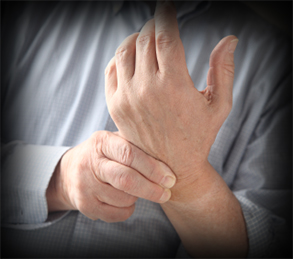
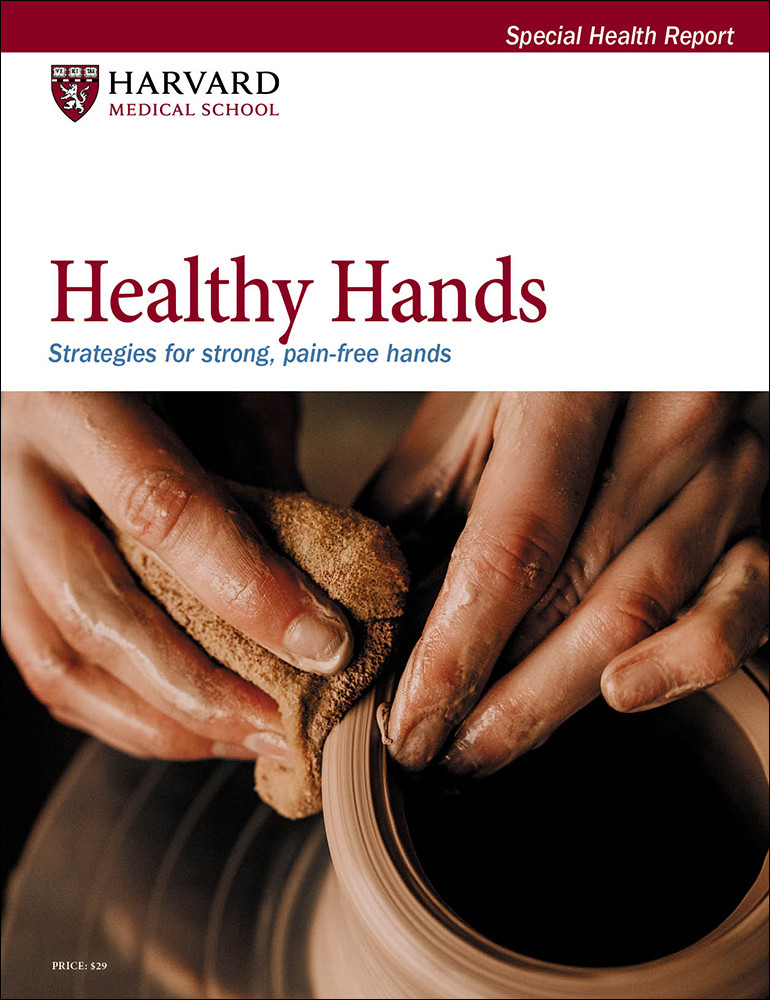
Unnoticed and unsung, healthy hands perform countless small tasks, from pouring your morning coffee to brushing your teeth at night. But aching hands transform even a simple task into a painful ordeal. Arthritis can make it difficult to carry a shopping bag, while carpal tunnel syndrome can interfere with your work or hobbies. Hand or finger deformities can make basic self-care routines such as getting dressed difficult. Hands: Strategies for strong, pain-free hands describes the causes and treatments for the wide range of conditions that can cause hand pain and stiffness.

This report includes a SPECIAL BONUS SECTION: Advances in artificial joints for the hands.

Prepared by the editors of Harvard Health Publications in consultation with Barry P. Simmons, M.D. Associate Professor of Orthopedic Surgery, Chief, Hand/Upper Extremity Service, Brigham and Women’s Hospital  and Joanne P. Bosch, P.T., C.H.T., Clinical Specialist in Hand Management, Rehabilitation Services, Brigham and Women’s Hospital, Boston, MA. 45 pages (updated 2008).

Back to top >


Table of Contents:

  • The healthy hand
    • Hand structure and physiology
    • Hand doctors and other clinicians
  • Arthritis of the hand
    • Osteoarthritis
    • Rheumatoid arthritis
    • Other types of arthritis that affect the hands
  • Tendon trouble
    • De Quervain’s tendonitis (or tenosynovitis)
    • Trigger finger
    • Tennis elbow
    • Dupuytren’s disease
    • Ganglion cysts
  • Exercise for the hand
    • Range-of-motion exercises
    • Strengthening exercises
    • Stretching exercises
    • Resisted isometrics
  • Carpal tunnel syndrome and other “pinched” nerves
    • Carpal tunnel syndrome
    • Cubital tunnel syndrome
    • Radial tunnel syndrome
  • Hand and wrist injuries
    • Wrist sprains
    • Finger sprains, jams, and dislocations
    • Tendon injuries
    • Fractures
    • Finger amputations
  • Getting a grip: Handy gadgets and advice
  • Resources
  • Glossary

ADD TO CART Printed Version: $18.00
ADD TO CART Electronic Download (PDF): $18.00
ADD TO CART Print + Electronic Download (PDF): $26.00

Back to top >

Here's an Excerpt from this Special Health Report

Besides helping you with work and play, hands are also a tool of communication, expression,  and emotion. Your hands are the only part of your body that is nearly always visible to you and others. People tend to be very conscious about the appearance of their hands, and hand pain or  deformity can cause embarrassment and inhibition, triggering feelings of poor self-esteem. 

Your hands may hurt for a variety of reasons, from the mechanical to the neurological. Arthritis and other chronic joint problems are by far the most common cause of hand pain and disability.  This report describes the many different forms of arthritis and ways to relieve arthritis-related hand pain, from use of assistive devices (tools and other gadgets that take strain off your hand) to medications and surgery. And although the prevalence of these disabling conditions is on the rise as the population ages, recent advances in artificial joint replacement hold promise for easing the pain and loss of function for people with severe forms of these diseases. 

Another common cause of hand pain, carpal tunnel syndrome, affects an estimated 2% to 3% of Americans. Contrary to conventional wisdom, this nerve disorder rarely results from  repetitive work-related tasks, as a growing body of research reveals.  This report clarifies the confusion between work-related musculoskeletal disorders (also known as repetitive stress  injuries) and carpal tunnel syndrome. 

Other highlights include treatments for common tendon injuries that affect the hands and two new therapies to ease a disfiguring hand problems known as Dupuytren’s contracture.  Finally, you’ll learn how to avoid the most common hand injuries, including sprains, fractures, and amputations, and how to keep your hands healthy and strong so you can enjoy the pleasures of work, play, communication, and expression for years to come.

ADD TO CART Printed Version: $18.00
ADD TO CART Electronic Download (PDF): $18.00
ADD TO CART Print + Electronic Download (PDF): $26.00

Back to top >


Harvard Medical School Online Health Information Library
Bookstore
Newsletters
Harvard Health Letter
Harvard Women’s Health Watch
Harvard Men’s Health Watch
Harvard Heart Letter
Harvard Mental Health Letter
Perspectives on Prostate Disease
Premium Access
Special Reports
Exercise
Vitamins
Skin Care
Stress Management
Foot Care
See All Titles
Books
Your Developing Baby
The Fertility Diet
Eat, Drink, and Be Healthy
Beating Diabetes
The Harvard Medical School Family Health Guide
See All Titles
Browse
Common Medical Conditions
Wellness & Prevention
Emotional Well Being & Mental Health
Women’s Health
Men’s Health
Heart & Circulatory Health
Tools
Guide to Diagnostic Tests