

Naturally gluten-free foods

Harvard study: Healthier fats linked to longer life after prostate cancer diagnosis

Shingrix shingles vaccine linked with lower heart disease risks

Estrogen-only hormone therapy tied to lower dementia risk

Should you have a hysterectomy?

Stair climbing may significantly lower cardiovascular risks

Why do I sweat so much?

Walking pneumonia: The "mild" illness that can still pack a punch

What causes knee pain: How doctors make a diagnosis

Where you carry excess weight matters in predicting heart disease risk
Preventive care Archive
Articles

Ask the doctor: Are activity trackers worthwhile for weight loss?
If wearing an activity tracker results in more daily exercise but not a significant weight loss, it still provides health benefits.

Two options for replacing lost teeth
Missing teeth can lead to additional dental woes, but implants and bridges can restore your smile and improve your dental—and overall—health.
Few of us will make it through life with a full set of 32 teeth. By age 50, the average American has lost 12 permanent teeth to decay, gum disease, or injury. Losing teeth not only affects your smile, but can also alter your bite and weaken your jawbone as well.
There is little reason to let that happen. Advances in prosthetic dentistry have made it possible to fill the spaces with bridges and implants that are more functional and attractive than the teeth they have replaced. "Your mouth is the first organ of your digestive system. Missing teeth affect not just your appearance but your overall health," says Dr. German Gallucci, executive director of the Harvard Dental Center. "We view dentistry as an integral part of comprehensive health care."

How to cut back on sugar and salt
Most Americans consume much more than the recommended levels of sugar and salt. However, you can retrain your palate to be satisfied with less of both.
Image: tsvibrav/iStock
If you own a sugar bowl and a saltshaker, you may be wondering if you should ever fill them again. The panelists crafting the 2015–2020 Dietary Guidelines for Americans emphasized that we're consuming much more sugar and salt than is healthy for us and have advised us to pare our intakes of both considerably. That said, they have acknowledged that the sugar bowl and saltshaker aren't the principal villains at the dining table. About 80% of the sugar and salt we eat is added to packaged and commercially prepared foods.
What are added sugars?
Reducing your sugar intake
Although beverages are the most important source of added sugars, they aren't the only ones. There are additional ways to reduce your intake of added sugars, and it doesn't have to mean giving up desserts. Here are several ideas for reducing the amount of sugar in your diet, targeting sugary drinks just as a first step:
Give your taste buds time to adjust. If you're in the habit of having two spoonful's of sugar in your coffee or tea, for instance, start by going to one-and-a-half for a week, then down to one. If sodas are part of your regular routine, cut your consumption by one a week, then two.
Adapt your recipes. You can make your favorite recipes less sugary by reducing a little bit at a time—try using one-quarter less sugar than the recipe calls for, then one-third—right up until you notice the difference. You may come to prefer the less-sweet variation.
Reach for fruit rather than juice. Squeezing fruit breaks down the cells and releases sugar into the juice, so that it enters the bloodstream more rapidly. Moreover, a glass of juice is usually the caloric equivalent of three whole fruits. Instead of drinking fruit juice, eat a piece of fresh fruit. You can make fruit drinkable and still preserve its fiber by blending it with almond milk or low-fat yogurt in a smoothie. If you just can't give up juice, make it 100% fruit juice that is not sweetened and limit the amount to a 4-ounce glass.
Check your cereal box. If you enjoy cold cereal or instant oatmeal for breakfast, look at the labels and choose one with minimal added sugar. It's also worth noting that cereals made with refined grains are quickly broken down into sugars in the body. To wean yourself off your favorite cereal, try combining it with a whole-grain, high-fiber cereal, and add fruit.
What about salt?
Cutting down on salt
Even if you ban salt from your table, it is still easy to exceed the sodium limit. To avoid doing so, try the following:
Eat mostly fresh foods. Most of the sodium we eat comes from restaurant meals and processed foods, including canned vegetables and soups, pasta sauces, frozen entrées, lunch meats, and snack foods. If you start with unsalted, fresh foods and prepare them yourself, you can exercise better control over your sodium intake.
Take care with condiments. Sodium is found in many condiments besides ordinary table salt—including soy sauce, Worcestershire sauce, salad dressings, ketchup, seasoned salts, pickles, and olives. Baking soda, baking powder, and monosodium glutamate (MSG) also contain sodium.
Read the labels. The Nutrition Facts label on packaged food lists milligrams of sodium per serving, so it's important to note how many servings the container holds. The percent daily value is based on 2,300 mg, so if your own daily sodium limit is lower, the amount of sodium in a serving is actually a higher percentage than the label indicates. Be aware that some over-the-counter drugs also contain sodium.
Speak up. When dining out, ask to have your food prepared with less salt. You can also ask for a lemon or lime wedge to add more flavor to your food.
Spice it up. Cut back on salt by using more herbs and spices like basil, coriander, cumin, cayenne, powdered mustard, oregano, rosemary, sage, thyme, and turmeric. You might try making your own blends of spices and herbs to use along with lemon or lime juice or flavored vinegars.
Seek out specialty salts. Some kosher and gourmet salts contain less sodium than standard iodized table salt; check the Nutrition Facts label to make sure.
The good news

Holiday weight gain is a worldwide phenomenon, study suggests
A study of people in the United States, Germany, and Japan found that holiday weight gain was common.
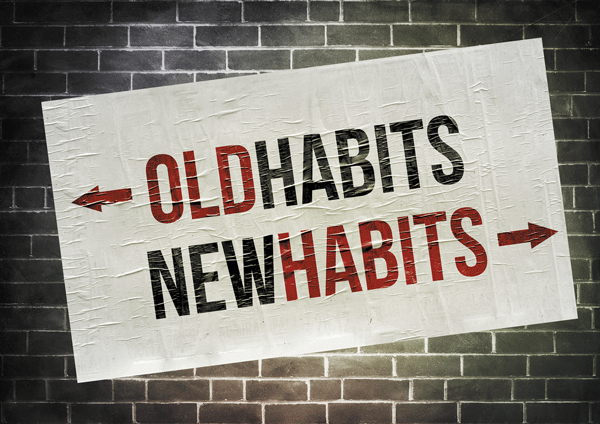
Trade bad habits for good ones
Understanding the three Rs —reminder, routine, and reward—can help you create healthful habits.
Image: gguy44/ThinkStock
Everyone has bad habits they want to break, but instead of scorning yourself for being helpless to break them, use the fundamentals of forming habits to your advantage.
Habits, good or bad, follow a typical three-step pattern. One way to describe this is as three Rs: reminder, routine, and reward. By breaking down the cycle of a bad habit, you can identify what triggers the routine and begin to address what really needs to change. This way you can establish a pattern for new and healthier habits.

Ask the doctor: Best protein: animals or plants?
Men need about 0.36 grams of protein per pound of body weight every day. Animal products contain some of the highest amounts, but many sources also include high levels of saturated fat and cholesterol. Plant proteins might be a healthier choice since they also include essential vitamins, minerals, and other micronutrients.

Give grip strength a hand
Your ability to grab, hold, twist , and squeeze is essential for many everyday functions.
Image: JannHuizenga/Thinkstock
Think how much you rely on a strong grip every day. It helps you open cans, grip a golf club, hold a steering wheel, brush your teeth, and pick up a grandchild. "The ability to stay active and independent often begins with our hands," says Maria Cole, a physical therapist with Harvard-affiliated Spaulding Outpatient Center. "Weak grip strength can limit your enjoyment of many life pleasures, so you need to ensure your hand and grip strength always are up to the task."
A measure of health
A grip on mobility
Grip strength also may predict your future loss of mobility. A May 2014 study in The Journal of Gerontology Series A: Biological Sciences and Medical Sciences analyzed data from more than 20,000 adults ages 65 and older to evaluate the link between weak grip strength and lack of mobility, in this case slow walking speed.
Among the men in the group, those with a weak grip—less than 26 kg using a dynamometer—were seven times more likely to be facing mobility issues compared with men who had normal grip strength.
You can take steps to improve grip strength and possibly avoid problems down the road. "You need to exercise your hands and wrists just like every other part of your body to keep them strong and supple," says Cole.
Exercise your hands


The year in health and medicine
Changes to food labels and health guidelines, and the arrival of another mosquito -borne illness, topped health news in 2016.
Image: sultancicekgil/iStock
The new year is approaching fast, and with it, the promise of better health. Before we bid farewell to 2016, we'd like to reflect on the news that got our attention this year.
The Zika virus
Guideline changes
Some new health guidelines made their entrance in 2016, and others underwent updates. The CDC announced its first-ever guidelines for prescription painkillers, encouraging doctors to stop treating chronic pain by prescribing opioids, such as oxycodone (OxyContin) and hydrocodone (Vicodin). Long-term use of the drugs carries risks for dependence, addiction, overdose, and death.
The U.S. Department of Health and Human Services (HHS) strengthened its guidelines granting access to one's own medical records. Among the rules: you do not have to give a reason for a records request, you can ask for the records by mail or email, and most requests should be granted within 30 days.
Also of note, the U.S. Preventive Services Task Force updated its guidelines to screen for depression, now recommending screening in all people 18 or older, including older adults, when there are systems in place to ensure accurate diagnosis (as opposed to selective screening based on judgment and patient preference).
Healthier food
New medications
This year also brought the news that we'll have to wait for an antidote to stop rare uncontrolled bleeding episodes linked to some newer types of blood thinners, such as apixaban (Eliquis) and rivaroxaban (Xarelto). In August 2016, the FDA rejected the potential antidote AndexXa (andexanet alfa), saying it wanted more information before it could grant approval. Another of the newer blood thinners—dabigatran (Pradaxa)—already has an approved antidote called idarucizumab (Praxbind).
The newer blood thinners are alternatives to warfarin (Coumadin). People who use warfarin require frequent blood tests to see if the dose needs to be adjusted, but if dangerous bleeding does occur, there's a treatment to reverse it. The newer blood thinners don't require lab monitoring. Apixaban and rivaroxaban do not yet have approved treatments to reverse bleeding.

Do antibacterial soaps really work?
Soaps with added “antibacterial” chemicals are not better at protecting people against infection and illness. The added chemicals may be harmful.
Naturally gluten-free foods
Harvard study: Healthier fats linked to longer life after prostate cancer diagnosis
Shingrix shingles vaccine linked with lower heart disease risks
Estrogen-only hormone therapy tied to lower dementia risk
Should you have a hysterectomy?
Stair climbing may significantly lower cardiovascular risks
Why do I sweat so much?
Walking pneumonia: The "mild" illness that can still pack a punch
What causes knee pain: How doctors make a diagnosis
Where you carry excess weight matters in predicting heart disease risk
Free Healthbeat Signup
Get the latest in health news delivered to your inbox!
Sign Up
