
Reading the current blood pressure guidelines

Oat vs. dairy milk: Nutrition, benefits, and downsides

Microplastics: A hidden health threat?

Healing after food poisoning

What is tempeh? Benefits, nutrition, and how to use it

Light exposure at night may raise risk for heart disease

Whole grains may improve several heart risk factors at once

A lumbar belt may help ease low back pain

Children of centenarians may stay healthier and live longer too, study finds

Signs of pneumonia: Sometimes vague and unexpected
Physical activity and exercise Archive
Articles
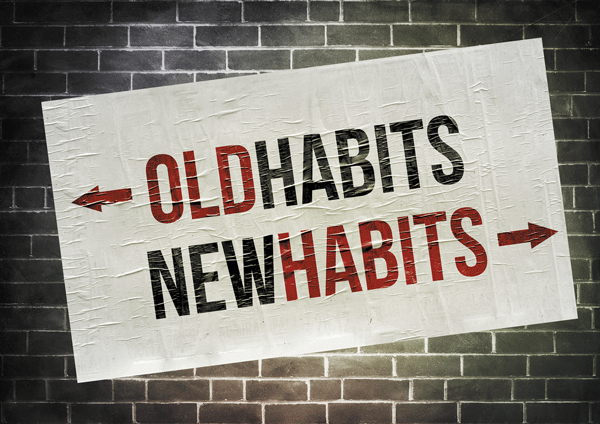
Trade bad habits for good ones
Understanding the three Rs —reminder, routine, and reward—can help you create healthful habits.
Image: gguy44/ThinkStock
Everyone has bad habits they want to break, but instead of scorning yourself for being helpless to break them, use the fundamentals of forming habits to your advantage.
Habits, good or bad, follow a typical three-step pattern. One way to describe this is as three Rs: reminder, routine, and reward. By breaking down the cycle of a bad habit, you can identify what triggers the routine and begin to address what really needs to change. This way you can establish a pattern for new and healthier habits.

Ask the doctor: Best protein: animals or plants?
Men need about 0.36 grams of protein per pound of body weight every day. Animal products contain some of the highest amounts, but many sources also include high levels of saturated fat and cholesterol. Plant proteins might be a healthier choice since they also include essential vitamins, minerals, and other micronutrients.

Give grip strength a hand
Your ability to grab, hold, twist , and squeeze is essential for many everyday functions.
Image: JannHuizenga/Thinkstock
Think how much you rely on a strong grip every day. It helps you open cans, grip a golf club, hold a steering wheel, brush your teeth, and pick up a grandchild. "The ability to stay active and independent often begins with our hands," says Maria Cole, a physical therapist with Harvard-affiliated Spaulding Outpatient Center. "Weak grip strength can limit your enjoyment of many life pleasures, so you need to ensure your hand and grip strength always are up to the task."
A measure of health
A grip on mobility
Grip strength also may predict your future loss of mobility. A May 2014 study in The Journal of Gerontology Series A: Biological Sciences and Medical Sciences analyzed data from more than 20,000 adults ages 65 and older to evaluate the link between weak grip strength and lack of mobility, in this case slow walking speed.
Among the men in the group, those with a weak grip—less than 26 kg using a dynamometer—were seven times more likely to be facing mobility issues compared with men who had normal grip strength.
You can take steps to improve grip strength and possibly avoid problems down the road. "You need to exercise your hands and wrists just like every other part of your body to keep them strong and supple," says Cole.
Exercise your hands


The year in health and medicine
Changes to food labels and health guidelines, and the arrival of another mosquito -borne illness, topped health news in 2016.
Image: sultancicekgil/iStock
The new year is approaching fast, and with it, the promise of better health. Before we bid farewell to 2016, we'd like to reflect on the news that got our attention this year.
The Zika virus
Guideline changes
Some new health guidelines made their entrance in 2016, and others underwent updates. The CDC announced its first-ever guidelines for prescription painkillers, encouraging doctors to stop treating chronic pain by prescribing opioids, such as oxycodone (OxyContin) and hydrocodone (Vicodin). Long-term use of the drugs carries risks for dependence, addiction, overdose, and death.
The U.S. Department of Health and Human Services (HHS) strengthened its guidelines granting access to one's own medical records. Among the rules: you do not have to give a reason for a records request, you can ask for the records by mail or email, and most requests should be granted within 30 days.
Also of note, the U.S. Preventive Services Task Force updated its guidelines to screen for depression, now recommending screening in all people 18 or older, including older adults, when there are systems in place to ensure accurate diagnosis (as opposed to selective screening based on judgment and patient preference).
Healthier food
New medications
This year also brought the news that we'll have to wait for an antidote to stop rare uncontrolled bleeding episodes linked to some newer types of blood thinners, such as apixaban (Eliquis) and rivaroxaban (Xarelto). In August 2016, the FDA rejected the potential antidote AndexXa (andexanet alfa), saying it wanted more information before it could grant approval. Another of the newer blood thinners—dabigatran (Pradaxa)—already has an approved antidote called idarucizumab (Praxbind).
The newer blood thinners are alternatives to warfarin (Coumadin). People who use warfarin require frequent blood tests to see if the dose needs to be adjusted, but if dangerous bleeding does occur, there's a treatment to reverse it. The newer blood thinners don't require lab monitoring. Apixaban and rivaroxaban do not yet have approved treatments to reverse bleeding.

Do antibacterial soaps really work?
Soaps with added “antibacterial” chemicals are not better at protecting people against infection and illness. The added chemicals may be harmful.

Is it too late to get a flu shot?
The best time to get an annual flu shot is in mid-October. However, it’s not too late to get the shot in December, since people are still at risk of getting flu for several more months.

Stretching: The new mobility protection
A regular stretching program will help you stay active and independent.
Image: MonkeyBusinessImages/Thinkstock
A loss of flexibility may not seem like a big deal as we age. After all, it's no longer necessary to do the kinds of athletic moves we did when we were younger. But flexibility is the secret sauce that enables us to move safely and easily, and the way to stay limber is to stretch. "People don't always realize how important stretching is to avoiding injury and disability," says Elissa Huber-Anderson, a physical therapist at Harvard-affiliated Massachusetts General Hospital.
Losing flexibility
Stretching benefits
When you stretch a muscle, you extend the tissue to its full length. If you hold that tension long enough, the muscle will be longer once it relaxes again. "Stretching your muscle is similar to stretching an elastic band," says Huber-Anderson. "The elastic's resting length becomes longer."
The more often you stretch your muscles, the longer and more flexible they'll become. As a result, you'll
increase your range of motion
reduce your risk for muscle and joint injury
reduce joint and back pain
improve your balance, thus reducing your risk of falling
improve your posture.
Regaining flexibility
Types of stretches
It's crucial to warm up the muscles before you stretch them. That means getting blood and oxygen to the tissue to make it more pliable and amenable to change. If you don't warm up, a stretch can damage the muscle fibers.
One way to warm up is dynamic stretching. "This is when you move a joint through its available range of motion repeatedly, without holding a position," says Huber-Anderson. Types of dynamic stretching include rolling your shoulders, lifting your knees, and sweeping your arms out to the sides and up to the ceiling repeatedly. Huber-Anderson recommends two to five minutes of dynamic stretching.
Then you'll be ready for the types of stretches that will help you regain flexibility, known as static stretching. These stretches are held for 10 to 30 seconds. Don't bounce—that can cause injury.
Note: An aerobic or weight-training workout can also prepare the muscles for static stretching. However, static stretching should not be performed before a workout, when the muscles aren't ready.
5 tips to get you started1. Get your doctor's okay before starting a stretching regimen. 2. Do two to five minutes of dynamic stretches before beginning a program of static stretches. 3. Try some of the stretches we've selected for you on page 5. 4. Stop stretching if you feel pain, beyond a mild burning sensation in the muscle. 5. Stick with the program. It won't magically restore flexibility overnight. In time, and with regular stretching, you'll feel the results of a successful regimen. |
1. Seated shoulder stretch
2. Seated rotation
Primarily stretches the back
Repeat 2–4 times
Hold: 10–30 seconds
Starting position: Sit up straight on a chair with your feet flat on the floor, hip-width apart, and your arms at your sides.
Movement: Slowly rotate your head and torso to the right side, placing your left hand on the outside of your right knee and your right hand next to your right hip. Hold. Slowly return to the starting position. Repeat to the opposite side. This is one rep.
Tips and techniques:
Stretch to the point of mild tension, not pain.
As you rotate, keep your hips squared and facing forward.
Breathe comfortably.
3. Standing hamstring stretch
4. Floor hip flexor stretch
Primarily stretches the front of the hip
Repeat: 2–4 times
Hold: 10–30 seconds
Starting position: Lie on your back with your legs extended on the floor.
Movement: Relax your shoulders against the floor. Bend your right knee. Rest your hands on the back of your thigh and pull your knee toward your chest. Flex your left foot and press the thigh and calf of that leg down toward the floor as you do so. Feel the stretch in the front of your left hip and top of your thigh. Hold. Return to the starting position and repeat with the other leg. This is one rep.
Tips and techniques:
Stretch to the point of mild tension, not pain.
When holding the stretch, remain as still as possible, without bouncing.
5. Double-knee torso rotation
6. Downward dog
Stretches the entire body
Repeat: 2–4 times
Hold: 10–30 seconds
Starting position: Position yourself on all fours, hands shoulder-width apart, legs hip-width apart, and fingers extended.
Movement: Exhale as you lift your knees off the floor, straightening your legs without locking the knees until you are in an upside-down V. While maintaining a neutral neck and spine, align your ears with your biceps. Try to keep your weight evenly distributed between your hands and feet. Press your heels down toward the floor while keeping your shoulders down and rolled back. Hold. Return to the starting position.
Tips and techniques:
Soften your elbows and keep your shoulders down and rolled back as you lengthen your spine. Brace your abdominal muscles.
If necessary, bend your knees slightly and let your heels come up off the floor.

Top screenings to avoid cancer
Talk to your doctor to nail down your cancer risk, and check this list to see which tests may help save your life.
Images: Monkey Business Images/Thinkstock
Recommendations for cancer screenings sometimes change, and it can be confusing about which tests you need and when. "It's best to talk to your doctor about your cancer risk factors and family history, learn which screenings are right for you, and then develop and stick to a screening schedule," says Dr. JoAnn Manson, chief of preventive medicine at Harvard-affiliated Brigham and Women's Hospital.
Routine screenings
Other screening tests
Some screenings are not recommended routinely but may be important based on your cancer risk.
Lung cancer. The American Lung Association recommends low-dose computed tomography to detect early signs of lung cancer for heavy smokers ages 55 to 74 who have a 30 pack-year smoking history (equivalent to one pack per day for 30 years) and who have smoked within the past 15 years. The USPSTF extends the screening age to 80. If you're not in this group, you should not have routine screening; the risk from radiation exposure and potential unnecessary follow-up testing is not worth the small chance of benefit.
Skin cancer. The USPSTF says there's not enough evidence to recommend regular visual skin exams by a doctor to screen for skin cancer, and that screenings increase the risk for unnecessary biopsies, overdiagnosis, and overtreatment. The American Academy of Dermatology suggests that all people conduct skin self-exams and report any unusual spots on their skin to a dermatologist.
People with an increased risk for melanoma, the deadliest form of skin cancer, should talk to a dermatologist about how often they should get a skin exam.
What about a PSA test?One of the most debated screenings is the blood test used to look for prostate cancer in men. It measures the level of a protein in the blood called prostate-specific antigen (PSA), which can rise when prostate cancer develops. In 2012, the USPSTF recommended against routine PSA tests, saying they raise the risk of unnecessary follow-up testing and treatment, which can cause problems such as incontinence and erectile dysfunction. Recent evidence shows that fewer men are being screened as a result. "The sentiment among many physicians now is against offering routine PSA testing for men, especially when nearly every study has not shown any tangible benefits for those who have undergone testing and treatment," says oncologist Dr. Marc Garnick, editor in chief of Harvard's Annual Report on Prostate Diseases. The American Cancer Society suggests that men 50 or older (at average risk for prostate cancer) make the decision about screening with their doctor, but only if they have a life expectancy of at least 10 years, and only if they have been advised about the uncertainties, risks, and potential benefits of prostate cancer screening. |

Should you try a subscription meal kit?
They provide hassle-free home-cooked meals. But watch the nutrient content.
Image: Bigstock
Wouldn't it be great if you had an assistant chef at home—someone who developed a delicious menu and then shopped for and measured all the ingredients to make it? All you'd have to do is cook and enjoy it. That's the idea behind the hot trend of subscription meal kits, which are delivered to your door. "It's very convenient, and it can challenge someone to try new foods with different seasonings," says Kathy McManus, director of the Department of Nutrition at Harvard-affiliated Brigham and Women's Hospital.
How it works
Downsides
Most meals take 30 or 40 minutes to prepare, a drawback if you're unable to stand for long periods. You'll have to do any necessary chopping yourself, a potential challenge if you have arthritis.
And while the food is fresh, it may not always be healthy. Some meals are high in sodium and calories. "And some recipes don't use whole grains or healthier carbohydrates; they use white potatoes and refined grains like jasmine rice," says McManus. That's especially important if you're on a restricted diet because of high blood pressure or diabetes.
What you should do
Reading the current blood pressure guidelines
Oat vs. dairy milk: Nutrition, benefits, and downsides
Microplastics: A hidden health threat?
Healing after food poisoning
What is tempeh? Benefits, nutrition, and how to use it
Light exposure at night may raise risk for heart disease
Whole grains may improve several heart risk factors at once
A lumbar belt may help ease low back pain
Children of centenarians may stay healthier and live longer too, study finds
Signs of pneumonia: Sometimes vague and unexpected
Free Healthbeat Signup
Get the latest in health news delivered to your inbox!
Sign Up
