
Fatty liver disease: Should you be tested?

Even a little exercise linked with lower stroke risk in people with afib

Testosterone therapy without evidence of deficiency may boost heart risk

Weight-loss drug may lower risk of heart attacks and infections

Migraine: How it's diagnosed and what that means

Tricep workouts you can do at home

Mindfulness practices to reduce stress and improve focus

Antihistamines may not offer meaningful relief from eczema symptoms

Overweight and taking blood pressure medications: Study finds it's a trend that's working

FDA approves first mRNA-based flu vaccine
Caregiving Archive
Articles

The powerful play of pickleball
Rapidly becoming a racquet sport favorite, pickleball serves up various physical, mental, and social benefits.
You keep hearing that older adults need to stay active physically, mentally, and socially. But what if you could do all three at once? You can if you play the racquet sport pickleball, one of the country's fastest-growing forms of recreation.
"In many ways, pickleball is the ideal activity for older adults," says Timothy Rivotto, a physical therapist and tennis coach with Harvard-affiliated Spaulding Rehabilitation Network. "It can accommodate people with different fitness levels and still offer a good aerobic workout. Pickleball also requires using key brain skills and is an exciting way to interact with others."

When it comes to activity, the more the better
In the journals
Regular exercise is good medicine, but more may be better, suggests a study published online Jan. 12, 2021, by PLOS Medicine. Scientists asked more than 90,000 people without heart disease to wear a fitness tracker for a week to measure the duration and intensity of their physical activity. Five years later, they found that the most active people were less likely to have had a heart attack or stroke or be diagnosed with heart disease.
That's no surprise, but the researchers also discovered that risk continued to shrink as weekly minutes of activity and intensity rose. People who exercised the most and at the highest intensity had the best odds of maintaining good cardiovascular health. Guidelines recommend people get 150 to 300 minutes of moderate-intensity exercise per week, but these findings suggest that trying to do a little extra — whether in time, intensity, or both — offers more reward.

Focusing on past successes can help you make better decisions
In the journals
People with anxiety or depression often have trouble making sound decisions. But a study suggests their judgment can improve if they focus on past successes instead of mistakes. The findings were published online Dec. 22, 2020, by the journal eLife.
Researchers recruited 86 adults, divided into three groups. In one group were people diagnosed with generalized anxiety disorder or major depression. Another group consisted of people who showed anxiety or depression symptoms, like excessive worrying and not feeling good about the future, but were not clinically diagnosed. The final group included those without anxiety or depression.

Arm yourself to get better blood pressure readings
In the journals
Blood pressure readings are usually done on only one arm, but a new analysis makes the case for checking both arms, as the difference between them may suggest an elevated risk for heart disease. The findings were published in the February 2021 issue of Hypertension.
Researchers examined 24 studies that measured blood pressure in both arms in 53,827 adults without high blood pressure. They found that a difference of more than five points between the left and right arm systolic readings (the top number) was linked with a 9% higher risk for a first-time heart attack or stroke and a 6% increase in cardiovascular death within 10 years. The greater the difference between the two readings, the higher the risk.
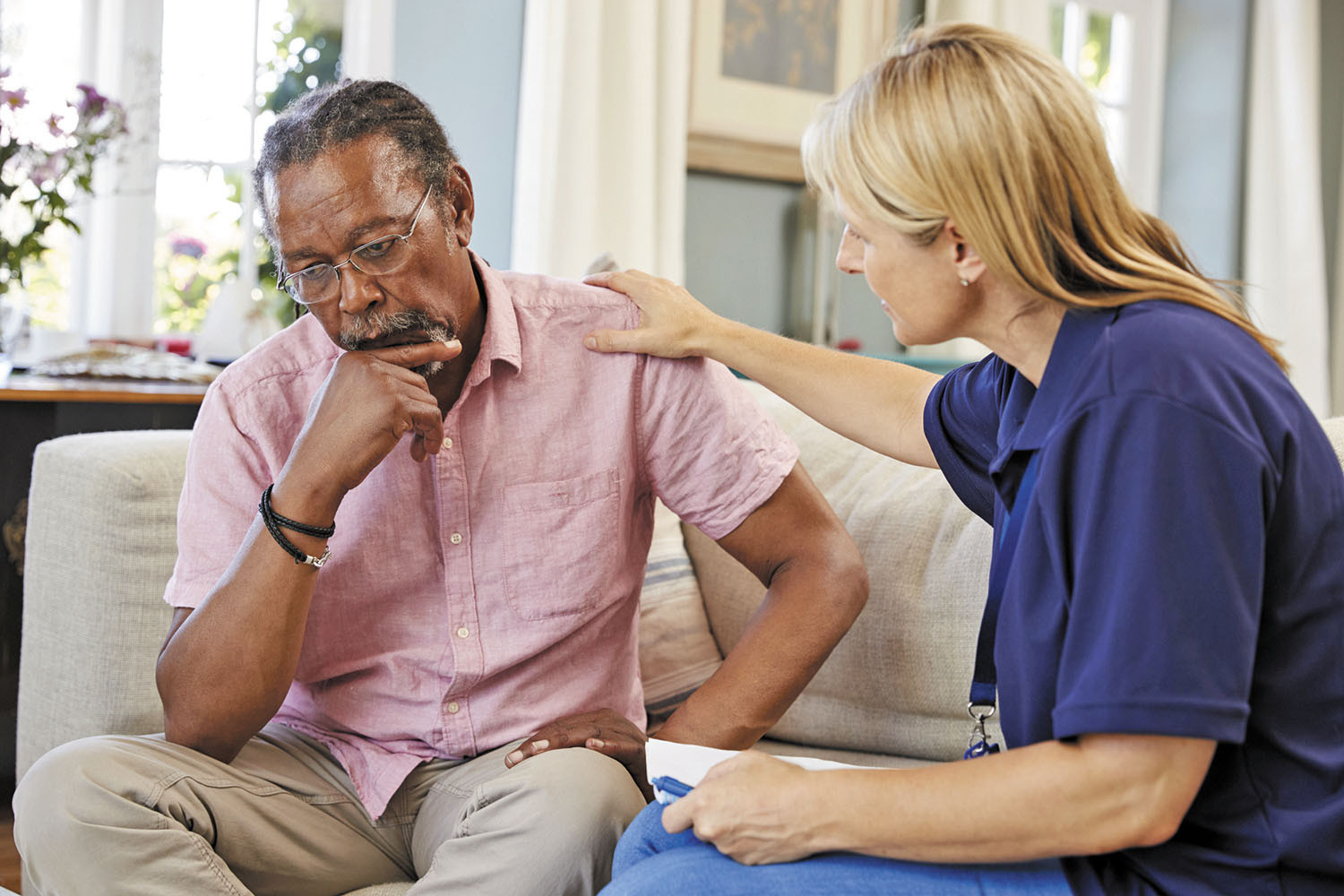
Depression and heart disease: A double-edged sword?
Lifestyle changes — along with other proven therapies — can help improve these often-overlapping conditions.
Everyone goes through periods of feeling gloomy, irritable, or listless at least once in a while. And these emotions are perfectly normal after a diagnosis of a serious health problem such as heart disease. But if those unpleasant feelings drag on for weeks and gradually erase your sense of well-being, you may have depression.
Over a lifetime, about one in five Americans is affected by depression. But the risk of depression in people who've had a heart attack is three times as high as the risk among the general population.

Is it dementia or something else?
Many cases of memory loss aren't related to dementia, but stem from other, treatable conditions.
You've been forgetting things lately — your keys, or maybe names. Sometimes you struggle to find the right word in conversations or repeat yourself to others. You may worry: are these signs of dementia?
If this sounds like you, you're not alone. Many people find their way into Dr. Tammy Hshieh's office wondering the same thing. But most of the time, it's not dementia causing their problems, says Dr. Hshieh, a geriatrician at Harvard-affiliated Brigham and Women's Hospital and Dana-Farber Cancer Institute and assistant professor of medicine at Harvard Medical School.

Is the COVID-19 vaccine safe for heart attack survivors?
Ask the doctors
Q. I experienced a heart attack a few years ago. I'm worried about getting the COVID-19 vaccine. Is it safe for someone with my medical history?
A. Yes. The vaccine is safe and advised for people with a history of heart attack and cardiovascular disease. While you should always discuss the particulars of your situation with your doctor, the American Heart Association said in a statement issued on Jan. 15, 2021, that it's important for people who have had heart disease or stroke (or who are at high risk for these conditions) to get vaccinated as quickly as possible, because they are at higher risk for severe disease if infected. The benefits of the vaccine far outweigh the risks. Clinical trials of the first two approved vaccines found that both are safe and, after two injections, are about 95% effective at preventing illness from SARS-CoV-2, the virus that causes COVID-19. The vaccine often causes soreness at the injection site. Other common side effects, such as headache and diffuse muscle pain, are usually mild and last only one or two days. More severe reactions, including allergic reactions, have occurred but are very rare.
Three-part breath
Among the Basic Practice exercises in "Intermediate Yoga," a special health report from Harvard Medical School, is this breathing exercise. "Three-part breath" is simple enough to do almost anytime and anywhere. To learn additional intermediate yoga exercises, visit: www.health.harvard.edu/iy
Half sun salutation
"Half sun salutation" is among the Basic Practice exercises described in "Intermediate Yoga," a special health report from Harvard Medical School. To learn additional intermediate yoga exercises, visit: www.health.harvard.edu/iy
Sun breath
Among the Flexibility Practice exercises in "Intermediate Yoga," a special health report from Harvard Medical School, is sun breath. The Flexibility Practice routine will help you gain more supple muscles and greater range of motion through various joints. To learn additional intermediate yoga exercises, visit: www.health.harvard.edu/iy
Fatty liver disease: Should you be tested?
Even a little exercise linked with lower stroke risk in people with afib
Testosterone therapy without evidence of deficiency may boost heart risk
Weight-loss drug may lower risk of heart attacks and infections
Migraine: How it's diagnosed and what that means
Tricep workouts you can do at home
Mindfulness practices to reduce stress and improve focus
Antihistamines may not offer meaningful relief from eczema symptoms
Overweight and taking blood pressure medications: Study finds it's a trend that's working
FDA approves first mRNA-based flu vaccine
Free Healthbeat Signup
Get the latest in health news delivered to your inbox!
Sign Up
