






Lymph node biopsy
- Reviewed by Howard E. LeWine, MD, Chief Medical Editor, Harvard Health Publishing; Editorial Advisory Board Member, Harvard Health Publishing
What is the test?
Lymph nodes are small balls of tissue that are part of the body's immune system. The nodes produce and harbor infection-fighting white blood cells (lymphocytes) that attack both infectious agents and cancer cells. Cancer, infection, and some other diseases can change the appearance of lymph nodes. For that reason, your doctor may recommend removal or sampling of one or more lymph nodes, to be examined microscopically for evidence of these problems.
Depending on the location of the node to be biopsied and the reason for doing a biopsy, the entire lymph node may be removed surgically, or a doctor will do a needle biopsy to remove a portion of a lymph node.
Usually no special preparation is necessary. The doctor doing the biopsy will review your medications in advance of the procedure. If you take a medication that interferes with blood clotting, be sure your doctor is aware.
What happens when the test is performed?
This depends on the location of the lymph nodes to be biopsied. Fortunately many lymph nodes, such as those in your neck, armpits, and groin, are found close to the surface of the skin. These can all be reached through an incision in the skin.
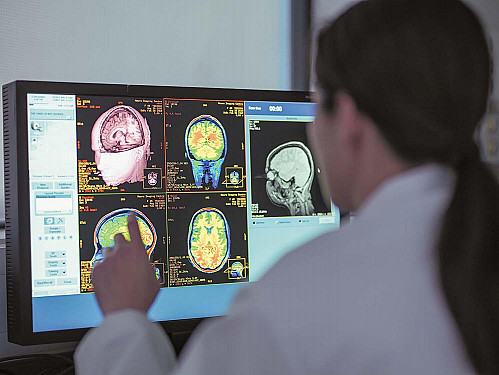
A lymph node located deeper in your body, such as in the middle of your chest or within your abdomen, will often be sampled by a doctor called an interventional radiologist. Under imaging with ultrasound or CT scanning, the doctor can guide a fine needle into the lymph node to get the sample.
If a deeper lymph node needs to be removed completely, a surgeon can insert a tubelike viewing instrument (a scope) through a slit in the skin into the target area to see the lymph node, and then remove it with tiny surgical scissors located at the end of the scope. Sometimes removing lymph nodes for microscopic examination requires open surgery.
When lymph nodes beneath the skin are biopsied, you lie on an examining table. The doctor cleans the skin at the biopsy site, and injects a local anesthetic to numb the area so that you won't feel the biopsy. The anesthetic may sting for a few seconds. Next, the doctor makes a small incision in the skin and the tissue just beneath it until he or she can see the lymph node and cut it out.
Following such a biopsy, it's normal to bleed slightly. After applying pressure to the incision site to stop the bleeding, the doctor will cover the area with a bandage. You'll usually be able to go home within several hours. When a biopsy involves inserting a scope, or surgery, general anesthesia may be required.
What risks are there from the test?
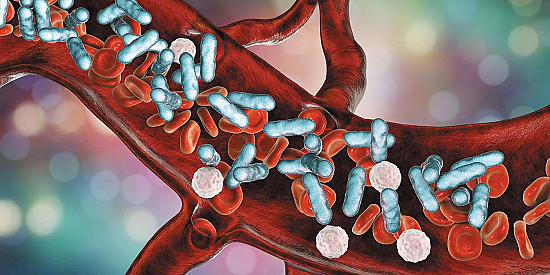
The biopsy site will feel tender for a few days. There's a slight risk of infection or bleeding. Depending on the location of the lymph node being removed, there is a slight risk of blood vessel or nerve damage.
Must I do anything special after the test is over?
It's normal for the biopsy site to feel sore afterward, but tell your doctor if it becomes red or hot, or if you develop a fever. These symptoms could be signs of infection.
How long is it before the result of the test is known?
Results will probably be ready in several days.
About the Reviewer
Howard E. LeWine, MD, Chief Medical Editor, Harvard Health Publishing; Editorial Advisory Board Member, Harvard Health Publishing
Disclaimer:
As a service to our readers, Harvard Health Publishing provides access to our library of archived content. Please note the date of last review or update on all articles.
No content on this site, regardless of date, should ever be used as a substitute for direct medical advice from your doctor or other qualified clinician.