







Want to prevent shifting teeth? Maybe you need retainers
Retainers can help protect your bite, your dental work, and your beautiful smile. Here's what you need to know about these dental appliances.
- Reviewed by Sercan Akyalcin, DDS, MS, PhD, Contributor
You may not notice, but your teeth move throughout your life. As you age, telltale signs appear - crowded teeth or new gaps between them. Even food getting stuck can point to shifting teeth.
Retainers for teeth help minimize unwanted tooth movement and reduce the chances of crowding or gaps over time, says Dr. Sercan Akyalcin, head of orthodontics and associate professor of developmental biology at the Harvard School of Dental Medicine.
It's more than just a smile issue. Stuck food promotes bacterial buildup that can lead to gum irritation, inflammation, and more serious periodontal problems. Crowding of your teeth can make it difficult to brush or floss well or to get needed dental care such as a crowns or bridges. Shifting teeth can also cause uneven forces that increase wear and tear not only on natural teeth, but also on previous dental work such as crowns, veneers, bonding, and implants.
Retainers also help maintain a person's bite contact - how the upper and lower teeth meet in terms of chewing, says Dr. Akylacin. "By helping maintain tooth position and bite contacts, retainers may help protect expensive dental work from avoidable bite changes, especially after orthodontic treatment or restorative work," he says.
If you or your dentist notice even minimal shifting of your teeth, or you've had orthodontic treatment for it already, you may be a good candidate for retainers.
Types of retainers
Dental retainers come as either removable appliances or permanent ones. Which is the best choice? That often comes down to whether a person will use the retainers as directed, Dr. Akyalcin says.
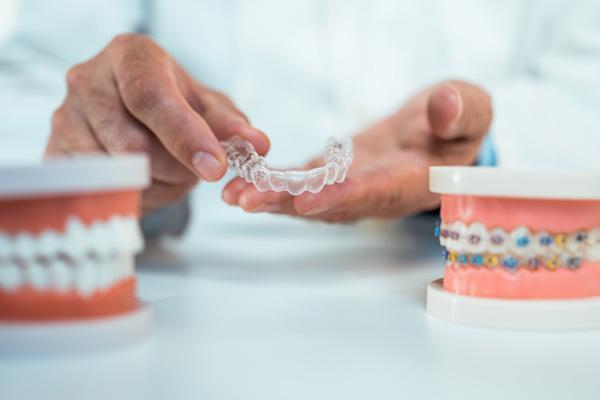
Some removable retainers are clear plastic molded pieces that fit snugly over your teeth. Another type, known as a Hawley retainer, consists of a metal wire across a portion of your front teeth and an acrylic base that sits against the roof of your mouth or beneath your tongue.
Permanent retainers use a metal wire bonded to the backs of your teeth. Because bonded retainers can make cleaning teeth more challenging, they may be less ideal for people who have a high risk for cavities or who struggle with flossing. This is one consideration to discuss with your orthodontist.
Even if you see a shift in only one row of teeth (upper or lower), it may make sense to use retainers on both. "The bite is a two-arch system," says Dr. Akyalcin, referring to the curved arrangement of teeth in the upper and the lower jaw and how they fit together. "Keeping only one stable can still allow the relationship between them to degrade."
Can retainers move teeth back into alignment?
Retainers are designed to maintain alignment and prevent shifting but not to actively straighten teeth. For that, you may need aligners, such as removable plastic trays (Invisalign is a popular brand), or braces.
Getting dental retainers starts with getting the right diagnosis. "Seeing an orthodontist can make all the difference, because they can diagnose you properly for any shifts that are happening," says Dr. Akyalcin. If needed, an orthodontist can straighten your bite first. Dentists typically don't straighten your teeth (though some offer aligners), but they can fit you for retainers.
Most orthodontists and many dentists use digital scanners to map your bite, says Dr. Akyalcin. They insert a wandlike device into your mouth to take three‐dimensional images of your bottom and top arches. There's no harmful radiation involved. These images are then sent to the lab that will make your retainers.
Some dental practices still take traditional impressions using a tray filled with material that molds to your teeth.
How much do retainers cost?
Expect to pay between $180 and $550 per retainer, depending on type and where you live. Some brands may offer the option of extra retainers for backup.
How long the appliances last depends on retainer type and habits like teeth grinding. Clear retainers may need replacement more often, while Hawley or bonded retainers can last longer with maintenance. During regular office visits, your orthodontist or dentist should check your retainers and fit to see if it's time for new ones.
How long do you have to wear retainers?
In most cases, you'll need to use your retainers for life. With removable retainers, wear them every night, while you sleep. Think of them as pajamas for your teeth, says Dr. Akyalcin.
After braces or other orthodontic treatment such as aligners, doctors recommend wearing retainers for 22 hours a day for one year, then switching to overnight wear. "Retainer wear for life is the only way to guarantee a stable bite that nicely aligns the upper and lower arches," says Dr. Akyalcin. "Teeth move throughout life."
Cleaning removable retainersRinsing removable retainers isn't enough. Without proper cleaning, retainers can harbor bacteria that can lead to periodontal problems. For daily cleaning, scrub the retainers with a dedicated toothbrush, lukewarm water, and mild soap. Don't use abrasive or whitening toothpastes, which can damage the surface. Let them air-dry. For deep cleaning, do one of the following once a week:
Ultrasonic cleaners use high-frequency sound waves to create microbubbles that remove bacteria and plaque. "They do work, but they're not magical either," says Dr. Sercan Akyalcin, head of orthodontics at the Harvard School of Dental Medicine. "If there's any debris, like food, it can be hardened, and that needs to be cleaned off first." Consider them for deep cleaning, but still brush your retainers daily, he recommends. Most studies of ultrasonic cleaners have been on dentures, using devices between 35 to 45 kilohertz. Evidence finds they work even better with peroxide-based cleansers compared to water alone. |
Image: © D-Keine/Getty Images
About the Author

Rita Colorito, Health Writer
About the Reviewer

Sercan Akyalcin, DDS, MS, PhD, Contributor
Disclaimer:
As a service to our readers, Harvard Health Publishing provides access to our library of archived content. Please note the date of last review or update on all articles.
No content on this site, regardless of date, should ever be used as a substitute for direct medical advice from your doctor or other qualified clinician.