










TMS treatment may succeed when depression drugs fail
Transcranial magnetic stimulation (TMS) targets areas of the brain involved in mood regulation. Updated protocols hold the promise of rapid relief from depression.
- Reviewed by Shan Siddiqi, MD, Contributor
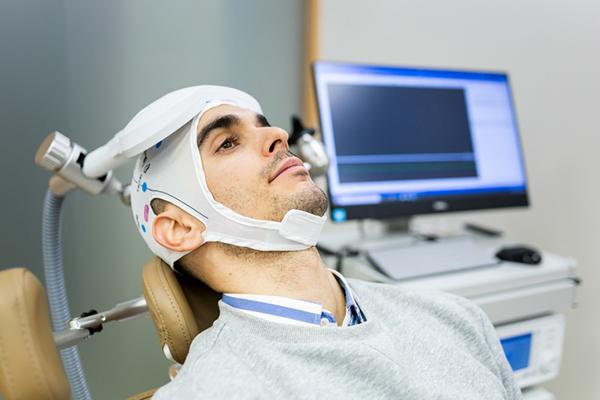
People who feel a persistent sense of sadness, hopelessness, and little interest in things they once enjoyed - the hallmarks of what doctors call major depression - often try many different antidepressants over time in search of relief. When none of those medications work, transcranial magnetic stimulation (TMS) may help. A noninvasive form of brain stimulation, TMS was cleared by the FDA for treating major depression nearly two decades ago. To date, more than 20 million TMS treatments have been administered throughout the world, and research on this therapy has increased in recent years.
How does TMS work?
"TMS uses magnetic pulses to repeatedly activate systems in the brain that aren't functioning as they should," says Dr. Shan Siddiqi, assistant professor at Harvard Medical School and neuropsychiatrist at the Center for Brain Circuit Therapeutics at Brigham and Women's Hospital. The therapy targets certain areas of the brain implicated in depression, which is thought to stem from a combination of causes. These include faulty mood regulation by the brain, genetic vulnerability, and stressful life events.
While you sit in a reclining chair, a device positioned on your head delivers the pulses, which pass through your skull to stimulate brain cells (neurons) in the targeted areas. Earplugs help muffle the loud clicking sounds made by the device during treatment.
A standard course of TMS treatment entails a session every weekday for seven weeks. Each session lasts between three and 40 minutes depending on the protocol, which is based on your symptoms and other factors. Newer, high-dose protocols that shorten the treatment period (known as accelerated TMS) may also be an option. One, which was cleared by the FDA in 2022, involves 10 treatments per day for five days and is covered by some insurance companies. Another, which delivers 20 treatments in a single day, is not yet cleared.
How effective is TMS?
For insurance to pay for TMS, a person must have already tried two to four different antidepressant medications, says Dr. Siddiqi. "But most people have tried more than that by the time they come to us," he adds. Before treatment, people rate the severity of their depression on a scale. After TMS, about 50% to 70% show a response to the treatment, defined as a drop of 50% or greater in symptoms. About 30% to 40% experience remission - a complete or near-complete absence of symptoms.
"TMS is really good at getting people out of a depressive episode. But it's not good at preventing a future depressive episode," says Dr. Siddiqi. Major depression often recurs, but the timing of future episodes is hard to predict. People who've undergone TMS often say they feel much better and ask if they need to keep taking their antidepressant medication, says Dr. Siddiqi. "It's important to know that medication can help prevent depression from returning. Some people stay on medication, and others talk to their doctor about tapering off their drug, usually if they're having side effects," he says. Either way, if your depression recurs, you can undergo another round of TMS.
Follow-up studies suggest that for people who achieve remission after TMS, it usually lasts at least a year. "Anecdotally, people who do well with TMS sometimes come back in about two years for another course of treatment," Dr. Siddiqi says.
What are the side effects of TMS?
Sometimes people feel mild pain in the scalp because the treatment stimulates nearby nerves, but the discomfort disappears once the session ends. TMS may also cause the muscles in your head to twitch, which stops when the session ends but sometimes triggers a headache if the twitching is particularly intense. Pain relievers such as acetaminophen (Tylenol) can help. Seizures during or soon after a treatment are another possible but very rare side effect, occurring at a rate as low as one in 30,000 sessions. The side effects are generally quite mild and are less extensive than antidepressant side effects, which can affect the gut, heart, and reproductive organs. "I think of TMS as more like psychotherapy, in that it targets specific parts of the brain, just as therapy focuses on specific thoughts and behaviors," says Dr. Siddiqi.
Image: © Jesus Rodriguez/Getty Images
About the Author

Julie Corliss, Executive Editor, Harvard Heart Letter
About the Reviewer

Shan Siddiqi, MD, Contributor
Disclaimer:
As a service to our readers, Harvard Health Publishing provides access to our library of archived content. Please note the date of last review or update on all articles.
No content on this site, regardless of date, should ever be used as a substitute for direct medical advice from your doctor or other qualified clinician.


