Do I need to avoid grapefruit if I am on a statin?
Ask the doctor
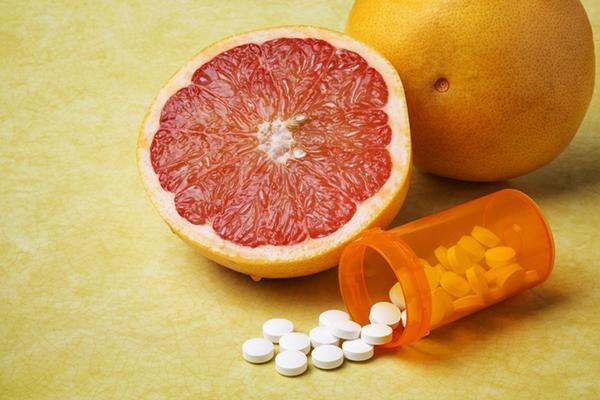
Q. My doctor just prescribed atorvastatin (Lipitor) for high cholesterol. The instructions said: "Do not eat grapefruit or drink grapefruit juice while taking this medication." I love grapefruit. Do I need to avoid it completely?
A. Like you, I love the taste of grapefruit. And it contains many healthy nutrients. However, one of those nutrients called furanocoumarins can raise the blood levels of certain medications, including atorvastatin.
Furanocoumarins block an enzyme called CYP3A4 in the intestine. This enzyme metabolizes (breaks down) many different drugs. Some drugs are broken down only a little by CYP3A4. For other drugs such as atorvastatin (and also simvastatin), CYP3A4 is the most important metabolic enzyme.
Drug makers estimate how much effect the CYP3A4 enzyme will have on each drug. This helps determine the proper dose.
CYP3A4 has a large effect on the breakdown of atorvastatin. When eating grapefruit or drinking its juice, you block the enzyme. So, you end up having a lot more atorvastatin go into your blood. This could cause major side effects.
The side effect doctors worry about the most with all statins is muscle damage. Extensive muscle damage releases chemicals into the blood that can cause kidney failure.
The interaction between atorvastatin and grapefruit depends on the dose of the drug, and the amount of fruit and juice you take in. If you take a low dose of atorvastatin and occasionally had a little fruit or juice, it's likely okay.
Most other statins also are broken down by the CYP3A4 enzyme. People that take either lovastatin or simvastatin should also avoid grapefruit and its juice. Rosuvastatin (Crestor), pravastatin (Pravachol), and pitavastatin (Livalo) are alternative statins that are not affected by grapefruit.
Image: © smartstock/Getty Images
About the Author

Howard E. LeWine, MD, Chief Medical Editor, Harvard Health Publishing; Editorial Advisory Board Member, Harvard Health Publishing
Disclaimer:
As a service to our readers, Harvard Health Publishing provides access to our library of archived content. Please note the date of last review or update on all articles.
No content on this site, regardless of date, should ever be used as a substitute for direct medical advice from your doctor or other qualified clinician.