










What does a positive TB skin test mean?
Ask the doctor
Q. I had a skin test for tuberculosis. The test came back positive. Does this mean I have tuberculosis, or just that I've been exposed to it? What is my next step? Should I have the skin test repeated?
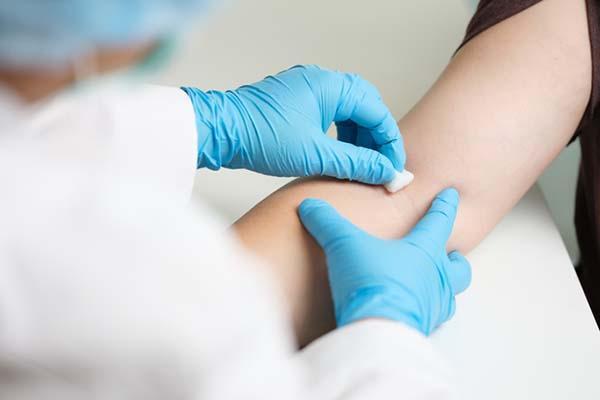
A. The standard tuberculosis skin test involves injecting several drops of a sterile solution that contains a purified protein derivative. The test is called PPD or Mantoux test. You get the shot just under the surface of the skin of the forearm. A small bump forms that disappears over the next 30 minutes or less.
A nurse, or other health professional, needs to examine the forearm 48 to 72 hours after the skin test. The nurse runs her finger over the site to feel if a new, firm bump (called induration) has formed. It usually will have a red color. However, the red color does not mean it is a positive test, even if it is big and red. It's the size of the bump that determines a positive test.
It's not just the size of the bump. Characteristics of the person also matter:
- For healthy people who don't work in a health care setting, a bump of 15 millimeters or more is positive.
- For someone who has come into contact with a person known to have TB or a person who has diabetes or kidney disease, 10 millimeters of induration is positive.
- For people with compromised immune systems, such as patients with HIV, any bump longer than 5 millimeters is positive.
If you fit into one of the above categories with a true positive TB skin test, it means that you likely have acquired the infection. But this does not mean you will ever get sick. Your immune system can keep the TB bacteria in an inactive state forever as long as you stay healthy.
If you have any symptoms, you will need to be evaluated by your doctor. Without any symptoms, the next step is usually a chest x-ray. If there is no reason why you should have been exposed to tuberculosis, your doctor could order a blood test called an IGRA (interferon gamma release assay).
In general, a true positive skin test should not be repeated. It could cause a very big reaction on your arm. Once a person has a positive TB skin test, they don't need a repeat.
Image: © Navinpeep/Getty Images
About the Author

Howard E. LeWine, MD, Chief Medical Editor, Harvard Health Publishing; Editorial Advisory Board Member, Harvard Health Publishing
Disclaimer:
As a service to our readers, Harvard Health Publishing provides access to our library of archived content. Please note the date of last review or update on all articles.
No content on this site, regardless of date, should ever be used as a substitute for direct medical advice from your doctor or other qualified clinician.


