Can dietary changes ease gas and diarrhea after a new colostomy?
Ask the doctor
Q. I recently needed a colostomy. I have a lot of gas and the output is very watery. Would changing my diet help? Any other suggestions?
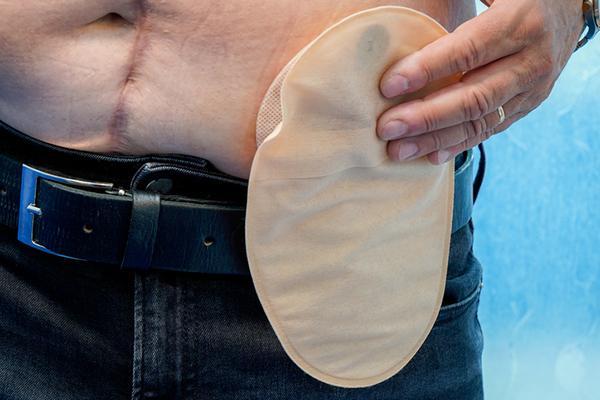
A. A colostomy is a surgical connection between the large bowel and the wall of the abdomen. Bowel movements are diverted through the colostomy into a plastic bag, rather than coming out through the rectum. A surgeon will create a colostomy when part of the bowel must be removed or bypassed, and the ends cannot be reconnected easily.
There are many reasons why you might have diarrhea and other digestive problems. Possibilities include:
- an underlying bowel disease (this may or may not be related to the reason that your colostomy was created in the first place)
- a bowel infection - in particular, diarrhea can be triggered by the bacteria Clostridium difficile after antibiotics are used
- a change in your diet
- side effects from new or old medicine
- a change in bowel function directly related to the colostomy itself; for example, the shortened length of your bowel may cause decreased absorption of water and nutrients. This in turn leads to diarrhea.
Your first step should be to visit your surgeon or primary doctor to help determine which of these are the likely cause.
If there are no worrisome causes for your diarrhea and flatulence after a careful evaluation, several simple things might help your symptoms.
First, carefully review your diet to see if there is anything that might be triggering your loose stools. Cutting out dairy products, raw fruits and vegetables, and caffeine might be a place to start.
If the diarrhea improves, you can slowly add back the things that you have eliminated. Intolerance to certain foods is one of the most common reasons that people develop diarrhea and gassiness, regardless of whether they have a colostomy.
Next, you can try adding fiber to your diet. Fiber has the remarkable ability to help both constipation and diarrhea. Fiber adds bulk to your bowel movements, which improves bowel function. Slowly add more fiber-rich foods such as whole-grain products. Or take a fiber supplement that contains psyllium (Metamucil or Konsyl).
If all else fails, an anti-diarrhea medicine, such as loperamide (Imodium AD) or bismuth subsalicylate (Pepto-Bismol), may help. Be sure to check with your doctor before using such a product on a regular basis.
Image: © Sheila Alonso/Getty Images
About the Author
Howard E. LeWine, MD, Chief Medical Editor, Harvard Health Publishing; Editorial Advisory Board Member, Harvard Health Publishing
Disclaimer:
As a service to our readers, Harvard Health Publishing provides access to our library of archived content. Please note the date of last review or update on all articles.
No content on this site, regardless of date, should ever be used as a substitute for direct medical advice from your doctor or other qualified clinician.