What are the treatments for bow legs?
Ask the doctor
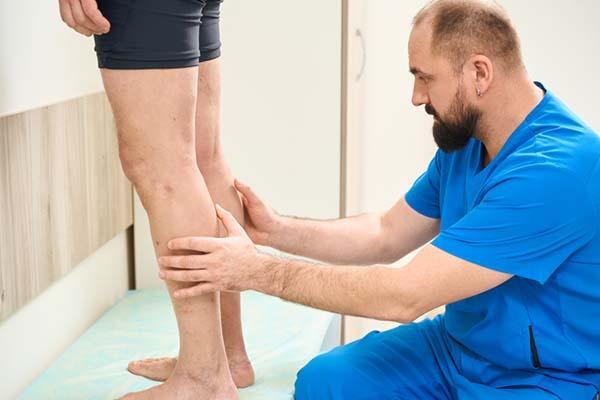
Q. What are the treatments for bow legs?
A. Bow legs (also called genu varum) are a common condition. When a person stands with their ankles together, the knees should come close together or lightly touch. If the knees are far apart, the legs are said to be bowed.
The best treatment for a person with bow legs depends on the person's age, the severity of the bowing, its cause, and any associated symptoms. Most people with bow legs require no treatment. That's because the condition often improves over time (as with the condition in toddlers), or because the bowing is mild and causes no harm.
There are several causes of bowed legs. The most common is normal variant. That means that there is no disease or condition causing bow legs; instead, there is a minor (and generally unimportant) variation from the usual alignment of the legs. In fact, this is normal in toddlers up to age 3. Newborns have bow legs, too, but as they grow and begin to walk, the legs tend to straighten out and the bowing is mostly gone by age 3.
Developmental abnormalities may cause bow legs. The most common cause worldwide is probably vitamin D deficiency (also called rickets when it occurs in growing children). Some genetic and developmental disorders can also contribute to bowing of the legs. In adults, injury (such as leg fracture) and osteoarthritis (degenerative joint disease) are the most common causes.
For cases associated with vitamin D deficiency, dietary intake of vitamin D and exposure to sunlight can restore normal bone growth (although severe bowing may be permanent). When bowing is significant and no reversible cause can be found, doctors will usually recommend bracing and exercises. Surgery may be recommended for severe cases.
Image: © Svitlana Hulko/Getty Images
About the Author

Robert H. Shmerling, MD, Senior Faculty Editor, Harvard Health Publishing; Editorial Advisory Board Member, Harvard Health Publishing
Disclaimer:
As a service to our readers, Harvard Health Publishing provides access to our library of archived content. Please note the date of last review or update on all articles.
No content on this site, regardless of date, should ever be used as a substitute for direct medical advice from your doctor or other qualified clinician.