










How to use home health monitors
These handy devices can help you track and manage many conditions.
- Reviewed by Howard E. LeWine, MD, Chief Medical Editor, Harvard Health Publishing; Editorial Advisory Board Member, Harvard Health Publishing
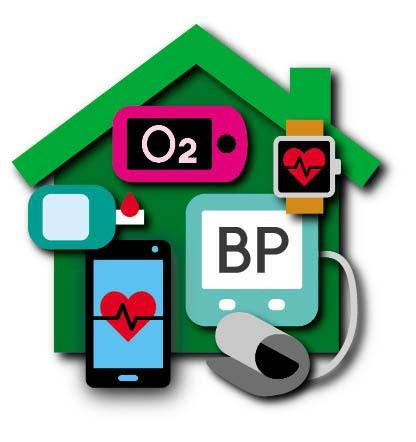
Home health technologies have made it easy for people to regularly monitor their health. These devices can track vital health markers like blood pressure, blood sugar, heart rhythms, heart rate variability, and oxygen saturation. "Checking this information regularly can help manage existing conditions or alert you to changes that you can discuss with your doctor," says Dr. Howard LeWine, medical editor for Harvard Men's Health Watch. Here is a look at how these devices work and who benefits from using them.
Blood pressure
High blood pressure raises the risk for heart attack, stroke, and other serious health conditions. People who need to manage their blood pressure are encouraged to take regular readings with at-home blood pressure monitors and share any changes with their doctors. Home readings also help people who suffer from "white-coat hypertension," in which blood pressure spikes only at the doctor's office.
A good device costs approximately $50 to $100. At-home monitors can store multiple readings and send the data to your computer, your smartphone, or even your doctor's office. "My blood pressure fluctuates quite a bit," says Dr. LeWine. "With my home blood pressure machine, I am able to correlate my readings with how I feel and share this information with my doctor to achieve good blood pressure control."
Choose a monitor with a large, easy-to-read display that appears on the U.S. Blood Pressure Validated Device Listing. Use one with an arm cuff that inflates automatically (wrist and finger cuff devices are not considered reliable). The cuff should be wide enough to cover about 80% of your upper arm, from your elbow to your armpit. Cuffs that are too small or too large will not provide an accurate reading. Your doctor can advise you about how often to take readings.
Blood sugar
Continuous glucose monitoring systems (CGMs) are used by people with diabetes to regularly monitor their blood sugar (glucose) levels to make sure they're not too high or too low. The information also helps doctors gauge treatment plans.
CGMs applied to the skin (usually on your arm or abdomen) have a sensor that measures glucose in the interstitial fluid that surrounds your body's cells. (Interstitial fluid has a glucose level similar to that in the blood.) Data is then sent wirelessly to another device, like a smartphone. Your glucose level is displayed every two to 15 minutes, along with a history of your levels and an indication of whether your level is trending up or down. Some devices have alarms that alert you if blood sugar becomes dangerously low or high and can also send that information to a compatible insulin pump if needed.
Because CGMs provide a continuous stream of information, they are especially beneficial for people with type 1 diabetes (an autoimmune disease that destroys the insulin-producing cells), who often have fluctuating glucose levels and need to monitor their insulin doses carefully. However, you need to be aware of the approximate 20-minute delay between the levels the CGM displays and the actual levels in your blood.
The benefit of CGMs for people with type 2 diabetes, the more common form of the condition, is less clear. Only a small number of these individuals require complex insulin regimens of the sort a CGM can help manage. However, experts suggest that CGMs may still help people with type 2 diabetes, as they are vulnerable to episodes of low blood sugar.
"And even if you don't have diabetes, some individuals may still benefit from using a CGM, particularly those at high risk for diabetes due to family history or other factors, or people taking medicines that can raise blood sugar," says Dr. LeWine. CGMs can also help catch early signs of prediabetes (when blood sugar is slightly high, but not high enough to meet the definition of diabetes). More than one in three adults have prediabetes, and 81% of them don't know it, according to the CDC.
Check with your doctor to determine if a CGM is a good option for you. Note that CGMs can be costly and are unlikely to be covered by health insurance unless you have diabetes.
Heart rhythm
Atrial fibrillation (afib), the most common heart rhythm disorder, is characterized by a rapid, irregular heartbeat. "Many people with afib don't know they have it," says Dr. LeWine. Afib symptoms include palpitations (a fluttering or pounding heartbeat), shortness of breath, fatigue, lightheadedness, and chest pain.
Wrist-worn devices, such as smart watches and fitness bands, can help detect afib. The FDA has cleared four wrist-worn devices for doing this: Apple Watch (Series 4 and later), Fitbit (Sense 2 and Charge 5), Samsung Galaxy Watch (Series 3 and later), and Withings ScanWatch. Each flashes a light on the skin of your inner wrist to detect blood flow, measuring heart rate and using an algorithm to check for abnormal rhythms. The device takes either on-demand, periodic, or continuous measurements, sending an alert if it detects an irregular rhythm.
The electrocardiogram (ECG) feature of wrist devices could be helpful for people who experience occasional, brief palpitations. "If the watch detects afib after such an episode, a person can then undergo a formal afib evaluation with their doctor," says Dr. LeWine.
Another way to detect afib at home is with a mobile ECG device. You place your fingers on the mobile ECG's sensors for 30 seconds. The rhythm is displayed either on the device or on an app on your nearby smartphone and identified as either normal or possible afib. Suspicious recordings are sent via email or an online health portal to your doctor's office. Wrist devices cost around $250, while mobile ECGs range from about $80 to $150. Neither is typically covered by health insurance.
Heart rate variability
Heart rate variability (HRV) is a measure of the brief (measured in milliseconds) fluctuations in time between heartbeats.
HRV reflects your autonomic nervous system, which regulates involuntary actions like heart rate, breathing, and digestion. The autonomic nervous system has two opposing parts: the sympathetic nervous system governs your stress response (andamp;ldquo;fight or flight"), while the parasympathetic nervous system controls your relaxation response (andamp;ldquo;rest and recovery"). The constant push-pull between these two underlies the variability in your heart rate.
Most wrist devices can also measure your HRV continuously or at specific intervals. Some can also check on demand and even while you sleep. The results are stored in the device or downloaded to an app on your phone.
"In general, a greater HRV is linked to higher fitness levels and better cardiac health," says Dr. LeWine. People battling stress or fatigue have a lower HRV. Other factors that can cause a low HRV include certain medications (like beta blockers and antidepressants) and dehydration.
There's no set definition of what constitutes an ideal number or range for HRV, since many factors influence it, including age, fitness, genetics, medical history, and lifestyle habits. "But by monitoring your personal HRV, you might find it correlates with your level of stress and fitness," says Dr. LeWine.
Oxygen saturation
An oxygen saturation test measures your blood oxygen level, indicating if your body is receiving and transporting enough oxygen to support its functions. "A low oxygen saturation level can signal serious problems like asthma, COPD [chronic obstructive pulmonary disease], or a heart failure flare," says Dr. LeWine.
The test works like this: you place a small, clip-on device called a pulse oximeter on your finger. A light shines on your finger from one side of the clip, and a detector measures the light that comes through the other side. The machine can distinguish blood cells that are saturated with oxygen from those that are not based on how they absorb and reflect light. Blood cells are bright red when they are loaded with oxygen, and they change to a bluish color when they don't carry a full oxygen load.
The oximeter estimates and displays your oxygen saturation percentage. Most healthy people have an oxygen level of around 95% or higher. Certain factors can cause less accurate readings, such as dark skin pigmentation, cold hands, poor blood flow (like in people with Raynaud's), and moving too much during the test.
"While these home devices can offer helpful information, it's easy to become obsessed with your numbers, so keep that in mind," says Dr. LeWine.
Image: © vreemous/Getty Images
About the Author

Matthew Solan, Former Executive Editor, Harvard Men's Health Watch
About the Reviewer

Howard E. LeWine, MD, Chief Medical Editor, Harvard Health Publishing; Editorial Advisory Board Member, Harvard Health Publishing
Disclaimer:
As a service to our readers, Harvard Health Publishing provides access to our library of archived content. Please note the date of last review or update on all articles.
No content on this site, regardless of date, should ever be used as a substitute for direct medical advice from your doctor or other qualified clinician.


