How can a low potassium result affect your health?
Ask the doctor
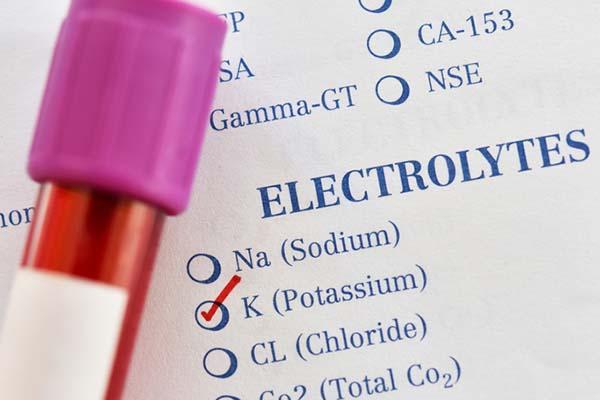
Q. My lab report says that blood potassium level is low at 3.4. What does this mean? What affect does this condition have on my body functions?
A. Potassium is a chemical found throughout the body. It helps our cells, tissues, and organs function properly.
98% of the body's potassium lives inside our cells. Only 2% is found in the water (serum) in our bloodstream. Still, the only practical way to measure whether we have the right amount of potassium is with a blood test.
The normal serum potassium level is 3.5 to 5.0 milliequivalents per liter. But most healthy people have potassium levels of 3.8 or higher.
Doctors refer to a low serum potassium level as hypokalemia:
- 3.0 to 3.4 is mild hypokalemia
- 2.5 to 2.9 is moderate hypokalemia
- Less than 2.5 is severe hypokalemia.
Most people with mild hypokalemia will have minimal or no symptoms. The symptoms that they can have are fatigue, weakness, and muscle cramps. Moderate and severe hypokalemia can cause marked fatigue and muscle weakness.
Hypokalemia is most worrisome in people who have heart disease. A low potassium level increases the chance of a heart rhythm problem. This is sometimes a dangerous situation.
The most common cause of hypokalemia is diuretic use. Other causes include:
- using laxatives
- overusing short-acting asthma inhalers
- vomiting
- eating disorders
- diarrhea.
There are several other rarer causes, too.
Image: © jarun011/Getty Images
About the Author

Howard E. LeWine, MD, Chief Medical Editor, Harvard Health Publishing; Editorial Advisory Board Member, Harvard Health Publishing
Disclaimer:
As a service to our readers, Harvard Health Publishing provides access to our library of archived content. Please note the date of last review or update on all articles.
No content on this site, regardless of date, should ever be used as a substitute for direct medical advice from your doctor or other qualified clinician.