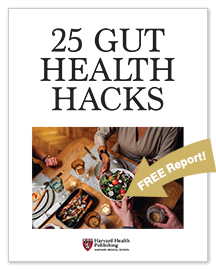
Step into summer in the best shape of your life with these reports from Harvard Medical School.
Learn How

Start your exercise and fitness program and reap the benefits of being more fit, stronger and healthier!

Warmer weather is on the way and it's not too late to get in shape for the summer. These 3 reports can help you enjoy outdoor activities in the best shape of your life:

Harvard Heart Letter: April 2011

Articles in this issue:

Same-day angioplasty feasible, safe

Not everyone needs an overnight hospital stay after this artery-opening procedure.

Artery-opening angioplasty is an amazing procedure. It lets a doctor restore blood flow to hard-working heart muscle without having to cut into the chest or split the rib cage. Assuming all goes well, the recovery time is minimal and the only physical reminder of the procedure is a half-inch scar at the top of one leg.

Standard procedure calls for spending a night in the hospital after angioplasty, even though some people want to go home the same day and could do so safely. Some doctors and insurers are ...

Read More »

Long-term look at aneurysm repair

A new study explores how people fare after surgery or nonsurgical repair.

A weakened widening of the aorta (the main pipeline for delivering oxygen-rich blood to the body) can be deadly if it bursts. This widening is called an abdominal aortic aneurysm, or triple-A for short. There are two main ways to battle this bulge: traditional surgery and a newer approach called endovascular repair.

Surgery is done by opening the belly, moving aside the intestines and other organs, and sewing in a durable patch to fix the bulge. Endovascular repair is performed through two small openings in the groin. Each ...

Study suggests caution on statins after a bleeding stroke

These drugs may harm more than help after a stroke linked to a degenerative brain condition.

The drugs known as statins do many good things. They are the most powerful cholesterol-lowering agents discovered so far. They help prevent heart attacks in people who have had one, as well as in those at high risk for one. They lessen the risk of having an ischemic (clot-caused) stroke, the most common kind of stroke in the United States. Use of statins has been linked to stronger bones, better brain health in old age, and other noncardiovascular benefits.

But statins aren't miracle drugs. ...

Hypertrophic cardiomyopathy: Optimism tinged with caution

Most people with this genetic condition develop thickened heart muscle but lead normal lives.

"You have a really big heart" is usually a wonderful compliment — except when it comes from your cardiologist and the term cardiomyopathy crops up in the conversation. An oversized heart usually isn't a good sign.

The heart can enlarge for many reasons. High blood pressure, problems with the valves of the heart, and other "insults" can make the muscular walls of the heart's lower chambers (ventricles) become thicker than they should be. The most common inherited cause is a condition known as hypertrophic cardiomyopathy — ...

Heart Beat: Family matters: Your parents' heart health affects yours

Research suggests that a family history of heart attack is another factor that should be considered in estimating a person's own heart attack risk.

In Brief

Brief reports on temporary heart damage caused by running marathons, the effect of kidney disease on the necessary dose of warfarin, and a possible increased risk of heart trouble for women taking a breast cancer drug.

Ask the doctor: Are my blood pressure and heart rate changing normally during exercise?

Q. Sometimes I take a walk while wearing my blood pressure cuff. For the first few minutes, as I walk at a modest pace, my systolic blood pressure rises from 115 to 130 or so, while my heart rate hardly changes from its usual 60-something beats per minute. But when I start walking faster, my systolic pressure stays steady or sometimes goes down a bit, while my heart rate increases to 110. Is this a normal pattern? Can you explain what is going on?

A. When the average healthy person is sitting or walking at a normal pace, the heart, ...

Ask the doctor: Does smoked fish contain omega-3 fats?

I like smoked salmon and kippered herring, and thought that eating them was good for me. But I read in another health newsletter that the smoking process destroys all the heart-healthy omega-3 fats. Is that true? Read More »

Ask the doctor: What is venous insufficiency?

I have been diagnosed with venous insufficiency. What does that mean?

Web Extras:

Did you know?

You can get instant online access to all of the articles from the April 2011 issue of Harvard Heart Letter for only $5.00.


Already a subscriber to this newsletter? Login for complete instant access.

If you want a button/link to remove the box (not sure if you do or not...), it would look like this: Cancel