










Special Health Reports

Managing Your Cholesterol

$20.00
$18.00
$29.00
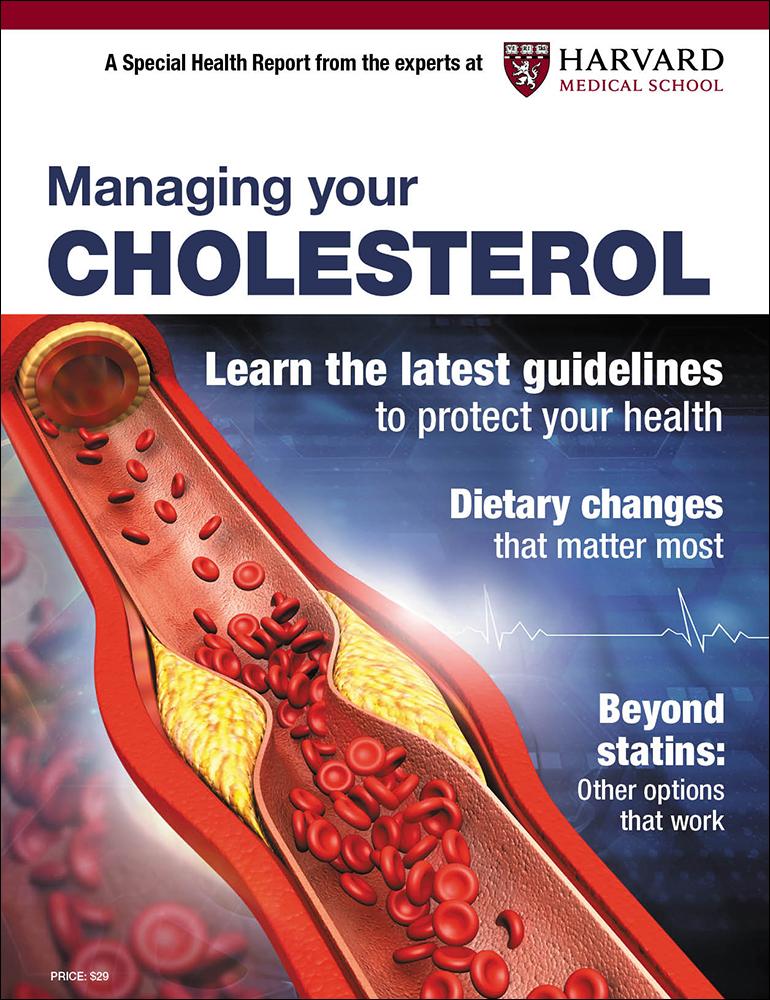
managingcholesterol-hc0726-cover

Managing Your Cholesterol: Learn the latest guidelines to protect your health

Managing Your Cholesterol offers up-to-date information to help you understand your cholesterol numbers, treatment options, and ways to lower your risk of heart disease and stroke. This report provides current, evidence-based information to help you or a loved one manage cholesterol, protect cardiovascular health, and work with your doctor to individualize your treatment.

Other Product Information

More and more Americans are working to prevent heart problems by detecting high cholesterol and lowering it. Those efforts appear to be paying off: the percentage of Americans with coronary artery disease — the cause of nearly all heart attacks — continues to fall.

Updated with information from the 2026 AHA/ACC dyslipidemia guidelines, this Special Health Report explains how cholesterol and triglycerides affect the body, how to understand a standard lipid panel, and how your overall cardiovascular risk influences your LDL goal. You’ll learn about:

  • cholesterol and triglycerides, including LDL, HDL, non-HDL cholesterol, apoB, and lipoprotein(a)
  • the PREVENT calculator and how it helps guide treatment decisions
  • when to consider genetic testing or screening for familial hypercholesterolemia
  • dietary changes, physical activity, weight management, and other lifestyle strategies
  • statins, their benefits and potential side effects, and how to get the most from treatment
  • non-statin options and add-on therapies
  • approaches to managing high triglycerides

A heart-healthy lifestyle is foundational, but many people also need medication to reach their cholesterol goals. This report can help you have more informed conversations with your health care provider and make individualized decisions about testing and treatment

Prepared by the editors of Harvard Health Publishing with Medical Editor Jorge Plutzky, MD, Director of Preventive Cardiology at Brigham and Women’s Hospital. 45 pages. (2026)

What is cholesterol, and why does it matter?

If you have high cholesterol, or your numbers have been trending upward, it’s wise to take it seriously. High cholesterol—what doctors call hypercholesterolemia— is a major driver of cardiovascular disease and a leading cause of death and disability. Elevated levels of low-density lipoprotein (LDL) are particularly dangerous and the primary focus of attention. Left unchecked, high cholesterol can lead to a heart attack, stroke, or the need for a stent or bypass surgery.

Cholesterol comes from two sources: the dietary cholesterol you consume in food, and the cholesterol your liver makes and releases into your bloodstream. Though many people fret about the cholesterol in their diets, only 20% to 25% of the cholesterol in your blood actually comes directly from what you eat. Your body makes the other 75% to 80% from raw materials such as fats, sugars, and proteins.

Cholesterol is a fat-like substance (lipid), and everyone requires a certain amount to function properly. It’s a key component of cell membranes and other structures; in fact, you can think of it as a kind of building block for body tissues. Certain glands use cholesterol to produce corticosteroids and other hormones, including testosterone, estrogen, and vitamin D. Cholesterol is also used to make bile acids, released by the gallbladder, that help you digest and absorb nutrients. It’s so important that the brain actually makes its own cholesterol, rather than relying on absorbing it from elsewhere in the body.

The problem isn’t having cholesterol in your bloodstream—it’s having too much, especially of the wrong kind. When that happens, cholesterol can irritate the arteries, accumulate within them, and damage blood vessel walls, setting off reactions that cause trouble. While this process, known as atherosclerosis, starts early in life, the resulting problems typically don’t appear until years later, after damage has accrued over the course of several decades.

  • What is cholesterol, and why does it matter?
    • More than a plumbing problem
    • How low should you go?
  • Understanding lipids and lipoproteins
    • Lipoprotein types
    • Rethinking “good” and “bad” cholesterol
    • What about triglycerides?
  • What causes high cholesterol?
    • Lifestyle factors that raise cholesterol
    • Medical conditions and medications
    • Genetic risks: When high cholesterol runs in the family
  • Cholesterol tests and related assessments
    • Understanding a standard lipid panel
    • Calculating your risk
    • Other tests you might need
  • Lifestyle changes to improve cholesterol
    • The diet-cholesterol connection
    • Eating for heart health
    • Get moving
  • Statins
    • Who should take a statin?
    • Choosing a statin
    • Statin side effects
    • Getting the most from your statin
  • Statin alternatives and add-ons
    • Ezetimibe
    • Bempedoic acid
    • PCSK9 inhibitors
    • Inclisiran
    • Other LDL-lowering options
    • Targeting triglycerides
    • Possible future therapies
  • Resources
  • Glossary

Reviews

No reviews have been left for this newsletter. Log in and leave a review of your own.

Free Healthbeat Signup

Get the latest in health news delivered to your inbox!

Sign Up