

Even a little exercise linked with lower stroke risk in people with afib

Testosterone therapy without evidence of deficiency may boost heart risk

Weight-loss drug may lower risk of heart attacks and infections

What to eat on the DASH diet

Migraine: How it's diagnosed and what that means

Tricep workouts you can do at home

Mindfulness practices to reduce stress and improve focus

Antihistamines may not offer meaningful relief from eczema symptoms

Overweight and taking blood pressure medications: Study finds it's a trend that's working

FDA approves first mRNA-based flu vaccine
Heart Attack Archive
Articles

Don’t fear the reaper: Eat more whole grains
People who eat at least four servings of whole-grain foods per day appear to have a 23% lower risk of dying of cardiovascular disease compared with people who eat little or no whole grains.

At-home testing for sleep apnea
Home sleep tests to diagnose obstructive sleep apnea (OSA) may reliably detect the disorder even if a sleep specialist is not involved. Marked by loud snoring and breathing lapses during sleep, OSA can increase the risk of cardiovascular disease.

The major impact of ministrokes
Often referred to as a ministroke , a transient ischemic attack, or TIA, often lasts only minutes, but acts as a warning for a potential full stroke.
Stumble walking across the room? You simply aren't watching your step. Forget a name or can't get out the right words? It's just a fuzzy senior moment. Feeling a little dizzy? You only need to sit down for a second.
Flu vaccine offers benefits to patients with heart failure
New research found that heart failure patients who had a flu shot had a 30% lower risk of hospitalization for cardiovascular disease, 16% lower risk of hospitalization for respiratory infections, and a 4% lower risk of hospitalization in general.

How accurate are drugstore blood pressure machines?
An electronic home blood pressure monitor is a better option than a store-based machine for measuring blood pressure between doctor office visits. Arm cuff machines are more accurate than wrist cuff models.

Feel the beat
Your resting heart rate can be an instant measure of your present and future health.
Image: Bigstock
One of the easiest ways to gauge your health can be done in 30 seconds with two fingers. Measuring your resting heart rate (RHR), the number of heartbeats per minute while at rest, provides a real-time snapshot of your heart muscle function.
It is easy to do. Place your index and middle finger on your wrist just below the thumb, or on your neck to one side of your throat, so you can feel your pulse. Use a watch to count the number of beats for 30 seconds and double it to get your beats per minute. Repeat a few times to get an accurate reading. A normal RHR for most adults ranges from 60 to 100 beats per minute.
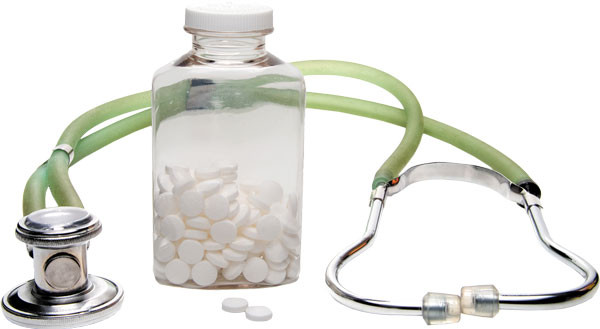
Why you should always have aspirin on hand
This old standby may not be your first choice for pain relief, but it still has an important role in disease prevention and first aid.
Image: Thinkstock
We have a lot to thank aspirin for. It's cheap and plentiful. It does a good job of relieving pain and bringing down fevers. It has also been shown to reduce the risk of heart attack, stroke, and colon cancer. It can even stop heart attacks and strokes in their tracks. In fact, if you're in your 50s or 60s, you may want to think about taking a low-dose aspirin every day.
After evaluating the results of scores of studies, in April 2016 the U.S. Preventive Services Task Force (USPSTF) recommended that women and men ages 50 through 69 who have a 10% risk of a heart attack or stroke in the next 10 years take 81 milligrams (mg) of aspirin daily. Under the previous recommendations—which, were different for men and women—daily low-dose aspirin was advised for women ages 60 through 79 who were at increased risk for cardiovascular events. The recommendation was revised to reflect a new method of calculating the risk of heart attack and stroke and of increased risk of bleeding in older people.
Migraine linked with increased risk of heart disease in women
Migraine headaches are associated with an increased risk of heart disease as well as stroke in women.

Hormones and your heart
Age-related drops in sex hormone levels sometimes cause undesirable symptoms. But is hormone therapy safe for the heart?
Image: monkeybusinessimages/Thinkstock
A decline in sex hormones is a natural part of growing older. Still, it's only natural to want to feel robust, mentally sharp, and healthy as we age. So it's no surprise that hormone therapy—which has been touted by drug companies as a way to restore youthful vigor, first for women and more recently for men—has generated so much interest.
But hormone therapy has a long, controversial history, particularly with regard to how it may affect the risk for common, chronic health problems. The following is a summary of what we know—and don't know—about the cardiovascular effects of hormone therapy for women and men.
Even a little exercise linked with lower stroke risk in people with afib
Testosterone therapy without evidence of deficiency may boost heart risk
Weight-loss drug may lower risk of heart attacks and infections
What to eat on the DASH diet
Migraine: How it's diagnosed and what that means
Tricep workouts you can do at home
Mindfulness practices to reduce stress and improve focus
Antihistamines may not offer meaningful relief from eczema symptoms
Overweight and taking blood pressure medications: Study finds it's a trend that's working
FDA approves first mRNA-based flu vaccine
Free Healthbeat Signup
Get the latest in health news delivered to your inbox!
Sign Up
