

Even a little exercise linked with lower stroke risk in people with afib

Testosterone therapy without evidence of deficiency may boost heart risk

Weight-loss drug may lower risk of heart attacks and infections

What to eat on the DASH diet

Migraine: How it's diagnosed and what that means

Tricep workouts you can do at home

Mindfulness practices to reduce stress and improve focus

Antihistamines may not offer meaningful relief from eczema symptoms

Overweight and taking blood pressure medications: Study finds it's a trend that's working

FDA approves first mRNA-based flu vaccine
Diseases & Conditions Archive
Articles

Traffic noise may raise stroke risk
A constant drone of low-level traffic noise may slightly raise your risk of cardiovascular disease, according to British researchers.
The study included data from the nearly 450,000 people admitted to London hospitals with cardiovascular disease over an eight-year period. Researchers estimated how much traffic noise these people were exposed to, day and night.

Best ways to battle irritable bowel syndrome
Get to know your triggers and ways to prevent flare-ups.
| Images: Thinkstock Irritable bowel syndrome may be due to an overgrowth of bacteria in the small intestine or nerve problems. |

Treating melanoma
If a growth or mole looks like a melanoma, the doctor will take a biopsy to confirm the diagnosis. This entails removing either a sample of tissue or else the entire growth and some surrounding skin, and examining the tissue under a microscope to determine whether it's cancer. Depending on how deep a melanoma is, additional tissue may have to be removed. In some cases, lymph nodes may be removed, too. A procedure called sentinel node biopsy can show whether the lymph node nearest the tumor contains any cancer cells. If it does, surgery to remove additional nodes right away can improve survival.
In addition to surgery, treatments for melanoma include immunotherapy (which strengthens the immune system against the cancer), chemotherapy, and radiation therapy. Newer, so-called targeted treatments include drugs that target specific genetic changes seem in people with certain forms of melanoma. For example, about half of melanomas have genetic changes (mutations) in a gene called BRAF, which signals melanoma cells to grow and divide quickly. Drugs that inhibit BRAF, such as vemurafenib (Zelboraf ) and dabrafenib (Tafinlar), and related proteins are now available.

Injections don't improve physical therapy for knees
Physical therapy is helpful for wear-and-tear knee osteoarthritis, especially if you start doing it early. But injecting a painful knee with an anti-inflammatory steroid medication before starting physical therapy offers no additional benefit, according to a clinical trial in JAMA Internal Medicine.
Studies have shown that physical therapy modestly reduces pain and improves daily functioning in people with knee osteoarthritis. That could mean being able to walk farther with less pain or to continue leisure activities such as gardening. Before you start physical therapy, your doctor may offer to inject the knee with a cocktail of anti-inflammatory steroid medication and an anesthetic. Hypothetically, this could make it easier for you to stick with exercise and therefore lead to better results.
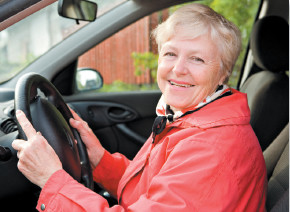
Stay behind the wheel longer
Driving assessment programs evaluate your driving history, family concerns, overall health, thinking, and driving reflexes. They can help you brush up on skills and get up to speed on new driving laws. Image: Thinkstock |
A driving assessment program can help identify your strengths and weaknesses and suggest ways to improve your driving skills.
The sense of freedom and independence that comes with driving is as important at 65 as it is at 16. But driving skills may start to falter as we age, an issue many people choose to ignore. "We all seem to be in denial about driving in our older years. No one wants to give it up. The good news is that you may not have to," says Lissa Kapust, a social worker at Harvard-affiliated Beth Israel Deaconess Medical Center.

When medications make you sensitive to sunlight
Avoid sun exposure or wear sunprotective clothing and sunscreen if you’re taking photosensitizing drugs. Image: Thinkstock |
Wear sunscreen, and avoid direct exposure to the sun.

When do you need a new knee?
Intolerable pain or disability can signal that it's time to consider a knee replacement. Image: Thinkstock |
Knee replacements can restore your mobility, but you don't want to get one too soon—or wait too long.

Ask the doctor: I have osteoporosis. Will physical therapy for my back cause spinal fractures?
Q. I have sciatica. I also have vertebral fractures caused by osteoporosis. I'd like to get physical therapy for my sciatica but am worried about damaging my spine further. What do you advise?
A. I am glad that you are interested in pursuing physical therapy to treat the sciatica. It's the best treatment for it. The physical therapist is likely to show you how to do gentle stretching exercises for your upper legs, buttocks, and back, as well as how to use your back, core, and legs more effectively to avoid worsening the strain on your sciatic nerve. She will also train you to do exercises to strengthen your back and core. None of these maneuvers will damage the bones in your back. But it's important for you to tell the therapist that you do have osteoporosis and vertebral fractures. She will keep that in mind as she works with you.

How to avoid a disabling stroke
Strokes hit women hard. Self-care is key to preventing a stroke and minimizing the damage if you have one.
This year an estimated 425,000 women will have a stroke, and 55,000 will die from one. Women are more likely than men to have strokes, and they are also more likely to be disabled or to die from them.
Stroke risk when you have atrial fibrillation
Now we have a better tool to calculate your chance of a brain attack if you've been diagnosed with afib.
Atrial fibrillation (afib) is among the most common heart rhythm irregularities. During a bout of afib, the usually rhythmic contractions of the heart muscle's upper chambers (the atria) are replaced by an ineffectual quiver that does not completely move blood out of the heart chamber. As a result, blood can stagnate and form clots. These clots can then travel to the brain and cause an ischemic stroke.
Even a little exercise linked with lower stroke risk in people with afib
Testosterone therapy without evidence of deficiency may boost heart risk
Weight-loss drug may lower risk of heart attacks and infections
What to eat on the DASH diet
Migraine: How it's diagnosed and what that means
Tricep workouts you can do at home
Mindfulness practices to reduce stress and improve focus
Antihistamines may not offer meaningful relief from eczema symptoms
Overweight and taking blood pressure medications: Study finds it's a trend that's working
FDA approves first mRNA-based flu vaccine
Free Healthbeat Signup
Get the latest in health news delivered to your inbox!
Sign Up
