What's the best blood pressure target for older adults?
For people over 60, intensive blood pressure lowering may prevent more heart problems than standard therapy.
- Reviewed by Mallika Marshall, MD, Contributing Editor

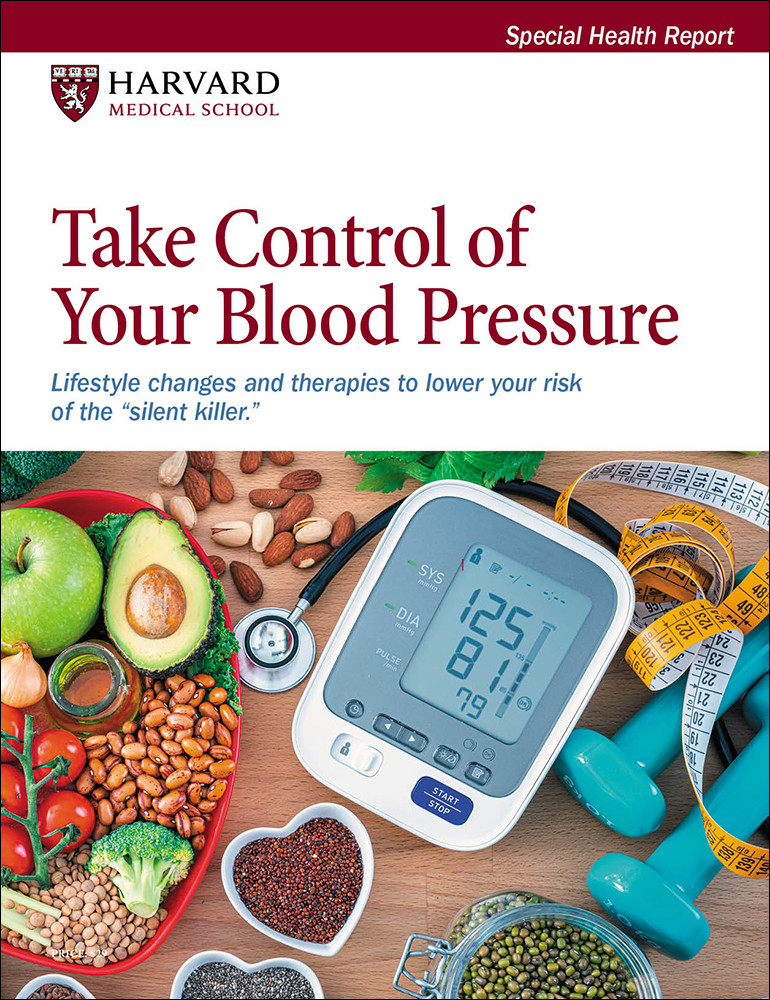
Current guidelines from the nation's leading heart organizations say adults should aim for a blood pressure reading under 130/80 millimeters of mercury (mm Hg). Some medical professionals believe that target might be too aggressive for older people, who may be more prone to side effects from blood pressure drugs, such as dizziness and falls.
That said, recent studies have found that intensive blood pressure reduction in people over 60 is not only safe, but also associated with better outcomes than less aggressive treatment
A 2025 review analyzed information from four randomized controlled trials that compared two strategies for controlling systolic blood pressure (the first, higher number): the more aggressive strategy aimed for a systolic blood pressure of less than 130 mm Hg, while the other aimed for a higher systolic blood pressure (usually between 130 and 150 mm Hg).
The trials included more than 3,600 people ages 75 and older. Compared with the less aggressive strategy, the more aggressive strategy was associated with a 39% reduced risk of cardiovascular events (heart attack, stroke, heart failure), as well as a 45% reduced risk for cardiovascular-related death.
There were no differences in the rates of adverse events - falls, fractures, dangerously low blood pressure, or cognitive decline - between the two groups. Researchers expanded the analysis and found the same conclusions held for people ages 70 and older.
The historical view
The incidence of high blood pressure clearly rises with age. In fact, the original term to describe high blood pressure seen in aging adults was "essential hypertension," as the thinking was that high blood pressure was essential to deliver sufficient blood to the brain. With age, blood vessels become stiffer and less flexible. To reach the brain, circulating blood needs an extra "push" in the form of higher blood pressure. That's why historically, some physicians believed that systolic blood pressure (the first number in the reading) could be as high as 150 mm Hg in people over 65.
Increasingly, however, doctors are reconsidering their approach to treating hypertension in older people, with the newer knowledge that high systolic blood pressure in older adults is a major contributor to strokes and heart attacks. The recent findings mean that many older people should work with their medical team to bring their systolic blood pressure below 130 mm Hg. That may require a combination of lifestyle changes and medication - sometimes more than one.
Aiming low
People often expect that a single medication will get them to their blood pressure goal, but that's often not feasible. For example, someone with a systolic blood pressure of 150 mm Hg almost always needs at least two medications. A single drug usually only lowers blood pressure by an average of 5 to 10 points.
Using lower doses of two different blood pressure medications is more effective than maximizing the dose of a single drug. Because high blood pressure can result from several different mechanisms, combining drugs that target different mechanisms typically works better. The combination approach is also less likely to cause side effects. Moreover, many drug combinations are available as single pills.
Many blood pressure medications are available, which means that doctors can usually find a combination that's safe, effective, and free from side effects.
Image: © Thomas Faull/Getty Images
About the Author

Julie Corliss, Executive Editor, Harvard Heart Letter
About the Reviewer
Mallika Marshall, MD, Contributing Editor
Disclaimer:
As a service to our readers, Harvard Health Publishing provides access to our library of archived content. Please note the date of last review or update on all articles.
No content on this site, regardless of date, should ever be used as a substitute for direct medical advice from your doctor or other qualified clinician.