










How long does it take to build muscle?
Consistent, progressive resistance training can grow muscles and boost strength in a few months.
- Reviewed by Timothy Aceto, PT, MPT, CSCS, Contributor
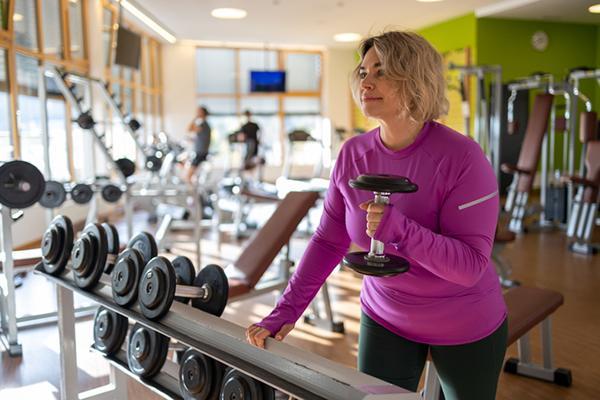
You probably understand how important it is to build muscle and maintain strength, especially as muscle mass declines with age. If you’re starting a strength training program, you may wonder how long you’ll have to wait to feel improvements in strength. The quick answer is, “it takes eight to 12 weeks to build muscle, but you’ll notice gains within the first week or two,” says Timothy Aceto, a physical therapist with Harvard-affiliated Spaulding Rehabilitation.
How does muscle growth happen?
For muscles to grow, they must be challenged with increasing amounts of resistance, which is an opposing force that muscles must strain against. “Resistance training can be done with dumbbells, kettlebells, elasticized resistance bands, specialized machines, or your own body weight,” says Aceto.
To get started, choose a weight or other resistance level that allows you to complete three to four sets of eight to 12 repetitions of an exercise and feel that it’s relatively easy. “Then increase the weight so you feel like you’re one or two repetitions away from not being able to complete one more repetition,” says Aceto. “When you feel like you’re almost at your maximum, that’s a good weight that will build muscle.”
Once this becomes easy, it’s time to add more resistance. For example, if you’re using a five-pound dumbbell, try using a 10-pound dumbbell. You may need to adjust the repetitions. “If you can’t complete 12 repetitions, go down to eight,” says Aceto.
If you feel like you can’t safely add weight, then add repetitions. “Do an extra set or add extra repetitions to each set,” says Aceto.
To get a full-body workout, focus on the main muscle groups: chest, back, arms, shoulders, and legs. To save time, do exercises that engage multiple muscles at once. For example, squats work the quadriceps and hamstrings in your thighs and the gluteals in your buttocks. “You’re not focusing on your calves, but you’re also working the calf muscle,” says Aceto (see “How to make your squat more challenging”).
How to build muscle safely and consistently
Don’t be in hurry. You want to build muscle, but you also don’t want to damage the muscles you’re hoping to strengthen. “Some people start off lifting the heaviest weights possible too frequently, and they burn out,” says Aceto.
Start safely by fitting in two to three 20- to 30-minute workouts a week. Your muscles require time to rest and recover between exercise sessions. On recovery days, continue your aerobic activities such as walking, swimming, or bicycling.
If you do this consistently, you’ll get results. Over the first few weeks, you’ll notice that it becomes easier to lift heavier weights. But you haven’t built new muscles. Your nervous system has gotten better at recruiting the muscles you already have. Actual muscle growth usually takes about two to three months of consistent training.
People with certain health problems (such as arthritis or back pain) may be more prone to injury when starting a muscle-building exercise program. If you have any concerns about whether you can exercise safely, talk to your doctor before you begin and consider working with a physical therapist or experienced personal trainer.
The role of diet in building muscle
How fast you build and maintain muscle also depends on your diet. “You need to consume the right caloric building blocks for the body to build muscle,” says Aceto. This means consuming more calories than you burn and getting sufficient protein.
“Aim for about 0.8 grams per pound of body weight per day,” says Aceto.
How to make your squat more challengingSquats are great for building lower-body strength. If you can’t do a regular squat, start with a sit-to-stand. Stand in front of a chair. Cross your arms over your chest. Squat down as if you’re going to sit in the chair. Instead of sitting, tap the chair with your buttocks and stand up. Squat
Starting position: Stand with your arms relaxed at your sides, your feet about shoulder-width apart, and your toes pointed forward or slightly out. Movement: Hinge forward slightly from your hips and bend your knees to lower your buttocks toward the floor as if sitting back into a chair. Let your arms come forward to help you balance. Hold. Press down through your heels to stand back up, straightening your legs. Squat with weights
Starting position: From the same starting position as the squat, hold a weight in each hand with your arms bent. Movement: Perform the same movement by hinging forward and lowering your buttocks toward the floor. Hold. Press down with your heels to stand back up. Exercise photos by Michael Carroll (squat) and Thomas MacDonald (squat with weights) |
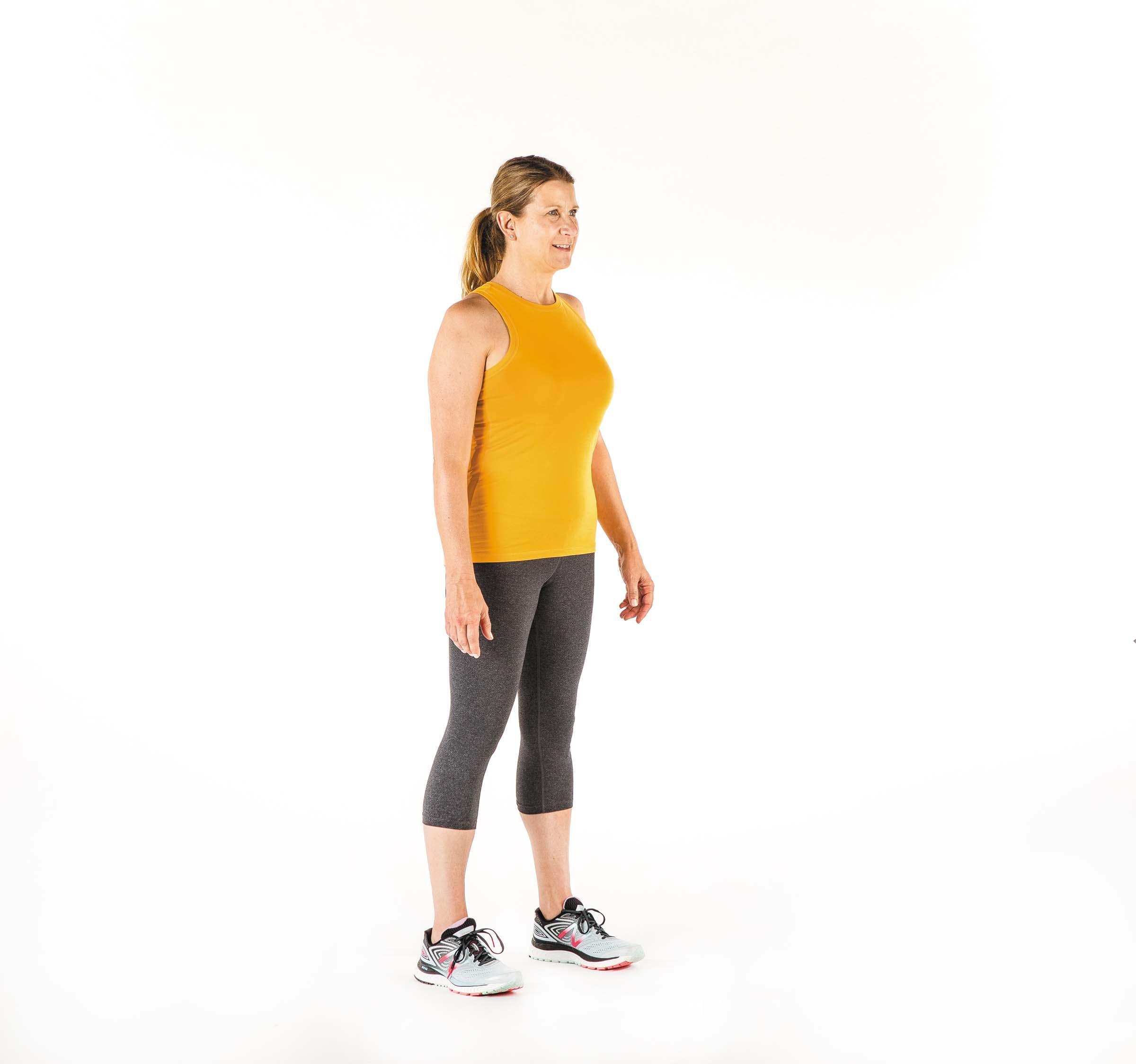
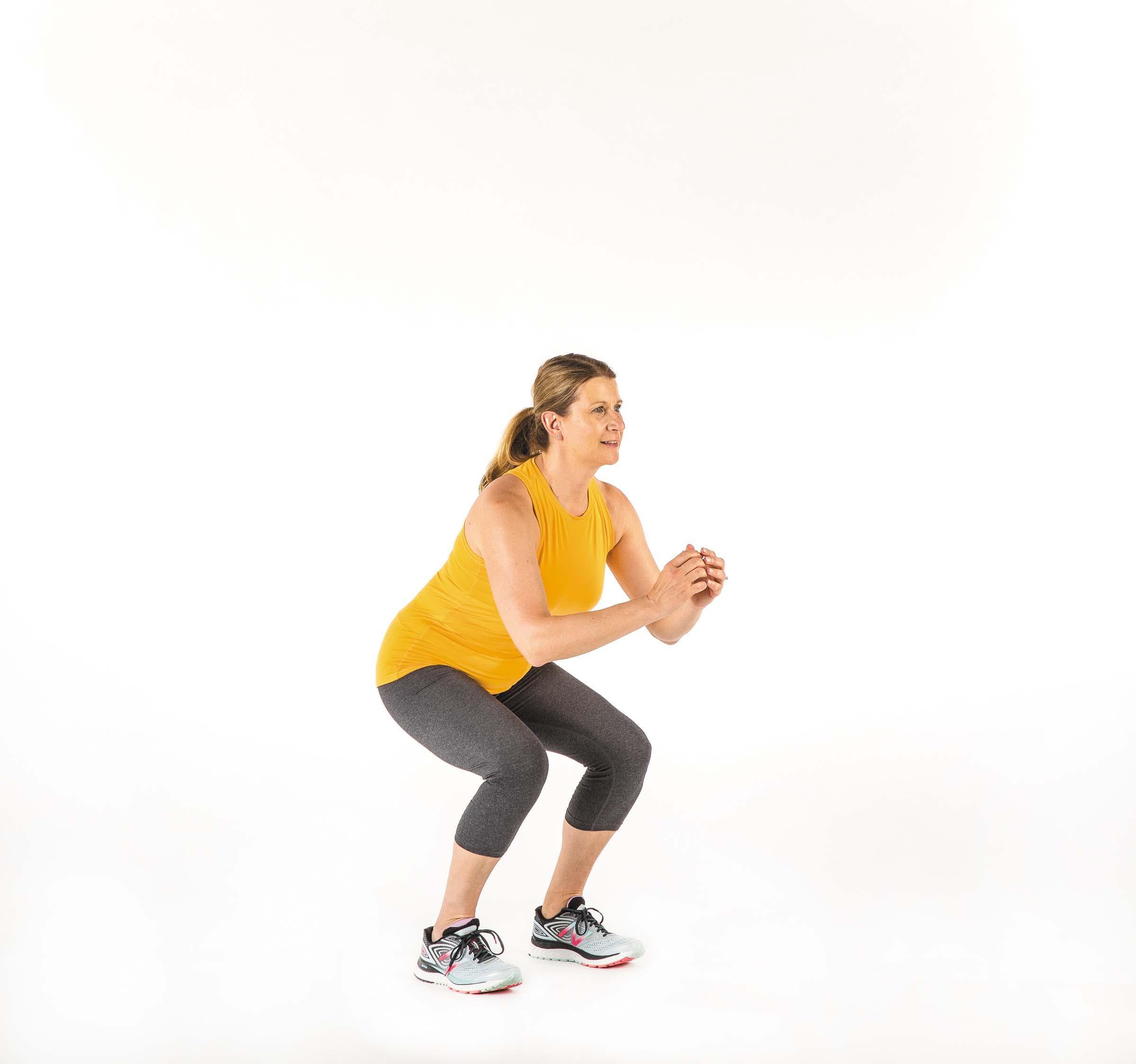
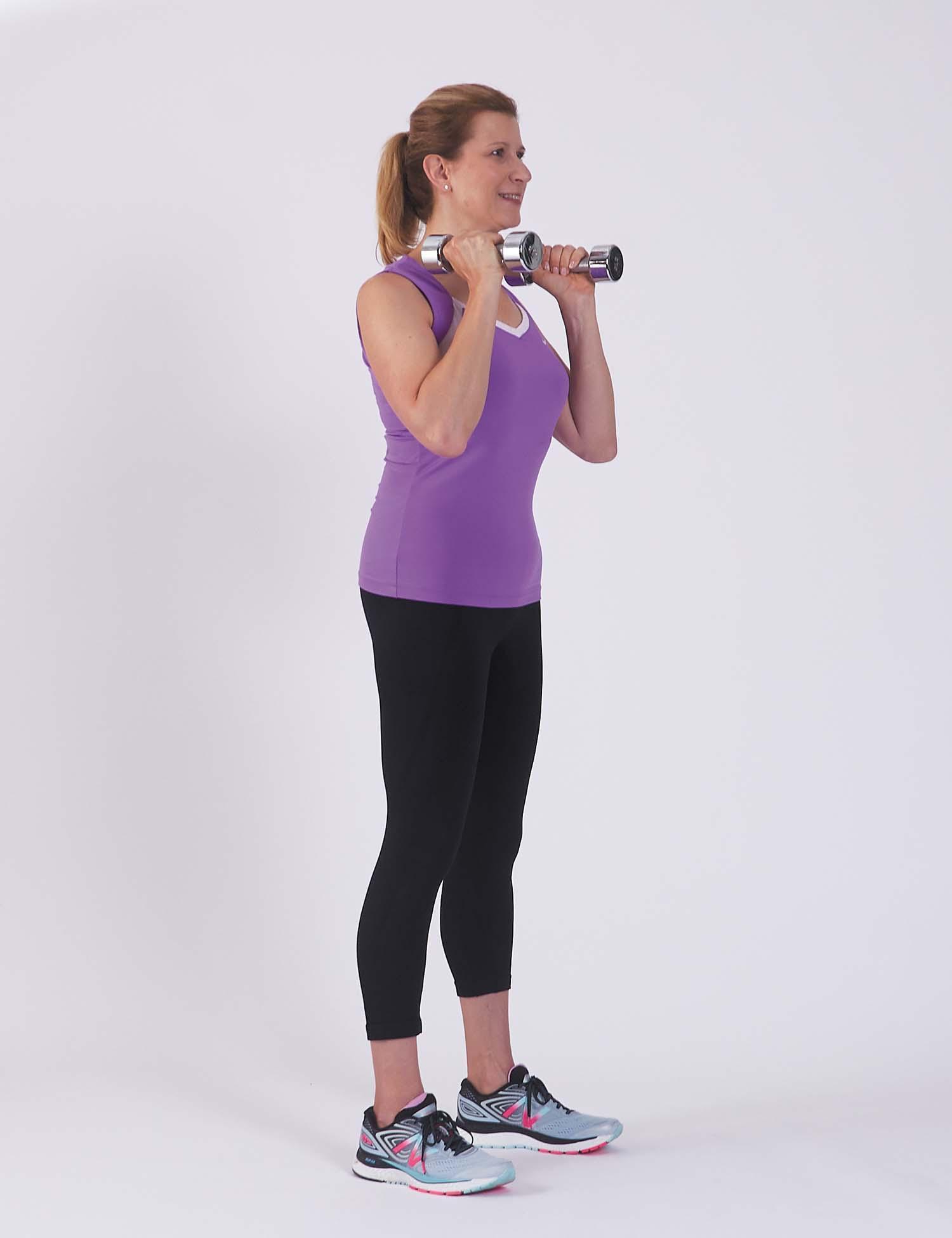
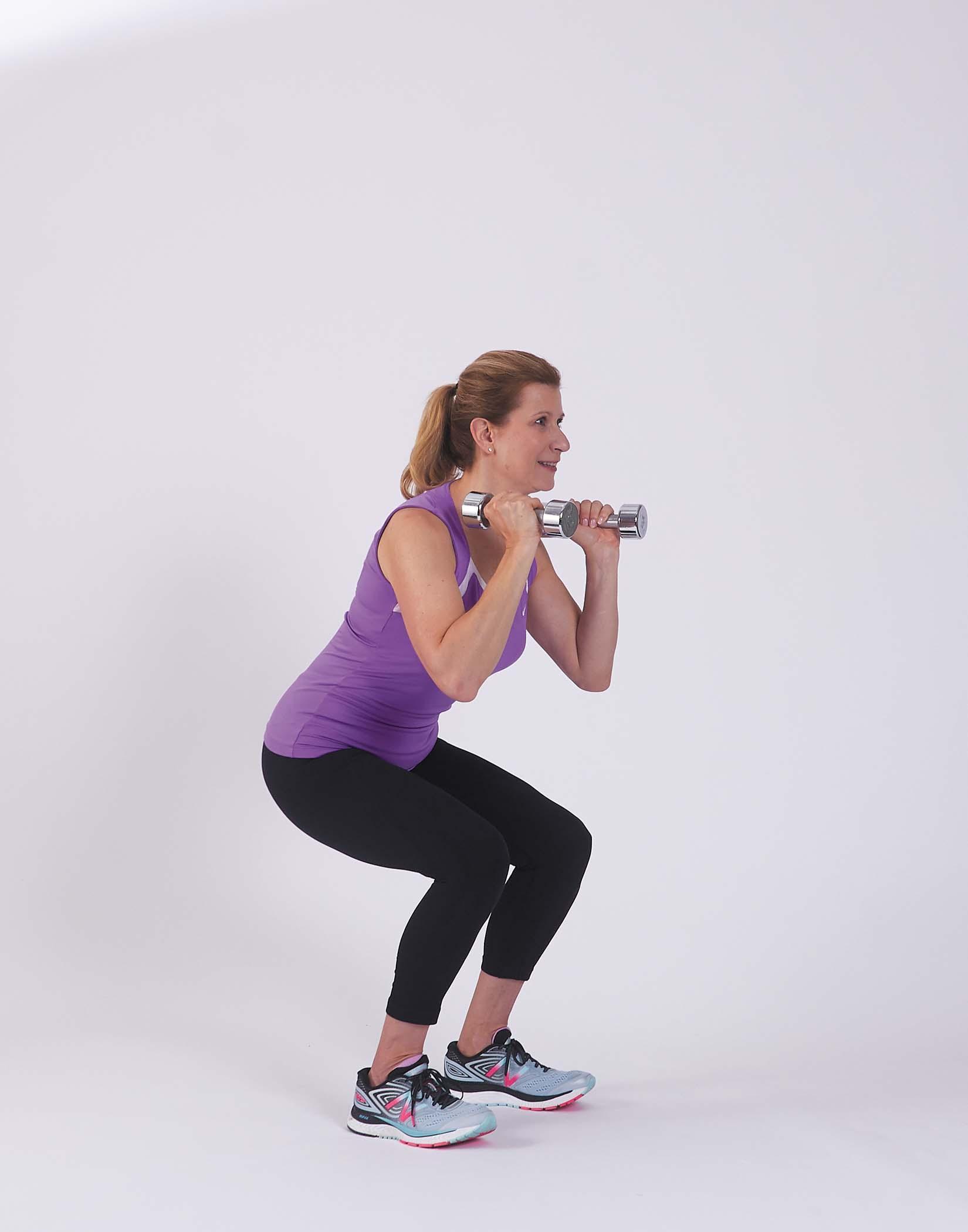
Image: © Kate Wieser/Getty Images
About the Author

Lynne Christensen, Staff Writer
About the Reviewer

Timothy Aceto, PT, MPT, CSCS, Contributor
Disclaimer:
As a service to our readers, Harvard Health Publishing provides access to our library of archived content. Please note the date of last review or update on all articles.
No content on this site, regardless of date, should ever be used as a substitute for direct medical advice from your doctor or other qualified clinician.


