Harvard Health Letter: November 2009
Articles in this issue:
Napping may not be such a no-no
Research is showing that the daytime snooze may have benefits and not interfere with nighttime sleep.
The nap has long been the troubled stepchild of the unassailably hygienic and universally admired good night's sleep. At work, if you get caught napping, it could get you into trouble or, more mildly, sully your reputation for diligence. In studies, naps have been linked to ill health, although usually as a consequence, not a cause. And in sleep recommendations, naps have taken a back seat — or been cast as a threat to nighttime sleep. On its Web site, the American Academy ...
The male face of osteoporosis
As men live longer, they're having to cope with a condition that used to be thought of as a women's disease.
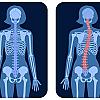
Osteoporosis, a condition characterized by a loss of bone mass and density, has been viewed mainly as a health problem for older women. If you're a member of the male sex, you may have breathed a small sigh of relief — or simply tuned out — whenever osteoporosis came up. It wasn't a disease you needed to worry about.
Unfortunately, gentlemen, it's not quite that simple.
True, osteoporosis is more common in women. But men are by no ...
A sport for all seasons
Swimming has myriad physical and psychological benefits at almost any stage or state of life.
In exercise, water is our natural ally. It lightens our load, stimulates our circulation, protects us from injury, and buoys our spirits. At the same time, it exerts just enough resistance to let us know we're doing some work. For that reason, it's no surprise that swimming is one of the most popular ways to retain — or regain — physical and psychological fitness.
How water works for us Archimedes' bathtub epiphany explains why we begin to reap benefits the moment we step into the ...
Side effects: Minor can add up to major
Many medications have relatively minor anticholinergic effects that may add up, causing mental decline and other impairments.
No one has found the pill that will turn back the clock and make us younger, but there are medications whose side effects seem to do just the opposite.
Drugs with anticholinergic effects can scramble thinking, dim memory, and eventually erode our ability to do the basic things needed to take care of ourselves — bathe, dress, prepare meals, walk, and so on. People get more sensitive to anticholinergic effects with age, so it's a common mistake to blame old age, or ...
By the way, doctor: Why did my doctor prescribe steroids?
I have been diagnosed with temporal arteritis and am being treated with prednisone, which the doctor says is a steroid. I know athletes use steroids to bulk up, and I can't see how that would have anything to do with temporal arteritis. Can you explain?
By the way, doctor: Can the brain grow new neurons?
A recent Health Letter urged us seniors to stay mentally active because that causes the growth of new neurons (brain cells). When my husband had a stroke 40 years ago, the doctors told me the brain cannot make new cells in later life. What's the truth?
Web Extras:
Did you know?
You can get instant online access to all of the articles from the November 2009 issue of Harvard Health Letter for only $5.00.
Already a subscriber to this newsletter? Login for complete instant access.