










Taking up adaptive sports
A physical disability or other limitations needn't keep you away from health-boosting activities.
- Reviewed by Howard E. LeWine, MD, Chief Medical Editor, Harvard Health Publishing; Editorial Advisory Board Member, Harvard Health Publishing
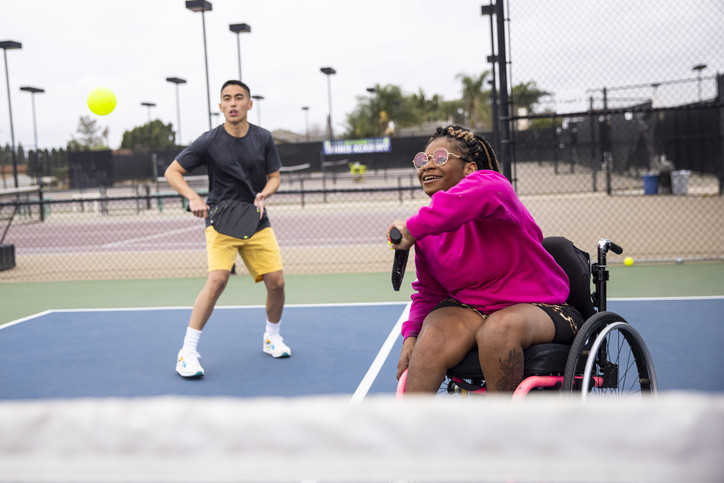
Health guidelines recommend adults get at least 150 minutes per week of moderate-intensity aerobic exercise, or at least 75 minutes of vigorous exercise. Which activities you choose don't matter as long as they get you moving.
But what if an injury, illness, health condition, disability, or even normal aging makes being active hard for you? In those cases, adaptive sports could lend a much-needed hand.
What are adaptive sports?
Adaptive sports are competitive or recreational sports or activities for people with disabilities or physical limitations. They often run parallel to traditional endeavors, but are modified to support people's specific physical abilities.
Eventually, almost everyone will experience some kind of disability that impedes regular exercise, whether it's mild arthritis, requiring a knee or hip replacement, limited vision, or a more significant physical disability. But today, because of advanced technology and supportive infrastructure, people can find almost any kind of sport or activity that takes into account their abilities and helps them stay active.
Why is it important to stay active?
Not getting sufficient regular exercise increases the risk of heart disease, stroke, obesity, diabetes, and cancer. It also affects mood. And people with disabilities are especially vulnerable because of the challenges of staying active. Adaptive sports are a way to continue to exercise regularly and support health and well-being going forward.
Research backs this up. According to one study, people participating in adaptive sports and activities report better overall health, quality of life, and social life.
How can you learn about options for adaptive activities near you?
You can find state and local adaptive sports programs and accessible activities through the website of the Challenged Athletes Foundation.
What kind of sport or activity you choose ultimately depends on your interests and level of function, but many options are available.
Build on strengths and consider new activities
Here are some other strategies that can help you transition to adaptive activities.
Look at your current form of exercise. Almost any kind of sport or activity can be adjusted to accommodate people with disabilities, so there is a good chance you can continue with a favorite endeavor.
For example, specialized golf carts can help you stand and stabilize your body while swinging the club. Sledge hockey uses sleds to skate across the ice.
Focus on your strengths. Don't dwell on what you can't do, but focus on what you can. Running no longer an option? How about power walking using walking poles for support? Can't use your legs? Focus on upper body activities like swimming or kayaking. Low vision? Guides are available to help you walk, run, and cycle.
Join a team. Many adaptive sports have organized team leagues with adjusted rules and formats, like wheelchair basketball and tennis, and "beep" baseball and kickball for individuals with low vision. These are a great way to build more awareness about your new endeavor and build a community with other peers with similar disabilities. Plus, a little competition provides extra motivation.
Try something new. Use your new functional status as an opportunity to attempt a different sport or activity. "Try something that has always interested you. Now might be the ideal time to explore waterskiing, windsurfing, horseback riding, or rock wall climbing.
It may be mentally and emotionally tough to embrace adaptive sports and activities, as it can feel like your disability has become magnified. But don't let that dissuade you. Staying committed to being active and investing in your health can help reduce and eliminate any negative stigma you feel. Participation in adaptive sports can help you live and feel better.
About the Reviewer

Howard E. LeWine, MD, Chief Medical Editor, Harvard Health Publishing; Editorial Advisory Board Member, Harvard Health Publishing
Disclaimer:
As a service to our readers, Harvard Health Publishing provides access to our library of archived content. Please note the date of last review or update on all articles.
No content on this site, regardless of date, should ever be used as a substitute for direct medical advice from your doctor or other qualified clinician.


