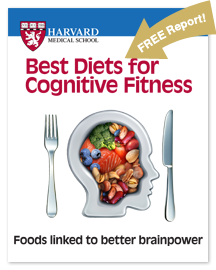
Step into summer in the best shape of your life with these reports from Harvard Medical School.
Learn How

Start your exercise and fitness program and reap the benefits of being more fit, stronger and healthier!

Warmer weather is on the way and it's not too late to get in shape for the summer. These 3 reports can help you enjoy outdoor activities in the best shape of your life:

September 2010 references and further reading

SEP 2010

Did you know?

You can get instant online access to all of the articles from the September 2010 issue of Harvard Heart Letter for only $5.

Already a subscriber? Login for complete instant access.

If you want a button/link to remove the box (not sure if you do or not...), it would look like this: Cancel

Diagnosing sleep apnea at home

Kuna ST, Maislin G, Hin S, Hartwig K, Hachadoorian R, Hurley S, Gupta R, Atwood CW. Non-inferiority of functional outcome in ambulatory management of obstructive sleep apnea. Presentation at the 2010 American Thoracic Society Annual Conference in New Orleans.

Sunwoo B, Kuna ST. Ambulatory management of patients with sleep apnea: is there a place for portable monitor testing? Clinics in Chest Medicine 2010; 31:299-308.

Epstein LJ, Kristo D, Strollo PJ, Jr., et al. Clinical guideline for the evaluation, management and long-term care of obstructive sleep apnea in adults. Journal of Clinical Sleep Medicine 2009; 5:263-76.

Stand up for your heart

Dunstan DW, Barr EL, Healy GN, et al. Television viewing time and mortality: the Australian Diabetes, Obesity and Lifestyle Study (AusDiab). Circulation 2010; 121:384-91.

Olsen RH, Krogh-Madsen R, Thomsen C, Booth FW, Pedersen BK. Metabolic responses to reduced daily steps in healthy nonexercising men. JAMA 2008; 299:1261-3.

Katzmarzyk PT, Church TS, Craig CL, Bouchard C. Sitting time and mortality from all causes, cardiovascular disease, and cancer. Medicine and Science in Sports and Exercise 2009; 41:998-1005.

Mandic S, Myers JN, Oliveira RB, Abella JP, Froelicher VF. Characterizing differences in mortality at the low end of the fitness spectrum. Medicine and Science in Sports and Exercise 2009; 41:1573-9.

New thinking on saturated fat

Siri-Tarino PW, Sun Q, Hu FB, Krauss RM. Saturated fat, carbohydrate, and cardiovascular disease. American Journal of Clinical Nutrition 2010; 91:502-9.

Siri-Tarino PW, Sun Q, Hu FB, Krauss RM. Meta-analysis of prospective cohort studies evaluating the association of saturated fat with cardiovascular disease. American Journal of Clinical Nutrition 2010; 91:535-46.

Jakobsen MU, Dethlefsen C, Joensen AM, et al. Intake of carbohydrates compared with intake of saturated fatty acids and risk of myocardial infarction: importance of the glycemic index. American Journal of Clinical Nutrition 2010; 91:1764-8.

Aspirin and diabetes

Pignone M, Alberts MJ, Colwell JA, et al. Aspirin for primary prevention of cardiovascular events in people with diabetes. Journal of the American College of Cardiology 2010; 55:2878-86.

Faith in medications fades

Allen LaPointe NM, Ou FS, Calvert SB, et al. Changes in beliefs about medications during long-term care for ischemic heart disease. American Heart Journal 2010; 159:561-9.

In brief

Migraine double trouble: Spector JT, Kahn SR, Jones MR, Jayakumar M, Dalal D, Nazarian S. Migraine headache and ischemic stroke risk: an updated meta-analysis. American Journal of Medicine 2010; 123:612-24.

HDL double benefit: Jafri H, Alsheikh-Ali AA, Karas RH. Baseline and on-treatment high-density lipoprotein cholesterol and the risk of cancer in randomized controlled trials of lipid-altering therapy. Journal of the American College of Cardiology 2010; 55:2846-54.

Super-sized TV food ads: Mink M, Evans A, Moore CG, Calderon KS, Deger S. Nutritional imbalance endorsed by televised food advertisements. Journal of the American Dietetic Association 2010; 110:904-10.

Shock boxes save lives: Weisfeldt ML, Sitlani CM, Ornato JP, et al. Survival after application of automatic external defibrillators before arrival of the emergency medical system: evaluation in the resuscitation outcomes consortium population of 21 million. Journal of the American College of Cardiology 2010; 55:1713-20.