

Whole grains may improve several heart risk factors at once

Light exposure at night may raise risk for heart disease

Children of centenarians may stay healthier and live longer too, study finds

A lumbar belt may help ease low back pain

Signs of pneumonia: Sometimes vague and unexpected

The surprising link between ovarian cancer and the fallopian tubes

Using a vibration plate: What it can — and can't — do for your body

People who walk more or walk faster live longer, study finds

Rosacea treatments: What works?

For sleep apnea, a dental device may be as effective as CPAP
Aaron Bernstein, MD, MPH
Contributor
Aaron Bernstein, MD, MPH, is the co-director of the Center for Climate, Health, and the Global Environment at the Harvard T.H. Chan School of Public Health, and a pediatric hospitalist at Boston Children’s Hospital. In his work at the Center, Dr. Bernstein examines the human health effects of global environmental changes, such as climate change and the loss of biodiversity, with the aim of promoting a deeper understanding of these subjects among students, educators, policy makers, and the public.
After receiving his bachelor’s degree in human biology from Stanford University, he received graduate degrees in medicine (MD) and public health (MPH), from the University of Chicago and Harvard University, respectively. He is a recipient of Stanford University’s Firestone Medal for Research and a Harvard University Zuckerman Fellowship.
He serves on the American Academy of Pediatrics Council on Environmental Health Executive Committee, the Board of Scientific Counselors to the CDC’s National Center for Environmental Health/Agency for Toxic Substances and Disease Registry, and the board of directors of the US Green Building Council.
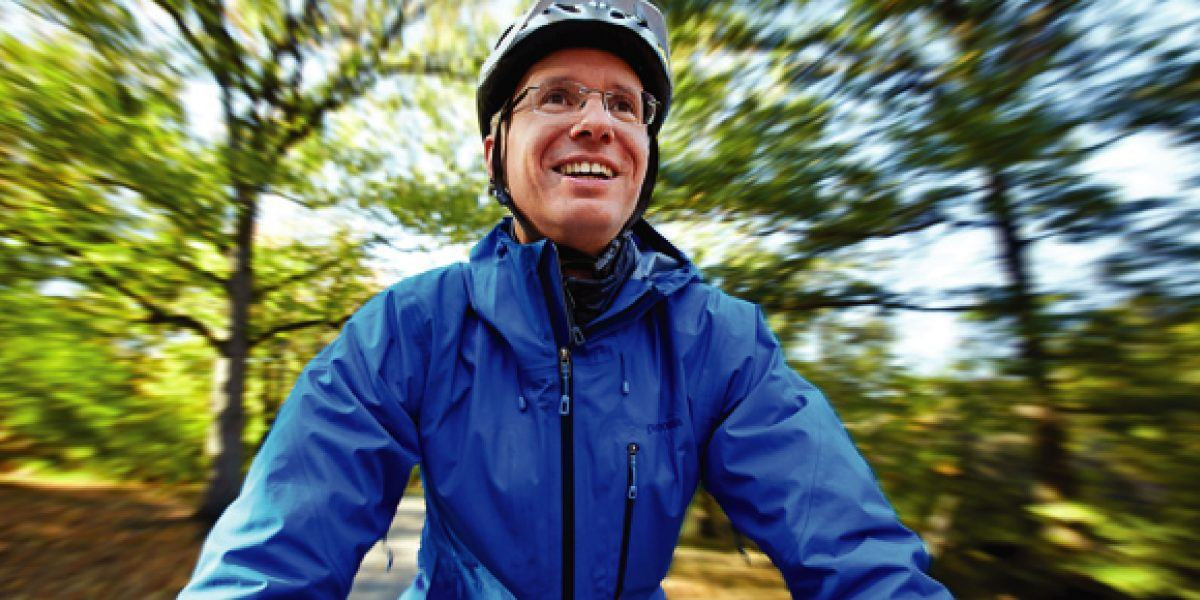
An avid bicyclist, Dr. Bernstein pedals to and from work year-round.
(Photo credit: Harvard University)
Posts by Aaron Bernstein, MD, MPH

Aaron Bernstein, MD, MPH
Rising temperatures: How to avoid heat-related illnesses and deaths

Pediatric health
Making young minds resilient to disasters
Whole grains may improve several heart risk factors at once
Light exposure at night may raise risk for heart disease
Children of centenarians may stay healthier and live longer too, study finds
A lumbar belt may help ease low back pain
Signs of pneumonia: Sometimes vague and unexpected
The surprising link between ovarian cancer and the fallopian tubes
Using a vibration plate: What it can — and can't — do for your body
People who walk more or walk faster live longer, study finds
Rosacea treatments: What works?
For sleep apnea, a dental device may be as effective as CPAP

