

Even a little exercise linked with lower stroke risk in people with afib

Testosterone therapy without evidence of deficiency may boost heart risk

Weight-loss drug may lower risk of heart attacks and infections

What to eat on the DASH diet

Migraine: How it's diagnosed and what that means

Tricep workouts you can do at home

Mindfulness practices to reduce stress and improve focus

Antihistamines may not offer meaningful relief from eczema symptoms

Overweight and taking blood pressure medications: Study finds it's a trend that's working

FDA approves first mRNA-based flu vaccine
Senior living and care Archive
Articles

A thousand rideshare options for older adults
News briefs
Catching a ride to the doctor or grocery store has never been easier, thanks to rideshare services like Uber or Lyft. You simply download an app to your smartphone and enter your credit card information. Then you can just tap a button whenever you need a ride. But if you're not comfortable with the concept, take heart: the United States now has about a thousand rideshare services that cater to older adults, according to a CDC-funded study conducted by NORC, a nonprofit research organization based at the University of Chicago. The results were released Dec. 5, 2019. Researchers found more than 900 individual nonprofit rideshare services and three for-profit rideshare companies (with a total of 888 locations) available for older adults in the United States. The rides weren't just for doctor or grocery store visits. Many rides were for other errands, work, or fun (an important point, since older adults are at risk for isolation). Also appealing: about two-thirds of the rides were free, and about a third of the services provided help in and out of the vehicle. Want to give it a try? Contact your local Area Agency on Aging (www.health.harvard.edu/aaa) to find groups that offer rides for older adults.
Image: adamkaz/Getty Images

Consumer alert: CBD products not necessarily safe
News briefs
The FDA is urging consumers to use caution with products infused with cannabidiol (CBD), the cannabis-derived extract that's touted as a cure-all. CBD is widely available in creams, tinctures, oils, patches, gummy bears, capsules, and more. But some products are being sold illegally, with claims that CBD can treat health conditions. In November, the FDA cracked down on 15 companies that were making such claims, or that were illegally adding CBD to food or selling it as a dietary supplement. "We remain concerned that some people wrongly think that the myriad of CBD products on the market, many of which are illegal, have been evaluated by the FDA and determined to be safe, or that trying CBD can't hurt.' Aside from one prescription drug approved to treat two pediatric epilepsy disorders, these products have not been approved by the FDA, and we want to be clear that a number of questions remain regarding CBD's safety," says FDA Principal Deputy Commissioner Amy Abernethy. Even legal CBD products have potential health risks such as liver injury, drug interactions, sedation, diarrhea, decreased appetite, and mood changes. Talk to your doctor before trying any new supplement, especially if it contains CBD.
Image: Alena Okunkova/Getty Images


What's in a number? Looking at life expectancy in the US
Between 1959 and 2014, average life expectancy in the United States rose astoundingly by nearly a decade. Then it began declining. A recent report examining this situation raises tough questions about that unexpected change.

Rural health risks?
Research we're watching
People living in rural areas of the country appear to be more likely to die from preventable causes compared with people in more urban locations, says a CDC report. The report looked at deaths from 2010 to 2017 and found that people in rural locations were more likely to die from preventable conditions, including cancers and heart and respiratory diseases. In 2010, about 29% of cancer deaths in rural areas were potentially preventable, compared with 18% of cancer deaths in urban areas. In addition, 45% of heart disease deaths in rural locations were deemed preventable, compared with 24% of heart disease deaths in urban areas. The authors suggested several strategies to reduce disparities, including better screening programs and initiatives to encourage better eating and exercise habits, as well as smoking cessation.
Image: shaunl/Getty Images

What has the most impact on longevity?
Ask the doctor
Q. My family tends to be long-lived. I hear longevity is due to our DNA, and I also hear it's due to lifestyle. Which is it, and how do they make us live longer?
A. Both DNA and lifestyle can affect longevity, and they both do so in the same way: by altering our body chemistry. DNA controls the production of each of the natural chemicals in our body. It controls both the shape (and, hence, the effectiveness) of each chemical, and also controls how much of that chemical is made. So, it's not surprising that DNA could affect longevity. In the past 20 years, astonishing progress has been made in understanding the body chemistry that controls the aging process. And that knowledge has allowed scientists to extend the life of various animals through simple genetic manipulations.

Tips to minimize the risks of anesthesia
Careful planning may help you avoid side effects.
It's always concerning when the doctor says you need a procedure that requires anesthesia. On top of worries about the procedure itself, you may wonder how you'll react to anesthesia, especially now that you're older. The answer is complicated.
Aging changes everyone's basic physiology. Anesthesia introduces some risk, but less so than the risk from underlying health conditions, the surgical procedure itself, and the care you receive after surgery," says Dr. Angela Bader, an anesthesiologist and founding director of the Weiner Center for Preoperative Evaluation at Harvard-affiliated Brigham and Women's Hospital.

Pickleball pleasures and pitfalls
The game requires agility and quick thinking. But it can leave you in a pickle if you overdo it or fall.
One of the fastest growing and popular sports among older adults is easy to play and lots of fun. But pickleball, with its funny name, comes with some serious risks. "It has a quick pace and a lot of stops, starts, and changes in direction that can lead to leg injuries and falls," says Clare Safran-Norton, clinical supervisor of rehabilitation services at Harvard-affiliated Brigham and Women's Hospital.
What is it?
Pickleball is a hybrid racquet sport that combines aspects of tennis, table tennis, and badminton. The game is played indoors or outdoors on a small court (20 feet by 44 feet, about the size of a badminton court) resembling the top of a giant Ping-Pong table. The net dividing the court is a few inches shorter than the net on a tennis court.
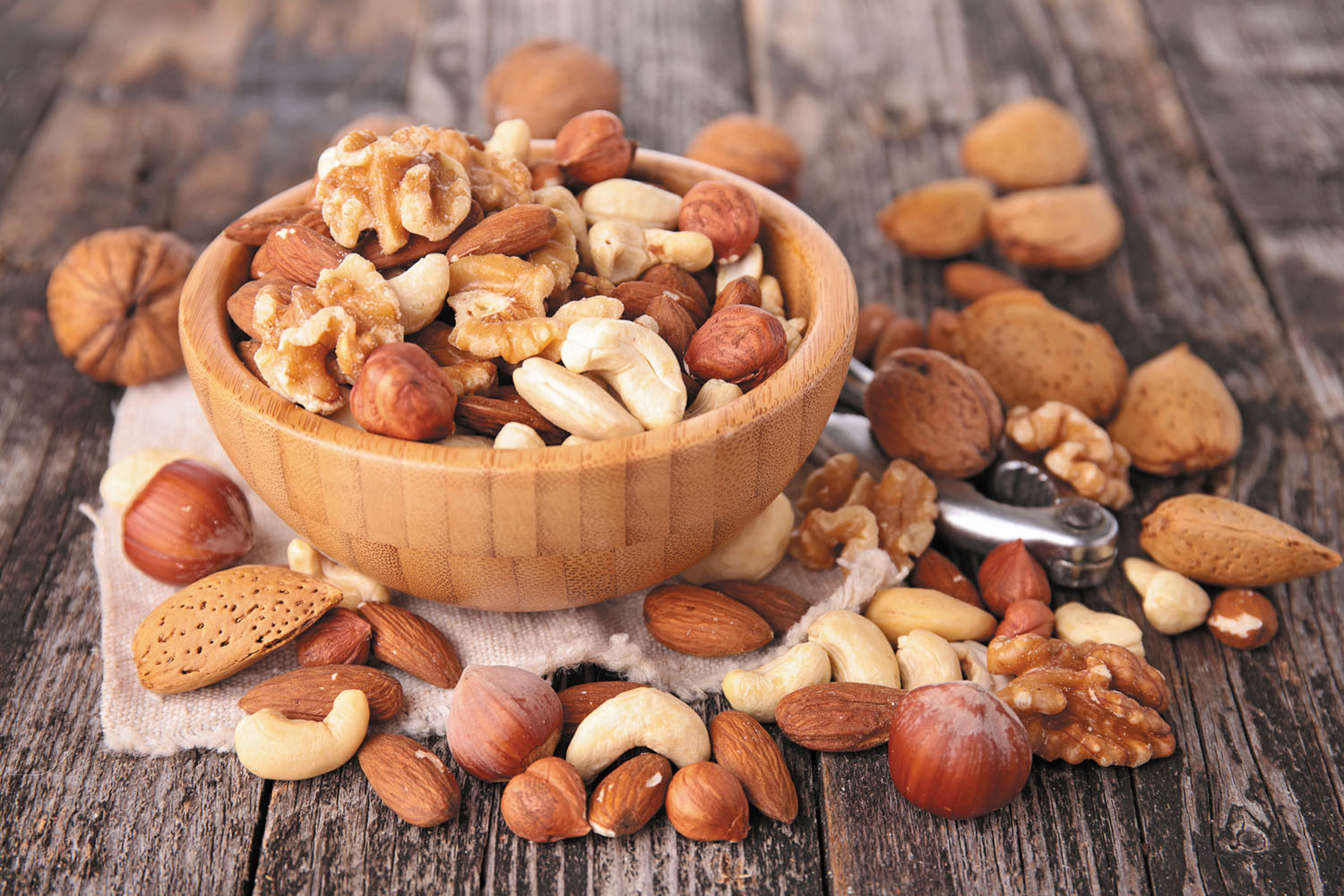
Eating nuts: A strategy for weight control?
News briefs
Nuts are rich in healthy fat and calories, so you may not think of them as tools for weight control. But nuts may actually help in the battle of the bulge, suggests a Harvard study published online Sept. 23, 2019, by BMJ Nutrition, Prevention, and Health. Researchers analyzed questionnaire responses on dietary habits, physical activity, and weight changes from about 145,000 middle-aged and older men and women. People who went from never eating nuts to eating a daily average of at least half a serving (about half a handful) were 16% less likely to become obese over a four-year period compared with people who didn't eat nuts at all. Substituting a half serving of nuts per day for red meat, processed meat, French fries, desserts, or potato chips was also associated with less weight gain. "Nuts have protein and fiber which help us feel full longer and offset cravings for junk food. Although nuts are high in calories, up to 20% of calories from nut consumption will be excreted from our body," says Dr. Xiaoran Liu, one of the study authors and a research associate with the Harvard T.H. Chan School of Public Health.
Image: margouillatphotos/Getty Images

Genetic test kits don’t have all the answers
News briefs
It's tempting to try a direct-to-consumer (DTC) genetic test kit that predicts your risk for developing certain diseases, like Alzheimer's or Parkinson's. The kit is shipped to your home, where you collect cells (typically with a cheek swab or a saliva collection tube) and then send them to a lab for DNA analysis. But a report from British researchers, published in The BMJ on Oct. 16, 2019, warns that the tests commonly produce misleading predictions of high or low genetic risk for disease. In other words, a positive result for a particular gene doesn't necessarily mean you'll develop a related health problem, and a negative result doesn't automatically mean you'll dodge a particular condition. Study authors say that interpreting genetic data is complex and depends on the context of your individual and family medical history. If you want to try a DTC test, bring the results to your physician for more insight. If your doctor determines that further investigation is warranted, he or she can refer you for genetic testing that's more comprehensive than DTC tests, performed by an accredited laboratory. Those test results may be combined with genetic counseling to help you understand what to expect and what the information might mean for your health or the health of your family members.
Photo: sanjeri/Getty Images
Even a little exercise linked with lower stroke risk in people with afib
Testosterone therapy without evidence of deficiency may boost heart risk
Weight-loss drug may lower risk of heart attacks and infections
What to eat on the DASH diet
Migraine: How it's diagnosed and what that means
Tricep workouts you can do at home
Mindfulness practices to reduce stress and improve focus
Antihistamines may not offer meaningful relief from eczema symptoms
Overweight and taking blood pressure medications: Study finds it's a trend that's working
FDA approves first mRNA-based flu vaccine
Free Healthbeat Signup
Get the latest in health news delivered to your inbox!
Sign Up
