The Sensitive Gut_June Test

Find real relief from frustrating digestive symptoms with help from the experts at Harvard Medical School
Understand your gut → Identify triggers → Get an effective treatment plan
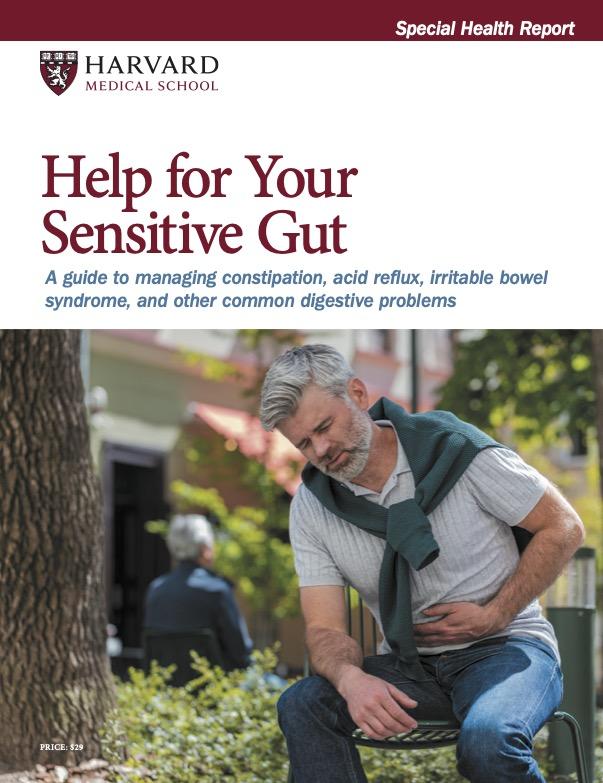
You don't have to let a sensitive gut control your life. Digestive disorders are manageable and treatable. In this Special Health Report, Harvard Medical School experts share the evidence-based ways to diagnose and treat common gastrointestinal problems so you can reduce symptoms and get back to enjoying meals and living life to the fullest.
What type of doctor should you see for your symptoms?
For occasional mild digestive discomfort, starting with your primary care physician is appropriate. However, if you have severe or persistent symptoms, you may need to consult a gastroenterologist who specializes in digestive disorders.
What happens during your appointment? What tests might be performed to diagnose your condition? How can you best work with your doctor to find the right treatment plan?
Get the answers you need in Harvard Medical School's report, Help for Your Sensitive Gut!
The steps you can take right now to start taming your sensitive gut!
Help for Your Sensitive Gut offers the latest research and recommendations from leading Harvard Medical School gastroenterologists and other digestive disorder experts. In the report, you'll find a full range of strategies for managing symptoms and preventing flare-ups.
Help for Your Sensitive Gut provides clear and specific guidance to help you find relief. You'll learn about the diagnostic approaches experts recommend to help uncover the reasons for those bothersome GI symptoms. You'll discover…
...how to zero in on the factors disrupting your digestion.
Is it reflux? Food intolerance? IBS? Dyspepsia? You'll learn the key characteristics of a dozen common digestive disorders and how doctors distinguish among them . You'll understand how gut bacteria, stress, diet and other lifestyle factors may be contributing to flare-ups .
...drug-free techniques to calm and soothe your GI tract.
You'll learn clinically proven diet and lifestyle strategies for reducing episodes of heartburn, diarrhea, constipation, bloating and more . You'll discover mind-body therapies that leverage the gut-brain axis to manage digestive distress . And you'll find out which foods may be aggravating your symptoms so you can steer clear .
...the most effective medications and other targeted treatments.
The report outlines current medical therapies for relieving chronic GI symptoms, including the latest prescription options and over-the-counter remedies . You'll get guidance on when medication may be warranted and how to use it safely. You'll also learn about how rebalancing your microbiome might finally put an end to recurrent diarrhea. .
… PLUS A SPECIAL BONUS SECTION!
Stress and emotion can have a big impact on your digestive tract. The report includes a special section on "The Stress Connection" that explains the gut-brain axis and teaches relaxation techniques that can help calm an agitated gut.