What to do about High Cholesterol

Turn your next cholesterol test into an action plan!

Let the doctors at Harvard Medical School show you the best steps and strategies for reducing your risk of heart attack and stroke.
Your body needs cholesterol for important functions. But too much LDL cholesterol and other harmful lipoprotein particles can contribute to plaque buildup, heart attack, and stroke.
Prepared by the editors of Harvard Health Publishing with medical guidance from Jorge Plutzky, MD, Managing Your Cholesterol explains how to understand your cholesterol results and work with your doctor to reduce your cardiovascular risk.
Updated with information from the 2026 AHA/ACC dyslipidemia guidelines, the report covers:
- what LDL, HDL, triglycerides, non-HDL cholesterol, apoB, and lipoprotein(a) mean
- how the PREVENT calculator can help estimate cardiovascular risk
- why LDL goals vary from person to person
- when additional tests, including Lp(a), apoB, hs-CRP, or a coronary artery calcium scan, may be useful
- dietary changes, physical activity, weight management, and other lifestyle strategies
- statins, potential side effects, and ways to get the most from treatment
- non-statin medications and add-on therapies
- genetic risks, including familial hypercholesterolemia
- ways to manage elevated triglycerides
A heart-healthy lifestyle is foundational, but many people also need medication to reach an LDL goal appropriate for their risk. This report can help you prepare for more informed conversations with your health care provider.
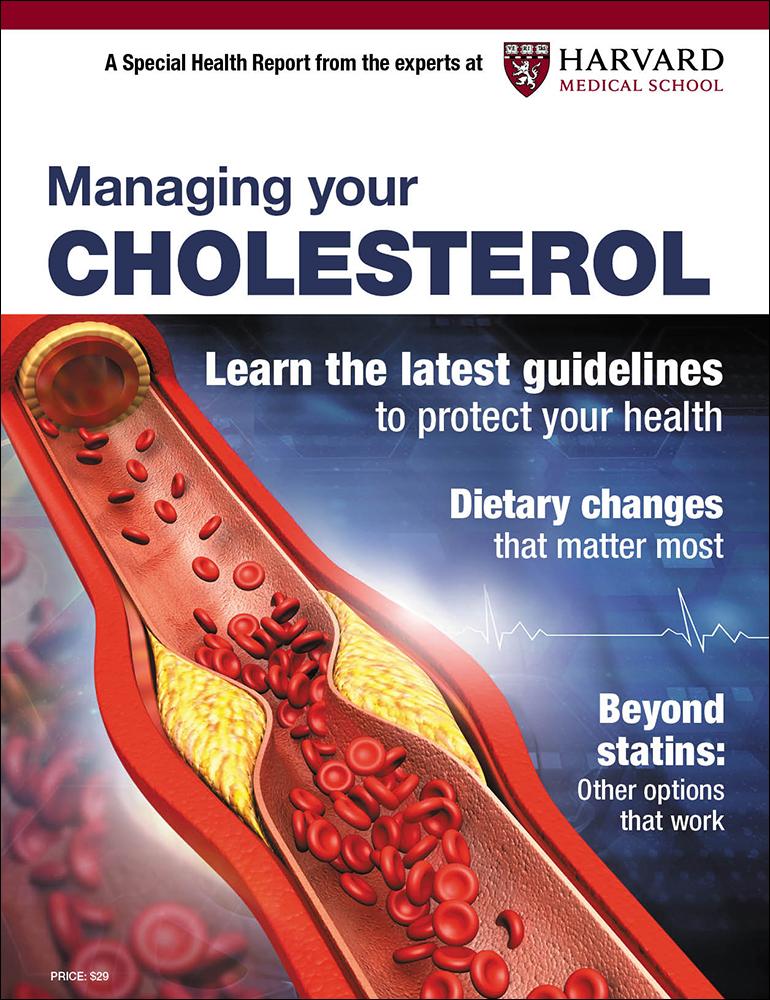
Inside Managing Your Cholesterol, you’ll discover:
- How low should your LDL go?
- Why cholesterol goals vary by cardiovascular risk
- Lifestyle habits and medications that can help lower triglycerides
- Risk factors for heart disease you can—and cannot—change
- Medical conditions and medications that can affect cholesterol levels
- How to prepare for a cholesterol test and interpret the results
- When to consider Lp(a), apoB, genetic testing, or coronary artery calcium scanning
- How statins work, who may benefit, and what to know about side effects
- Non-statin options for people who need additional LDL lowering or cannot tolerate statins